Common Causes Of Family Conflict In Everyday Life
Gusti Ayu Tita P
8 September 2026
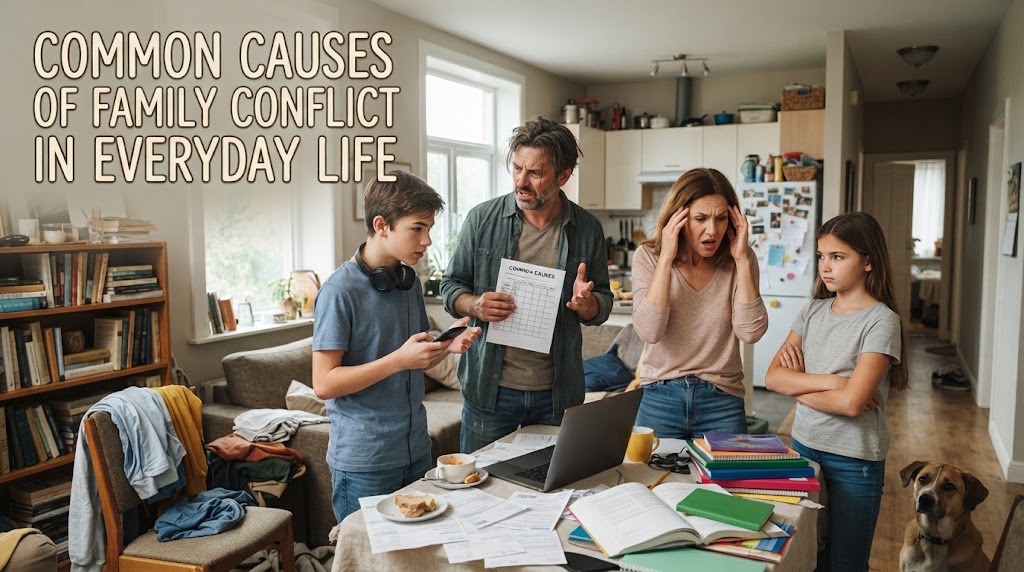
Family is an important part of everyday life because it can provide love, support, and a sense of belonging. However, living together does not always mean that everyone will agree on everything. Family conflict can happen because family members have different personalities, expectations, habits, and ways of communicating. Small problems can become bigger when they are ignored or handled with anger. Understanding the common causes of family conflict can help people prevent misunderstandings and build healthier relationships.
DIFFERENCES IN OPINIONS AND PERSONALITIES
Every family member has a unique personality and way of thinking. Differences in opinions can appear when people have different preferences, values, or expectations about family decisions. One person may want something that another person strongly disagrees with. If both sides insist on getting their way, a simple disagreement can develop into a serious argument. Respecting different perspectives can help prevent these differences from damaging family relationships.
POOR COMMUNICATION
Poor communication is one of the most common causes of family conflict. Misunderstandings can happen when people do not explain their feelings clearly or make assumptions about what others mean. Problems may also grow when family members avoid talking about important issues. Harsh words, shouting, or refusing to listen can make communication even more difficult. Open and respectful communication allows family members to express their concerns and understand each other better.
FINANCIAL PROBLEMS
Money can become a major source of tension in many families. Financial difficulties may involve household expenses, debt, income differences, or disagreements about spending priorities. When financial concerns are not discussed openly, family members may blame one another or feel under pressure. Financial stress can also affect emotions and make people more sensitive during disagreements. Creating a realistic budget and discussing financial responsibilities honestly can help reduce unnecessary conflict.
DIFFERENT EXPECTATIONS
Family members may have different expectations about education, careers, relationships, household responsibilities, or personal choices. Parents, for example, may expect their children to follow a certain path while the children have different goals. When these expectations are not discussed properly, someone may feel pressured, misunderstood, or disappointed. Unrealistic expectations can gradually create frustration within the family. Talking openly about individual goals and finding reasonable compromises can help reduce this type of conflict.
HOUSEHOLD RESPONSIBILITIES
Daily responsibilities can also create disagreements among family members. Arguments may occur when one person feels that they are doing more household work than others. Cleaning, cooking, taking care of children, shopping, and managing other tasks require cooperation. Unequal responsibilities can lead to feelings of frustration and unfairness. Dividing tasks clearly and fairly can make everyday family life more organized and reduce tension.
LACK OF PERSONAL SPACE
Living together requires people to respect each other's need for privacy and personal space. Conflicts may occur when someone feels that their belongings, activities, or private conversations are constantly being interrupted. Teenagers and adults may especially need appropriate boundaries as they become more independent. Healthy personal boundaries can help family members feel respected without creating emotional distance. Discussing privacy needs calmly can make shared living more comfortable for everyone.
STRESS AND EMOTIONAL PRESSURE
Stress from work, school, financial problems, or other responsibilities can influence how people behave at home. Someone who is tired or overwhelmed may become more easily irritated during ordinary conversations. Unfortunately, this stress can sometimes be directed toward other family members even when they are not the real cause of the problem. Emotional pressure can therefore turn small disagreements into larger conflicts. Taking time to rest, manage emotions, and communicate calmly can help prevent stress from damaging family relationships.
DIFFERENT PARENTING STYLES
Parents may sometimes disagree about how children should be raised and disciplined. One parent may prefer strict rules, while another may use a more flexible approach. These differences can create confusion for children and tension between parents. Consistent parenting does not require parents to agree on every detail, but they should communicate and establish important rules together. Discussing parenting decisions privately and respectfully can help create a more stable family environment.
UNRESOLVED PAST PROBLEMS
Some family conflicts continue because old problems have never been properly addressed. A previous argument may be repeatedly brought up whenever a new disagreement occurs. This can create resentment and emotional distance between family members. Instead of repeatedly blaming one another, families can discuss unresolved issues when everyone is calm and ready to listen. Learning from past mistakes and focusing on improvement can help prevent old problems from controlling present relationships.
CONCLUSION
Family conflict can have many causes, including differences in personality, poor communication, financial problems, unequal responsibilities, stress, and different expectations. Many conflicts become worse when family members avoid communication or respond with anger. Understanding the real cause of a disagreement is an important first step toward finding a solution. Respect, empathy, active listening, and healthy boundaries can help families handle problems more effectively. Although disagreements are a normal part of family life, they can become opportunities to improve communication and strengthen family relationships.
About the Author
Gusti Ayu Tita P
Author — STEKOM University
An active author focused on academic issues, educational technology, and human resource development in the campus environment.