Common Live Streaming Mistakes That Content Creators Should Avoid
Gusti Ayu Tita P
27 Agustus 2026
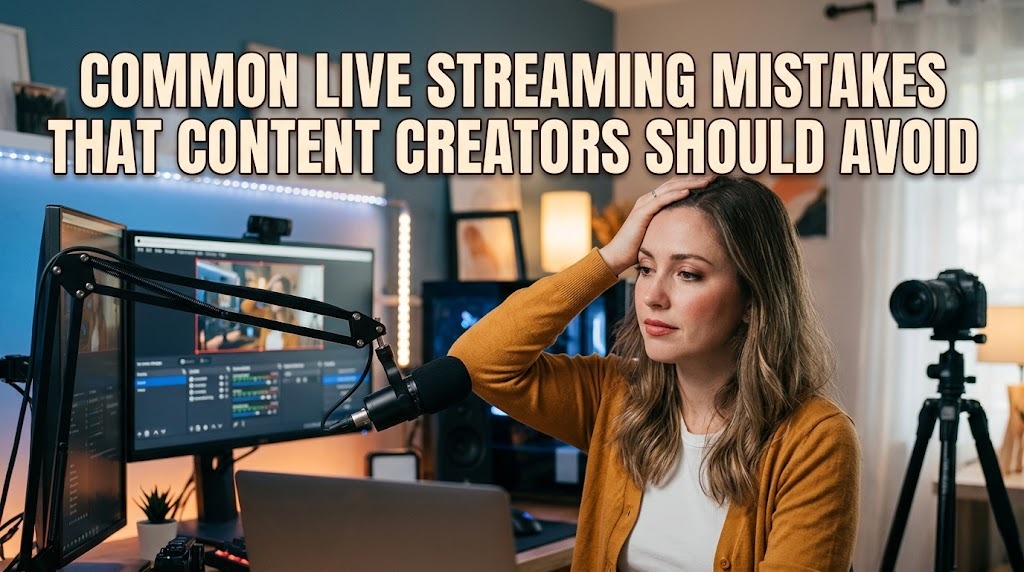
Live streaming has become an effective way for content creators to communicate directly with their audiences. Unlike recorded videos, live content allows creators to interact with viewers in real time through comments, questions, reactions, and discussions. This direct interaction can help build stronger relationships and create a more authentic online presence. However, successful live streaming requires more than simply turning on a camera and speaking to an audience. Creators who ignore preparation, technical quality, or audience needs may struggle to keep viewers interested.
Understanding common mistakes can help creators produce more professional, engaging, and consistent live streams. Small problems such as poor audio, unclear topics, or a lack of interaction can significantly affect the viewer experience. By recognizing these issues early, creators can develop better habits and improve their content over time.
POOR PREPARATION BEFORE GOING LIVE
One of the most common mistakes is starting a live stream without adequate preparation. Creators should determine the main topic, target audience, objectives, and basic discussion points before broadcasting. Preparation does not mean creating a rigid script for every sentence, but having a clear structure can prevent the conversation from becoming confusing. A simple outline can help creators move smoothly from the introduction to the main content and closing section. It also makes it easier to stay focused when unexpected situations occur.
Technical preparation is equally important. Creators should test the camera, microphone, internet connection, lighting, and streaming software before going live. A short test can identify problems that might otherwise interrupt the broadcast. Preparing backup options, such as an alternative internet connection or additional device, can also reduce unnecessary disruption. Good preparation gives creators greater confidence and allows them to focus on communicating with viewers.
IGNORING AUDIO AND VIDEO QUALITY
Viewers may tolerate simple visual production, but poor audio quality can quickly make a live stream difficult to follow. Background noise, microphone distortion, low volume, or inconsistent sound can reduce audience attention. Creators should position the microphone correctly and choose a relatively quiet environment whenever possible. Headphones or an external microphone can also help improve sound clarity. Before broadcasting, creators should listen to a short test recording or check the platform's audio indicators.
Video quality also influences how professional a live stream appears. Poor lighting, an unstable camera, or a distracting background can make the presentation less appealing. Creators do not always need expensive equipment because good lighting, stable framing, and a clean background can already make a noticeable difference. The camera should be positioned at a comfortable angle so viewers can clearly see the presenter. Improving basic production quality can make the content easier and more enjoyable to watch.
LACK OF INTERACTION WITH VIEWERS
Another major mistake is treating a live stream like a recorded video. The greatest advantage of live content is the ability to communicate with viewers in real time. Creators should acknowledge comments, answer relevant questions, respond to reactions, and occasionally invite viewers to participate in the discussion. Asking simple questions can also encourage passive viewers to become active participants. This interaction can make the audience feel that they are part of the experience rather than simply watching from a distance.
However, interaction should remain relevant to the content. Creators should avoid allowing every comment to completely change the direction of the discussion. A useful approach is to establish specific moments for questions and audience responses while maintaining the main topic. Active engagement can increase viewer interest and encourage audiences to return to future streams. It can also provide creators with valuable feedback about the subjects their communities find interesting.
BEING INCONSISTENT AND LOSING FOCUS
Inconsistent live streaming schedules can make it difficult for audiences to develop a regular viewing habit. Creators do not necessarily need to stream every day, but they should establish a realistic and sustainable schedule. A predictable schedule helps viewers know when new content is likely to appear. Creators should choose a frequency that matches their available time, energy, and content resources. Maintaining consistency is generally more valuable than streaming frequently and then disappearing for long periods.
Losing focus during a broadcast can create a similar problem. Long pauses, unrelated discussions, or repeatedly changing topics may cause viewers to leave. Creators should use a simple content structure to keep the conversation organized. Clear transitions and useful talking points can help maintain momentum throughout the stream. If an unexpected topic becomes relevant, creators can address it briefly and then return to the main discussion.
OVERPROMOTING CONTENT AND IGNORING FEEDBACK
Promoting products, services, or other content during a live stream can be useful, especially for creators who use streaming as part of their business strategy. However, excessive promotion can make audiences feel that the stream exists only to sell something. Creators should provide valuable or entertaining content first and integrate promotional messages naturally. Explaining how a product solves a problem is often more useful than repeatedly asking viewers to purchase it. Maintaining a balance between promotion and value helps protect audience trust.
Creators should also pay attention to feedback after each broadcast. Viewer comments, watch time, engagement, and audience questions can reveal what worked and what needs improvement. Ignoring this information can cause the same mistakes to happen repeatedly. Constructive feedback should be treated as an opportunity to improve, rather than simply as criticism. Reviewing each live stream can help creators gradually develop stronger content, better presentation skills, and a deeper understanding of their audience.
CONCLUSION
Successful live streaming requires more than having a camera and an internet connection. Poor preparation, weak audio and video quality, limited interaction, inconsistency, loss of focus, and excessive promotion are among the mistakes that can reduce the quality of a broadcast. Creators can avoid many of these problems by preparing carefully, testing their equipment, engaging with viewers, and maintaining a clear content structure. Consistent evaluation is also important because every live stream provides an opportunity to learn. By focusing on audience value and continuous improvement, creators can build more professional and engaging live streaming content.
About the Author
Gusti Ayu Tita P
Author — STEKOM University
An active author focused on academic issues, educational technology, and human resource development in the campus environment.