
Common LMS Implementation Challenges and How to Solve Them
Gusti Ayu Tita P
30 Juli 2026
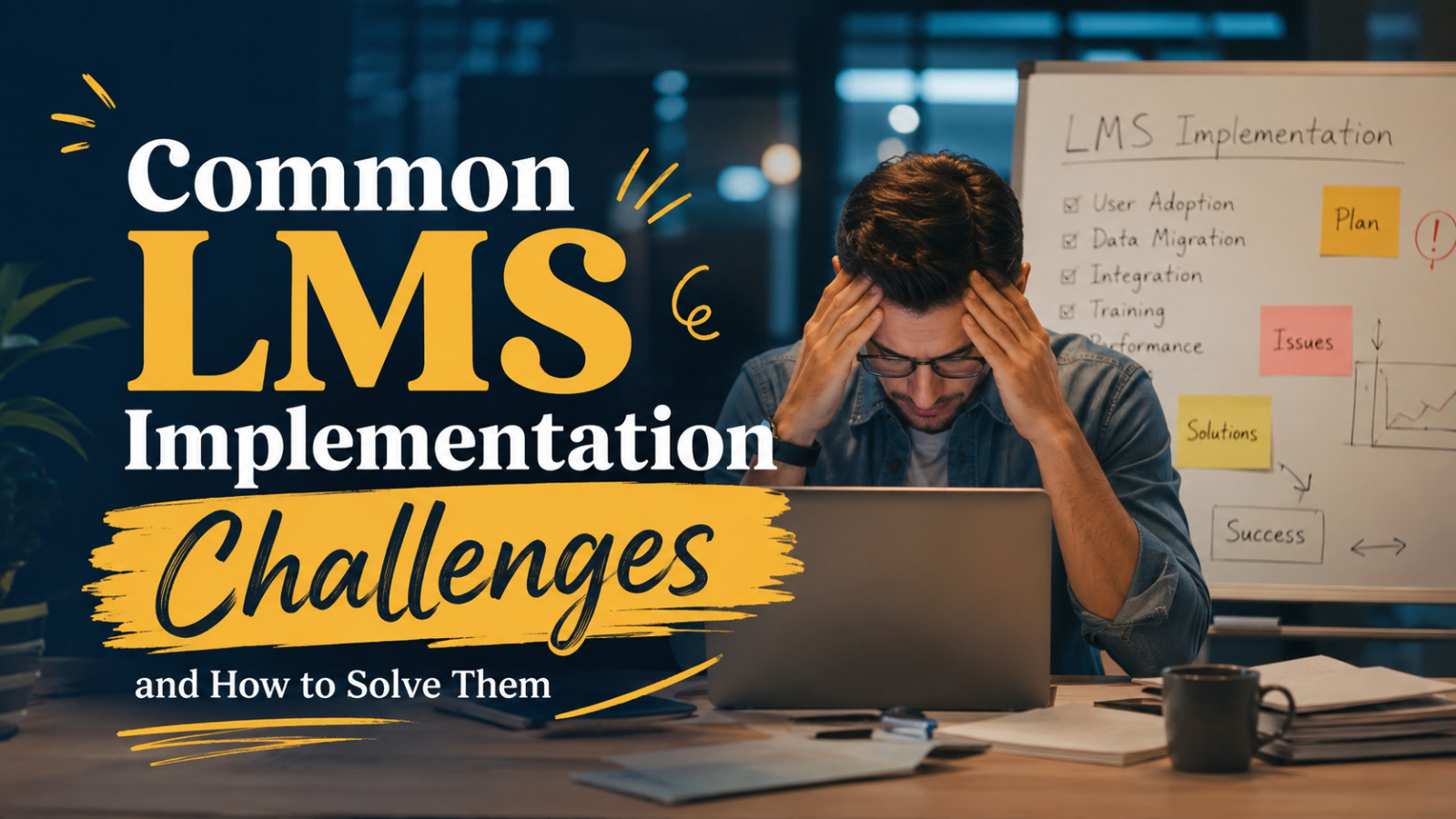
implementing a Learning Management System (LMS) can transform the way organizations and educational institutions deliver training. However, many LMS projects face unexpected obstacles that slow down adoption and reduce the return on investment. Understanding these challenges before implementation helps organizations prepare effective strategies and avoid costly mistakes. With proper planning, the right technology, and strong user engagement, businesses can successfully launch an LMS that improves learning outcomes. This article explains the most common LMS implementation challenges and provides practical solutions for each one.
LACK OF CLEAR IMPLEMENTATION GOALS
One of the biggest reasons LMS implementations fail is the absence of clear objectives. Many organizations purchase an LMS without identifying what they want to achieve. As a result, employees become confused about the purpose of the platform, and management struggles to measure success. Defining measurable goals from the beginning helps every stakeholder stay aligned throughout the implementation process.
Organizations should create SMART goals that are specific, measurable, achievable, relevant, and time-bound. These goals may include improving course completion rates, reducing training costs, or increasing employee engagement. Clear objectives also make it easier to evaluate the effectiveness of the LMS after deployment. Regular reviews ensure the platform continues to meet organizational needs as they evolve.
POOR USER ADOPTION
Even the best LMS will fail if users refuse to use it. Employees and students often resist new technology because they are comfortable with existing methods or fear complicated systems. Poor communication about the benefits of the LMS can also reduce user interest. Encouraging users early in the implementation process is essential for long-term success.
Organizations should provide hands-on training, simple tutorials, and continuous support. Demonstrating how the LMS makes learning easier motivates users to embrace the platform. Gathering feedback and making improvements based on user suggestions also increases satisfaction. When users feel involved, adoption rates naturally improve.
INSUFFICIENT TRAINING FOR ADMINISTRATORS
Many organizations focus only on end users while forgetting the administrators who manage the LMS daily. Without proper knowledge, administrators may struggle with course creation, reporting, user management, and system configuration. These issues can delay implementation and reduce platform efficiency. Investing in administrator training is just as important as training learners.
Provide comprehensive training sessions before launching the LMS. Encourage administrators to explore all available features and practice common tasks. Maintaining updated documentation and support resources helps solve problems quickly. Well-trained administrators ensure the LMS operates smoothly and efficiently.
SYSTEM INTEGRATION ISSUES
An LMS often needs to connect with existing software such as HR systems, payroll software, CRM platforms, or video conferencing tools. Integration problems can lead to duplicate data, manual processes, and inconsistent records. Poor integration also creates frustration for both administrators and learners. Careful planning helps minimize these technical challenges.
Organizations should identify all required integrations before selecting an LMS. Working closely with IT teams and software vendors ensures compatibility and smooth data migration. Testing integrations before the official launch reduces unexpected issues. A well-integrated LMS improves productivity and creates a seamless learning experience.
LOW-QUALITY LEARNING CONTENT
Technology alone cannot guarantee successful learning. If the learning materials are outdated, boring, or irrelevant, users will lose interest quickly. High-quality content is the foundation of every successful LMS implementation. Engaging learning experiences encourage better participation and knowledge retention.
Develop content that is interactive, visually appealing, and relevant to learners' needs. Include videos, quizzes, real-world examples, and practical exercises whenever possible. Regularly review and update training materials to keep information accurate. Fresh content helps maintain learner motivation over time.
INADEQUATE CHANGE MANAGEMENT
Implementing an LMS often changes existing workflows and learning habits. Employees may feel uncertain about these changes if they are not properly informed. Poor change management creates resistance and slows implementation. Strong leadership and communication reduce uncertainty.
Explain the benefits of the new LMS early and often. Share implementation timelines, provide updates, and encourage open discussions. Managers should actively support the transition and address concerns promptly. Effective change management builds confidence and increases acceptance across the organization.
LACK OF CONTINUOUS EVALUATION
Some organizations assume implementation is complete once the LMS goes live. In reality, successful LMS management requires continuous monitoring and improvement. Without evaluation, small issues may become major problems over time. Regular assessment helps maintain system performance and learner satisfaction.
Track important metrics such as course completion rates, user engagement, learner feedback, and assessment results. Use analytics to identify areas that need improvement. Schedule regular system updates and content reviews. Continuous optimization ensures the LMS remains effective and valuable.
CONCLUSION
Every LMS implementation comes with challenges, but most problems can be prevented through careful planning, effective communication, quality training, and continuous improvement. Organizations that define clear goals, support users, develop engaging content, and monitor performance are more likely to achieve successful results. An LMS is not simply a software investment—it is a long-term learning strategy. By addressing common implementation challenges proactively, businesses and educational institutions can maximize the value of their learning management systems and create better learning experiences for everyone.
About the Author
Gusti Ayu Tita P
Author — STEKOM University
An active author focused on academic issues, educational technology, and human resource development in the campus environment.















