Common Mistakes in Community Service Projects and Steps to Avoid Them
Gusti Ayu Tita P
27 Agustus 2026
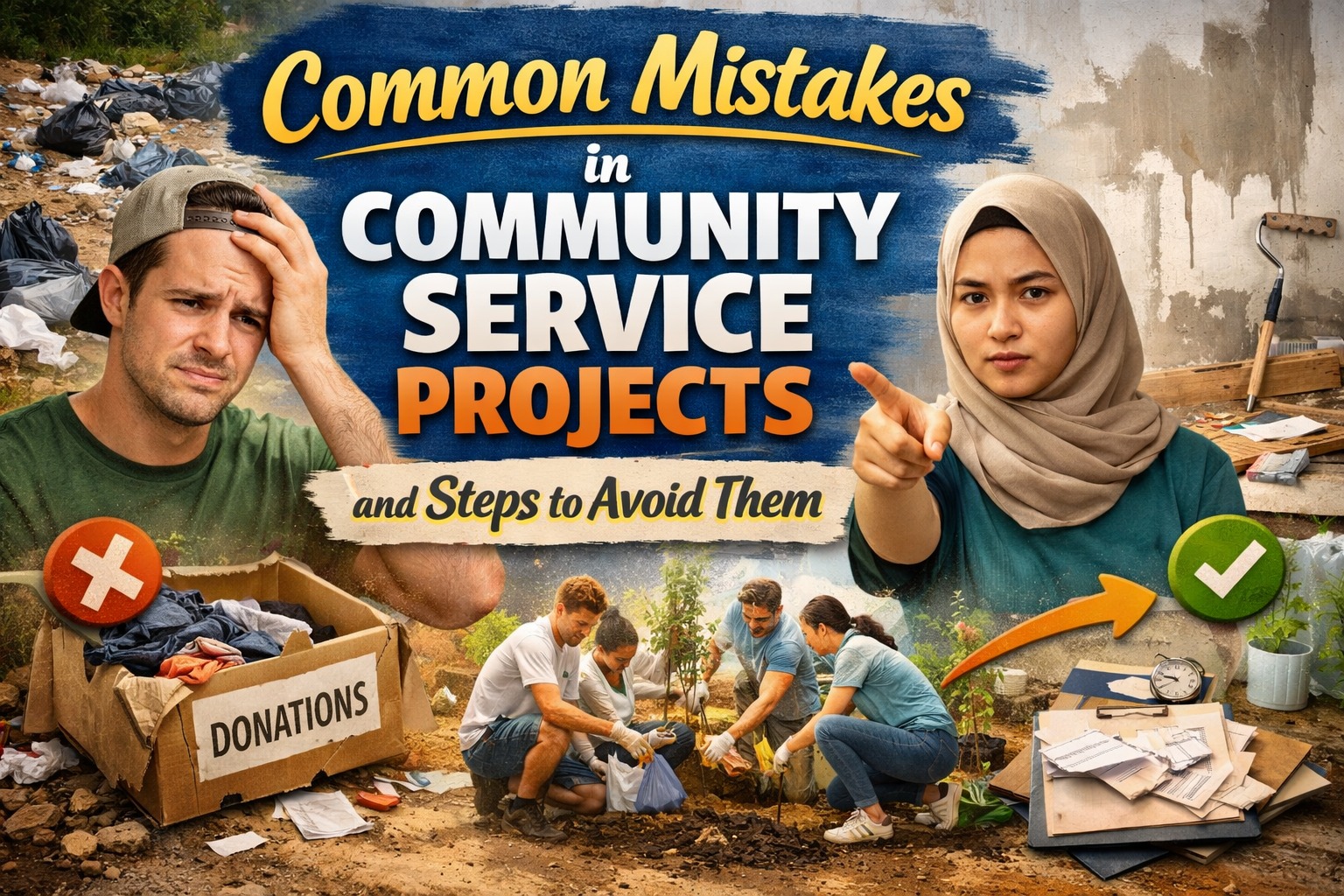
Community service projects play an important role in improving social welfare, supporting local development, and building stronger relationships between volunteers and communities. These projects can provide meaningful benefits when they are carefully planned and implemented. However, many community service initiatives fail to achieve their goals because of avoidable mistakes. Understanding these common errors and learning how to prevent them can help ensure that community service projects create a positive and lasting impact.
LACK OF PROPER PLANNING
One of the most common mistakes in community service projects is insufficient planning. Many teams begin activities with enthusiasm but without a clear roadmap. As a result, resources may be wasted, responsibilities become unclear, and project goals are difficult to achieve. Poor planning can also lead to unexpected challenges that disrupt the entire program.
To avoid this issue, project organizers should create a detailed action plan before implementation. This plan should include objectives, timelines, budgets, team roles, and expected outcomes. Conducting risk assessments and preparing backup solutions can also improve project readiness. Careful planning increases efficiency and helps projects stay on track.
IGNORING COMMUNITY NEEDS
Another major mistake is failing to understand the real needs of the community. Some projects are designed based on assumptions rather than actual conditions. While the intentions may be good, the activities may not solve the problems that local residents face. This can reduce participation and limit the project's effectiveness.
The best way to prevent this problem is through community engagement. Organizers should conduct surveys, interviews, discussions, or observations before developing a project. Listening to community members allows volunteers to identify priorities and create programs that provide meaningful solutions. Projects become more successful when communities actively participate in the planning process.
POOR COMMUNICATION AMONG TEAM MEMBERS
Effective communication is essential for every successful project. Unfortunately, many community service programs suffer from miscommunication, unclear instructions, or lack of coordination among team members. These issues can create confusion, delays, and conflicts during project implementation.
To avoid communication problems, teams should establish clear communication channels from the beginning. Regular meetings, progress updates, and shared documentation can help everyone stay informed. Encouraging open discussions also allows team members to address concerns before they become major obstacles.
LACK OF RESOURCE MANAGEMENT
Community service projects often depend on limited resources such as funding, equipment, materials, and volunteers. A common mistake is poor resource allocation, which can result in shortages or unnecessary spending. Without proper management, project activities may stop before reaching their objectives.
Project leaders should develop a resource management strategy that identifies available assets and estimates future needs. Budget monitoring, inventory tracking, and responsible spending can maximize the impact of available resources. Seeking partnerships and sponsorships can also help strengthen project sustainability.
SETTING UNREALISTIC GOALS
Many community service teams make the mistake of setting overly ambitious objectives that exceed their capabilities. While high aspirations are admirable, unrealistic goals can create disappointment and reduce team motivation when targets are not achieved.
Instead, organizers should establish realistic and measurable goals. Using clear performance indicators helps teams monitor progress and evaluate results effectively. Achievable goals allow volunteers to maintain momentum and celebrate meaningful accomplishments throughout the project.
FAILING TO EVALUATE PROJECT RESULTS
A significant mistake often overlooked is neglecting project evaluation. Some teams complete their activities and move on without assessing whether the project achieved its intended outcomes. Without evaluation, valuable lessons and opportunities for improvement may be lost.
To avoid this issue, project organizers should conduct regular evaluations before, during, and after implementation. Collecting feedback from community members and volunteers provides useful insights into project effectiveness. Evaluation helps identify strengths, weaknesses, and strategies for future improvement.
CONCLUSION
Community service projects can create meaningful and lasting benefits when they are planned and managed effectively. Common mistakes such as poor planning, ignoring community needs, weak communication, resource mismanagement, unrealistic goals, and lack of evaluation can significantly reduce project success. By understanding these challenges and applying practical solutions, volunteers and organizations can improve project outcomes and strengthen community impact. Successful community service is not only about good intentions but also about thoughtful preparation, collaboration, and continuous improvement.
About the Author
Gusti Ayu Tita P
Author — STEKOM University
An active author focused on academic issues, educational technology, and human resource development in the campus environment.