Common Mistakes That Can Slow Down Career Progression
Gusti Ayu Tita P
15 September 2026
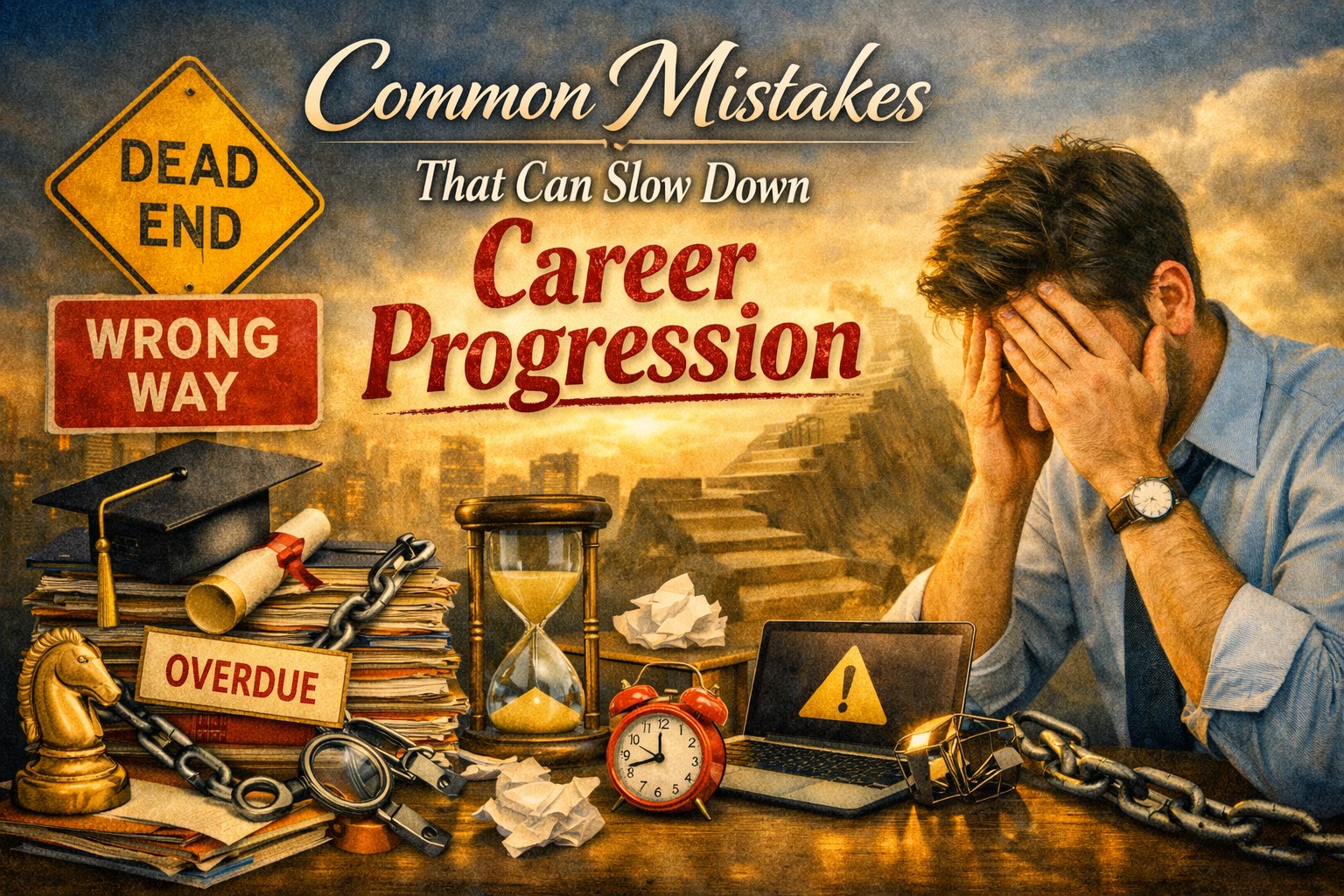
Building a successful career requires more than just technical knowledge and experience. Many professionals work hard but still struggle to move forward because they unknowingly make mistakes that limit their growth. Understanding these common errors can help individuals make better decisions and achieve their career goals faster.
Career progression is often influenced by a combination of skills, attitude, communication, and continuous learning. By recognizing and avoiding career-limiting behaviors, professionals can increase their chances of securing promotions, leadership roles, and long-term success.
LACK OF CONTINUOUS LEARNING
One of the most common reasons for slow career advancement is a lack of continuous learning. Industries constantly evolve due to technological developments, changing market demands, and new business strategies. Employees who stop learning may find their skills becoming outdated over time.
Professionals who actively pursue training programs, certifications, and new knowledge often remain competitive in the workplace. Continuous learning demonstrates adaptability and commitment, qualities that employers highly value when considering candidates for promotion.
POOR COMMUNICATION SKILLS
Strong communication is essential for career growth. Employees who struggle to express ideas clearly may find it difficult to collaborate with colleagues, present solutions, or build professional relationships. Even highly skilled workers can be overlooked if they cannot communicate effectively.
Improving verbal communication, written communication, and active listening skills can significantly enhance workplace performance. Clear communication helps reduce misunderstandings, increase productivity, and establish a professional reputation within an organization.
AVOIDING RESPONSIBILITY
Many employees limit their career potential by avoiding responsibilities outside their basic job duties. While completing assigned tasks is important, employers often look for individuals who are willing to take initiative and contribute beyond expectations.
Accepting additional responsibilities, leading projects, and solving problems proactively can demonstrate leadership potential. Employees who consistently show accountability are often viewed as valuable assets and are more likely to receive advancement opportunities.
NEGLECTING PROFESSIONAL NETWORKING
Building professional relationships plays a significant role in career development. Some individuals focus only on their daily tasks and fail to establish connections with colleagues, mentors, and industry professionals. This can reduce their access to valuable opportunities and career advice.
Effective professional networking helps individuals learn from others, discover new opportunities, and expand their industry knowledge. Maintaining positive relationships both inside and outside the workplace can contribute greatly to long-term career success.
RESISTING CHANGE
Work environments frequently change due to new technologies, organizational restructuring, and evolving business goals. Employees who resist change may struggle to adapt and remain relevant in their roles. This resistance can negatively affect performance and career growth.
Developing a flexible mindset and embracing change management can help professionals succeed in dynamic environments. Adaptability is often considered a key characteristic of successful employees and future leaders.
POOR TIME MANAGEMENT
Ineffective time management can significantly impact productivity and professional performance. Missing deadlines, failing to prioritize tasks, and poor organization may create a negative impression among supervisors and colleagues.
Practicing time management skills, setting priorities, and using productivity tools can help professionals complete tasks more efficiently. Good time management not only improves work quality but also demonstrates reliability and professionalism.
IGNORING FEEDBACK
Constructive feedback provides valuable insights for personal and professional improvement. However, some employees become defensive or ignore suggestions from managers and colleagues. This attitude can slow development and prevent skill enhancement.
Professionals who actively seek and apply constructive feedback are more likely to identify weaknesses and improve performance. A willingness to learn from feedback demonstrates maturity and a commitment to growth.
CONCLUSION
Career progression does not depend solely on experience or qualifications. Common mistakes such as lack of continuous learning, poor communication skills, avoiding responsibility, neglecting professional networking, resisting change, poor time management, and ignoring feedback can significantly slow professional growth.
By recognizing these challenges and taking proactive steps to improve, individuals can strengthen their professional value and accelerate their career advancement. Consistent self-improvement, adaptability, and a positive attitude remain essential factors for long-term career success.
About the Author
Gusti Ayu Tita P
Author — STEKOM University
An active author focused on academic issues, educational technology, and human resource development in the campus environment.