Common Mistakes To Avoid During The Homecoming Travel Season
Gusti Ayu Tita P
10 Agustus 2026
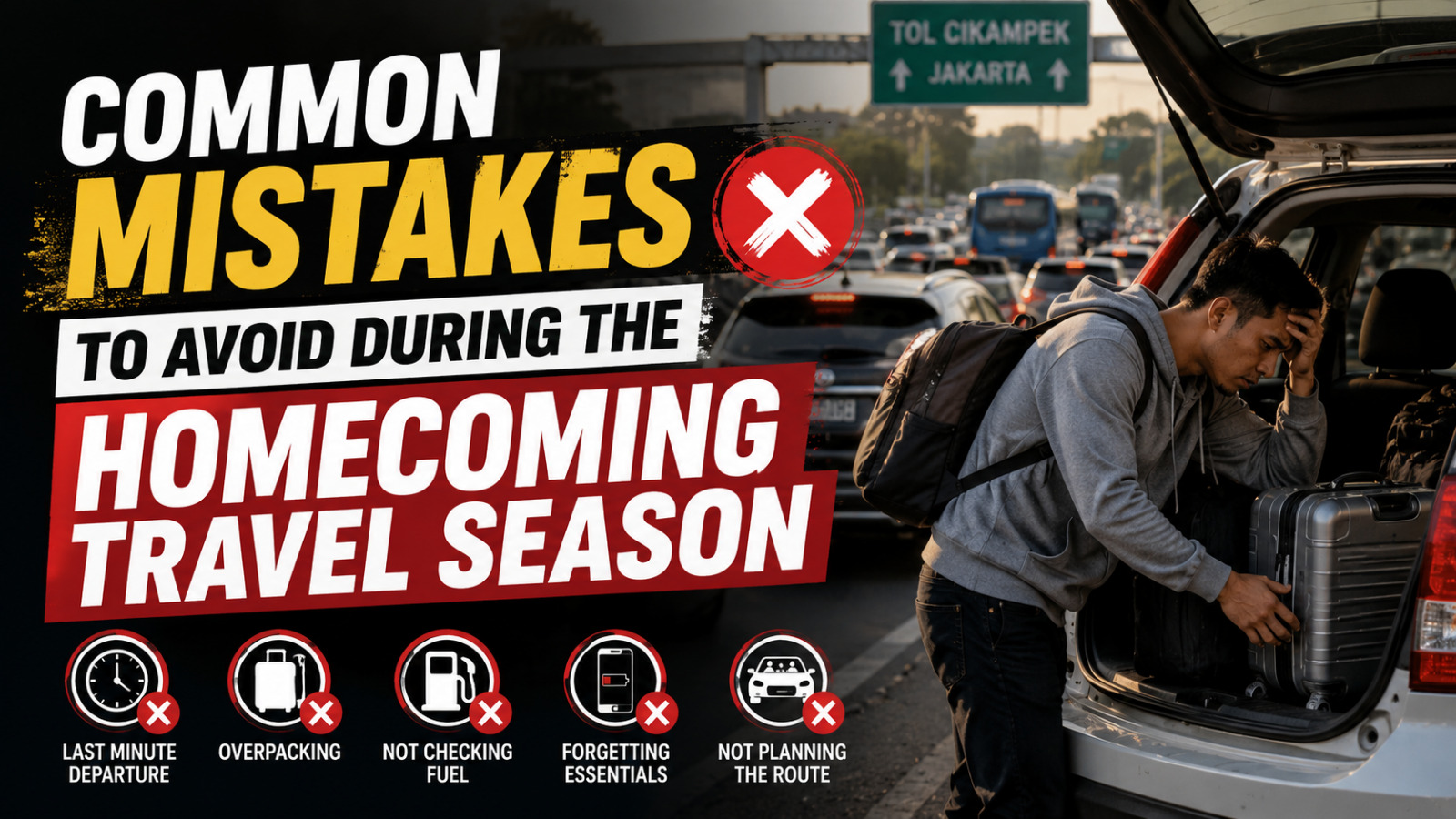
The homecoming season is an important time for families to return to their hometowns and meet relatives. However, the large number of travelers can create traffic congestion, long travel times, and unexpected problems. Some difficulties happen because travelers do not prepare properly before leaving. Simple mistakes can become more serious when roads and transportation facilities are extremely busy. Understanding common Travel Mistakes can help travelers enjoy a safer and smoother journey.
Good preparation does not need to be complicated. Travelers can reduce many risks by checking their vehicle, planning their route, preparing essential supplies, and getting enough rest. They should also monitor traffic and weather information before and during the journey. Careful preparation helps travelers respond better when conditions change. The goal is not to eliminate every possible problem but to reduce avoidable risks.
LEAVING WITHOUT PROPER PLANNING
One of the most common mistakes is starting a journey without adequate Travel Planning. Some travelers decide to leave without checking the expected traffic situation or identifying possible rest locations. This can result in unexpected delays and unnecessary stress. Long-distance journeys require more preparation than ordinary daily trips. A basic plan can make the entire journey more organized.
Travelers should know their destination, preferred route, estimated travel time, and possible alternative routes. They should also consider fuel stops, rest areas, meals, and emergency situations. A flexible plan is better than a rigid schedule because traffic conditions can change quickly. Good planning allows travelers to make safer decisions when unexpected problems occur.
IGNORING VEHICLE CONDITION
Another serious mistake is failing to inspect the vehicle before departure. A vehicle may appear normal during short daily trips but develop problems during a long journey. Tires, brakes, battery, engine fluids, lights, and other important components should be checked. Vehicle Preparation is especially important when traveling with several passengers and a large amount of luggage.
Drivers should address warning signs before starting the journey. Unusual noises, weak brakes, damaged tires, or warning lights should not be ignored. A professional inspection may be necessary when a problem cannot be identified by the driver. Preventive maintenance can reduce the risk of breakdowns during heavy homecoming traffic.
DRIVING WHILE TIRED
Driving while tired is one of the most dangerous mistakes travelers can make. Long-distance travel requires continuous concentration, and fatigue can reduce reaction time and decision-making ability. Some drivers try to continue because they want to arrive at their destination quickly. This can create serious risks for the driver, passengers, and other road users.
Drivers should get sufficient rest before starting the journey. During long trips, they should take regular breaks and stop when they feel sleepy. Changing drivers can be useful when another qualified and well-rested person is available. Travel Safety should always be more important than reaching the destination according to a strict schedule.
STARTING THE JOURNEY TOO LATE
Some travelers delay their departure without considering the effect on travel time. Leaving too late can expose them to heavy traffic or cause them to drive during hours when they are less alert. A late departure may also reduce the amount of time available for rest stops. This can make the journey more stressful.
Travelers should select a departure time based on traffic conditions, driver readiness, and journey distance. They should avoid choosing a time simply because it appears convenient. The safest departure time is one that allows the driver to remain alert throughout the trip. A realistic schedule is an important part of responsible Homecoming Travel.
CARRYING TOO MUCH LUGGAGE
Excessive luggage is another common mistake. Overloading a vehicle can affect its handling, braking performance, fuel consumption, and stability. Large amounts of luggage can also reduce passenger space and make the cabin uncomfortable. In some situations, improperly secured luggage can become dangerous during sudden braking.
Travelers should bring only items that are necessary for the journey. Heavy luggage should be distributed properly and secured to prevent movement. The vehicle's recommended load limits should also be respected. Efficient packing can improve both Travel Comfort and vehicle safety.
FORGETTING ESSENTIAL ITEMS
Some travelers focus heavily on clothing and forget important practical items. Identification documents, tickets, medicine, chargers, water, snacks, and emergency supplies may be needed during the journey. Forgetting these items can create unnecessary problems, particularly when travelers are far from home.
Families should prepare a checklist before departure. Important items should be placed in an easily accessible bag rather than hidden under large luggage. Parents traveling with children should prepare additional supplies based on the children's needs. A simple checklist can prevent many avoidable problems.
DEPENDING TOO MUCH ON NAVIGATION APPS
Navigation applications are useful tools, but travelers should not depend on them blindly. A navigation app may recommend a route based on current data, but actual conditions can change quickly. Road closures, accidents, weather, or temporary traffic arrangements may not always be reflected immediately.
Drivers should compare navigation information with official traffic announcements when possible. They should also avoid using their phones while driving. A passenger can operate the application, or the driver can stop safely before changing the route. Technology should support Travel Planning, not replace responsible judgment.
IGNORING WEATHER AND ROAD CONDITIONS
Ignoring weather information can create unnecessary risks during a long journey. Heavy rain, flooding, poor visibility, and slippery roads can affect driving conditions. Travelers should check weather forecasts and transportation information before departure.
Drivers should adjust their speed according to actual road conditions. If conditions become unsafe, they should consider stopping at a suitable location until the situation improves. Continuing simply to follow a planned schedule can be dangerous. Road Awareness is an important part of safe homecoming travel.
STOPPING IN UNSAFE LOCATIONS
Travelers sometimes stop on road shoulders or other unsuitable locations when they feel tired or need to check something. Stopping in an unsafe area can increase the risk of collisions, particularly on busy highways. Drivers should use designated rest areas, service areas, fuel stations, or other appropriate locations whenever possible.
Families should also remain alert when stopping in crowded places. Children should stay close to adults, and valuable belongings should not be left unattended. Choosing safe stopping locations protects both travelers and other road users. Proper rest planning can reduce the temptation to stop in dangerous places.
CONCLUSION
Avoiding common Travel Mistakes can make the homecoming journey safer and more comfortable. Travelers should plan their routes, inspect their vehicles, choose suitable departure times, prepare essential supplies, and get enough rest. They should also monitor traffic, weather, and road conditions throughout the journey.
Good Homecoming Travel requires preparation and responsible decision-making. Travelers should not rely entirely on technology or rush to reach their destination. By combining Travel Planning, proper Vehicle Preparation, and strong Travel Safety awareness, families can reduce avoidable risks and enjoy a more organized journey during the homecoming season.
About the Author
Gusti Ayu Tita P
Author — STEKOM University
An active author focused on academic issues, educational technology, and human resource development in the campus environment.