Common Mistakes to Avoid When Dealing With Social Media Algorithms
Gusti Ayu Tita P
7 Agustus 2026
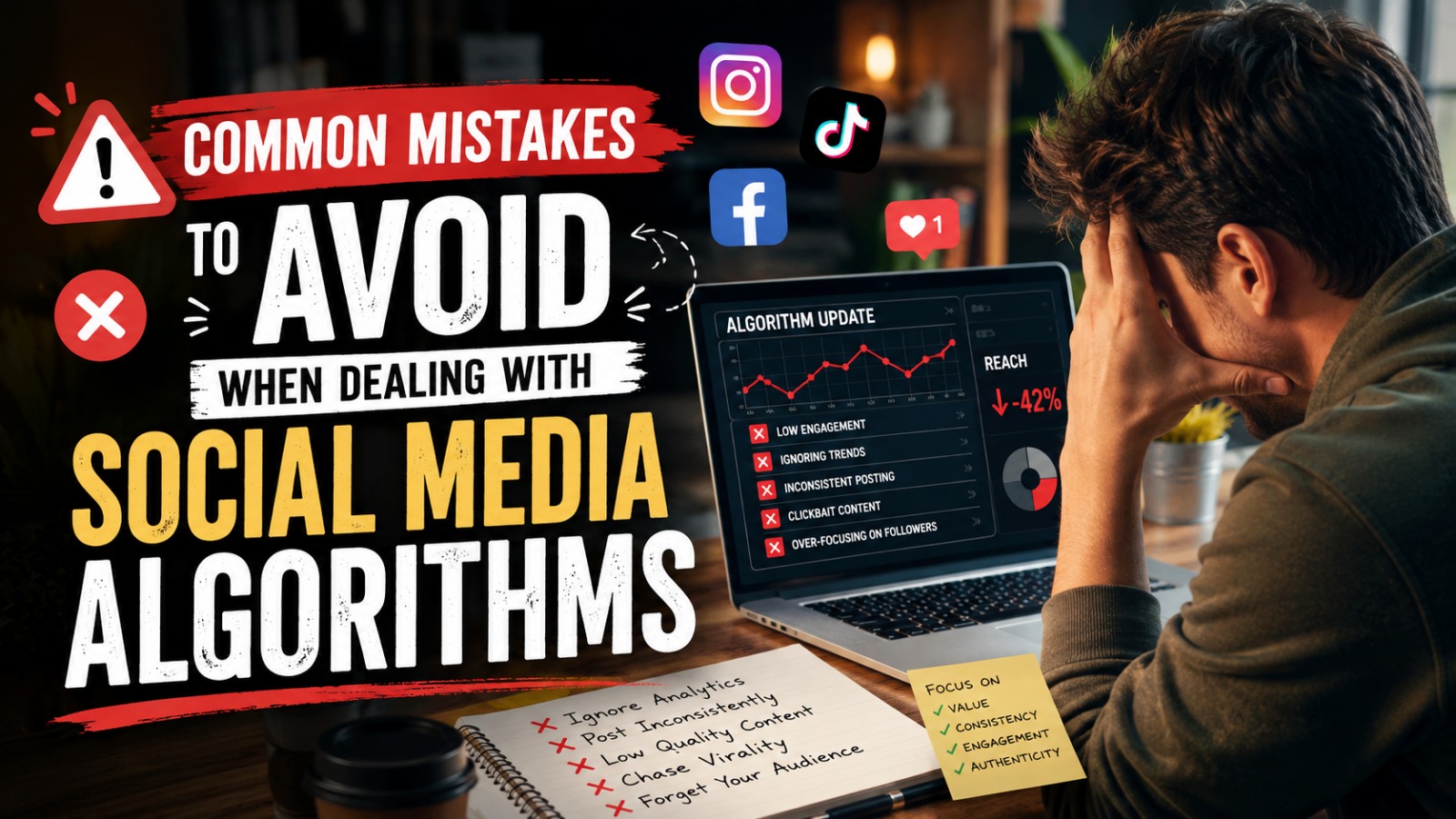
Social media algorithms play an important role in determining how content is recommended and displayed to users. For creators and businesses, understanding these systems can help improve content distribution and audience engagement. However, many people make mistakes when trying to adapt to algorithm changes or increase their reach. Some mistakes come from following unverified advice, while others involve focusing too much on numbers instead of audience needs.
A successful social media strategy should not depend on shortcuts or attempts to manipulate recommendation systems. Algorithms can change, and different platforms use different signals to rank and recommend content. The best approach is to create valuable content, understand audience behavior, and use reliable data to improve performance. Avoiding common mistakes can make social media growth more sustainable and effective.
CHASING EVERY ALGORITHM TREND
One of the most common mistakes is trying to follow every new trend related to social media algorithms. Creators may hear claims that a particular hashtag, posting time, or content format is guaranteed to increase reach. However, these claims are not always supported by official information or reliable evidence. Following every new theory can make a content strategy inconsistent. It can also distract creators from understanding what their own audience actually wants.
A better approach is to focus on patterns that can be observed through reliable analytics. Creators should test changes carefully instead of immediately changing their entire strategy. If a new platform feature is officially introduced, it can be tested while keeping the overall content direction consistent. This allows creators to learn what works without becoming dependent on unverified algorithm tips.
FOCUSING ONLY ON LIKES AND VIEWS
Likes and views are easy to notice, but they do not always represent the full value of a piece of content. A post can receive many views without generating meaningful engagement or useful business results. Depending on the goal, metrics such as saves, shares, comments, clicks, watch time, leads, or conversions may provide more useful information. Focusing on one metric can therefore create an incomplete picture of performance.
Creators should identify which metrics are connected to their actual objectives. An educational account may care about saves and watch time, while a business may prioritize website visits or conversions. Looking at several relevant metrics provides a better understanding of whether content is genuinely effective. This approach also prevents creators from making unnecessary changes based only on a temporary drop in likes.
CREATING CONTENT ONLY FOR THE ALGORITHM
Another mistake is producing content based entirely on what creators think an algorithm wants. This can result in posts that feel unnatural, repetitive, or disconnected from audience needs. Algorithms are designed to help users discover content, but they do not replace the importance of useful and engaging material. Content should first provide value to the intended audience. When people find content relevant, they are more likely to watch, interact with, save, or share it naturally.
Creators should therefore treat algorithms as part of the distribution system rather than the main audience. Content needs a clear purpose and should match the interests of the people it is intended to reach. Understanding platform mechanics can support content planning, but audience needs should remain the foundation. This balance can help maintain both reach and long term trust.
USING CLICKBAIT AND MISLEADING CONTENT
Clickbait can sometimes attract attention quickly, but misleading content can damage audience trust. A headline or opening that promises something the content does not deliver may cause users to leave quickly or feel disappointed. Repeated use of this approach can weaken the relationship between creators and their audiences. It can also create a poor user experience. Strong content should attract attention while remaining accurate and relevant.
Creators can use compelling hooks without making false promises. A clear introduction can tell viewers what they will learn, discover, or gain from the content. The rest of the post should then deliver that value. This approach is more sustainable than relying on exaggerated claims simply to increase clicks or views.
POSTING TOO MUCH WITHOUT A CLEAR PLAN
Some creators assume that posting as frequently as possible will automatically improve algorithmic performance. However, excessive posting can reduce content quality and overwhelm both the creator and audience. Publishing many low value posts does not necessarily create meaningful engagement. It can also make it harder to identify which content is actually performing well. A clear and sustainable content schedule is often more practical.
Consistency should focus on maintaining quality rather than reaching an arbitrary number of posts. Creators should plan content around their audience's needs and their available resources. A realistic schedule also makes it easier to maintain quality over a long period. This is especially important for individuals or small teams with limited production capacity.
IGNORING AUDIENCE FEEDBACK
Algorithms provide data, but audiences can provide valuable context behind that data. Comments, direct messages, questions, and feedback can reveal what people like, dislike, or want to understand better. Ignoring these signals can cause creators to miss important content ideas. Audience feedback can also explain why certain topics receive stronger responses than others. Listening to viewers helps creators create content that feels more relevant and useful.
Feedback should not mean following every individual request without considering the overall strategy. Instead, creators can look for repeated questions and common concerns. These patterns can be turned into future topics, tutorials, explanations, or discussions. Combining audience feedback with analytics creates a more complete understanding of content performance.
COPYING OTHER CREATORS TOO CLOSELY
Seeing another account succeed can make creators want to copy its content strategy exactly. However, what works for one creator may not work for another because audiences, niches, formats, and goals can be different. Copying content too closely can also make an account lose its unique identity. Originality helps creators build recognition and establish a stronger relationship with their audience.
Creators can learn from successful accounts without copying them directly. They can study presentation styles, content structures, storytelling techniques, or audience interaction methods. These ideas can then be adapted to fit their own expertise and brand identity. Learning from others is useful when it leads to improvement rather than imitation.
RELYING ON ARTIFICIAL ENGAGEMENT
Artificial engagement is another mistake that can create misleading performance signals. Buying likes, followers, views, or comments may increase visible numbers temporarily, but these interactions often do not represent genuine audience interest. A large follower count with very low meaningful engagement can make it harder to understand the real performance of content. It may also weaken credibility with potential audiences or business partners.
Creators should focus on building genuine relationships with people who are interested in their content. Useful information, authentic communication, and consistent interaction can encourage natural engagement. Organic growth may take longer, but it provides more valuable information about the audience. Genuine engagement is also more closely connected to long term community building.
PANICKING AFTER A SINGLE LOW PERFORMING POST
Not every post will perform equally well, and a single weak result does not necessarily indicate an algorithm problem. Content performance can be affected by topic, timing, audience interest, competition, seasonality, and many other factors. Changing the entire strategy after one disappointing post can lead to unnecessary confusion. Creators should instead evaluate performance across multiple posts and identify broader patterns.
A temporary decline can become an opportunity to learn. Creators can examine what was different about the post and compare it with content that performed better. They can then make small adjustments and observe the results over time. This data driven approach is more reliable than reacting emotionally to individual results.
IGNORING PLATFORM DIFFERENCES
Another common mistake is using exactly the same strategy on every social media platform. Each platform has different audiences, features, content formats, and recommendation systems. A video designed for one platform may need different editing, length, context, or presentation on another. Treating all platforms identically can limit the effectiveness of the content. Creators should understand the characteristics of each platform they use.
Cross platform content can still be efficient when it is adapted appropriately. The central idea can remain the same while the format and presentation change according to the platform. This allows creators to save time without treating every audience in exactly the same way. Strategic adaptation can improve relevance while maintaining a consistent brand identity.
CONCLUSION
Dealing with social media algorithms does not require chasing every trend or searching for secret tricks. Common mistakes include focusing only on likes and views, creating content solely for algorithms, using clickbait, relying on artificial engagement, and copying other creators too closely. Ignoring audience feedback and reacting too quickly to individual performance changes can also weaken a content strategy.
The most sustainable approach is to understand the audience, create valuable content, monitor meaningful metrics, and adapt based on reliable information. Creators should remember that algorithms are constantly evolving and that no single tactic guarantees long term success. By avoiding common mistakes and maintaining a flexible strategy, creators and businesses can build stronger audiences and achieve more consistent social media growth.
About the Author
Gusti Ayu Tita P
Author — STEKOM University
An active author focused on academic issues, educational technology, and human resource development in the campus environment.