
Common Mistakes to Avoid When Managing a Digital Community
Gusti Ayu Tita P
7 Agustus 2026
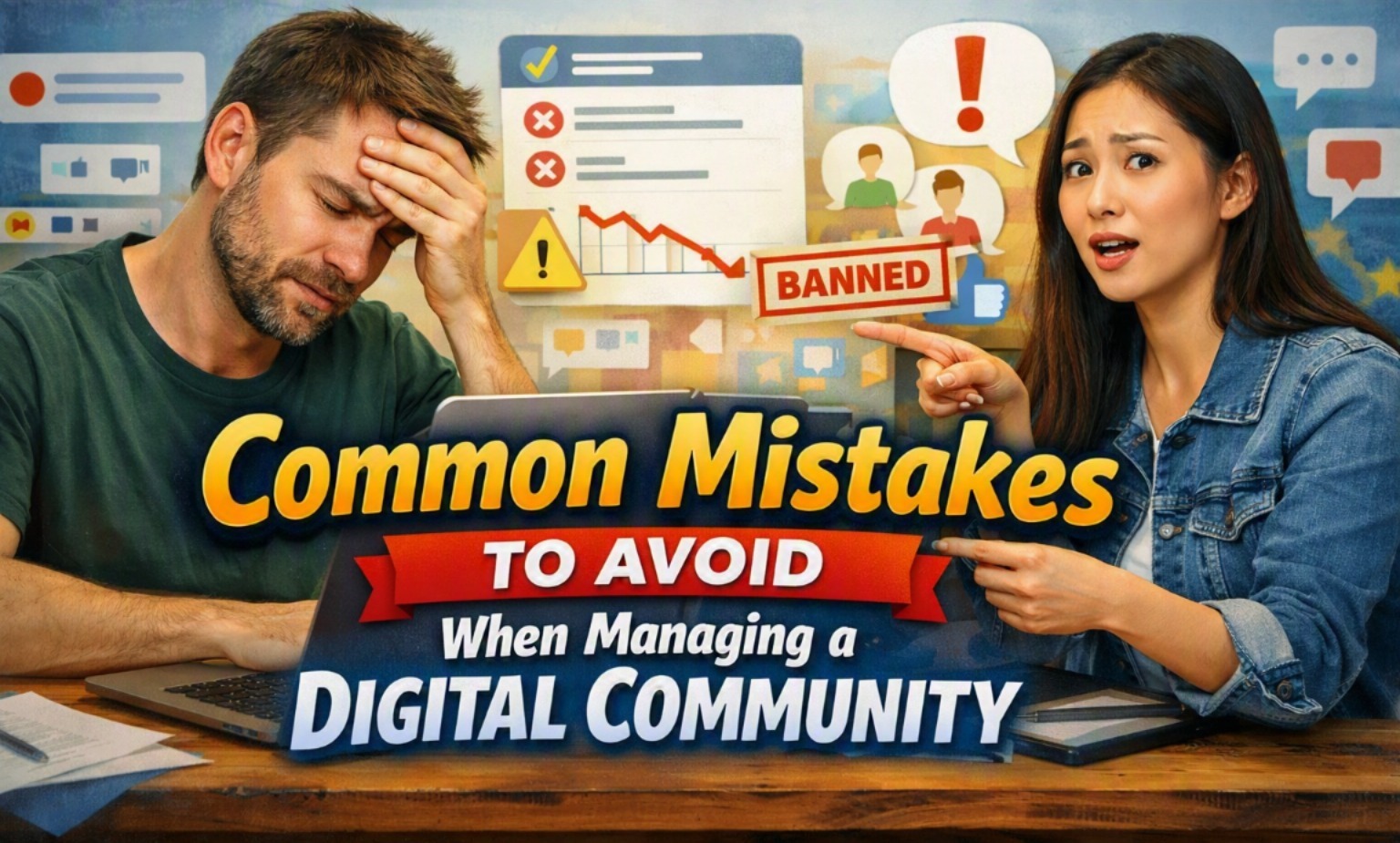
Managing a digital community is about much more than creating a social media group or an online forum. A successful community encourages meaningful conversations, builds trust, and keeps members actively engaged over time. However, many community managers unknowingly make mistakes that reduce participation and weaken member relationships.
Understanding the most common mistakes can help community leaders create a welcoming environment where members feel valued and motivated to contribute. By avoiding these pitfalls, organizations, businesses, and creators can build stronger communities that continue growing in a healthy and sustainable way.
LACK OF CLEAR COMMUNITY GUIDELINES
One of the biggest mistakes in digital community management is failing to establish clear community guidelines. Without clear expectations, members may become confused about acceptable behavior, leading to misunderstandings, spam, or even conflicts. A well-written set of rules creates consistency and helps everyone understand the purpose of the community. It also gives moderators a fair basis for handling inappropriate content.
Clear guidelines should be easy to read, visible to every member, and updated whenever necessary. They should encourage respectful communication, constructive discussions, and mutual support. Members are more likely to participate when they know the environment is safe and organized. Consistent rule enforcement also builds trust between moderators and community members.
IGNORING MEMBER ENGAGEMENT
Many community managers focus only on growing member numbers while forgetting to maintain active engagement. A large community without meaningful interaction often becomes inactive over time. Members want to feel heard, appreciated, and connected to others with similar interests. Ignoring questions or feedback can quickly reduce enthusiasm.
Creating regular discussions, polls, challenges, and educational content keeps conversations alive. Responding to comments and recognizing valuable contributions makes members feel important. Encouraging members to share their experiences also strengthens relationships within the community. Consistent engagement creates long-term loyalty and higher participation.
OVERPROMOTING PRODUCTS OR SERVICES
Another common mistake is turning the community into a constant advertising platform. While promoting products or services is acceptable occasionally, excessive promotion can make members lose interest. People usually join communities to gain knowledge, connect with others, or solve problems, not to see endless advertisements.
A healthy balance between valuable content and promotional posts is essential. Educational articles, helpful tips, discussions, and member success stories provide real value. Promotional content should support the community rather than dominate it. Communities that prioritize helping members often achieve better long-term business results.
FAILING TO HANDLE NEGATIVE BEHAVIOR QUICKLY
Every online community may eventually face spam, harassment, fake accounts, or toxic discussions. Ignoring these problems allows negative behavior to spread and discourages positive members from participating. Fast and fair moderation is critical for maintaining a welcoming environment.
Moderators should monitor discussions regularly and respond professionally to violations. Removing harmful content while explaining moderation decisions promotes transparency. Members appreciate communities where safety and respect are actively protected. Effective moderation strengthens the overall reputation of the community.
NEGLECTING COMMUNITY FEEDBACK
Successful communities continuously improve by listening to their members. Some managers assume they already know what members want and rarely ask for opinions. This approach can lead to declining satisfaction and lower participation over time.
Collecting feedback through surveys, polls, and open discussions helps identify member needs. Community suggestions often inspire better events, content, and features. Even when every suggestion cannot be implemented, acknowledging feedback shows respect. Members who feel heard are more likely to remain active and supportive.
INCONSISTENT CONTENT AND COMMUNICATION
Posting content irregularly is another mistake that reduces community activity. Long periods without updates can make members believe the community is inactive. Consistency helps establish expectations and encourages members to return regularly.
Creating a content schedule helps maintain steady communication. Educational posts, community highlights, live sessions, and discussion topics can be planned in advance. Regular updates also improve visibility across digital platforms. Consistent communication keeps the community active, informed, and connected.
CONCLUSION
Building a successful digital community requires more than simply attracting new members. Community managers must create clear guidelines, encourage engagement, balance promotional content, moderate discussions fairly, listen to feedback, and communicate consistently. Avoiding these common mistakes creates a healthier environment where members feel respected and motivated to participate. A well-managed digital community not only strengthens relationships but also supports long-term growth, collaboration, and trust.
About the Author
Gusti Ayu Tita P
Author — STEKOM University
An active author focused on academic issues, educational technology, and human resource development in the campus environment.















