
Common Mistakes to Avoid When Using Electronic Stamp Duty
Gusti Ayu Tita P
22 Agustus 2026
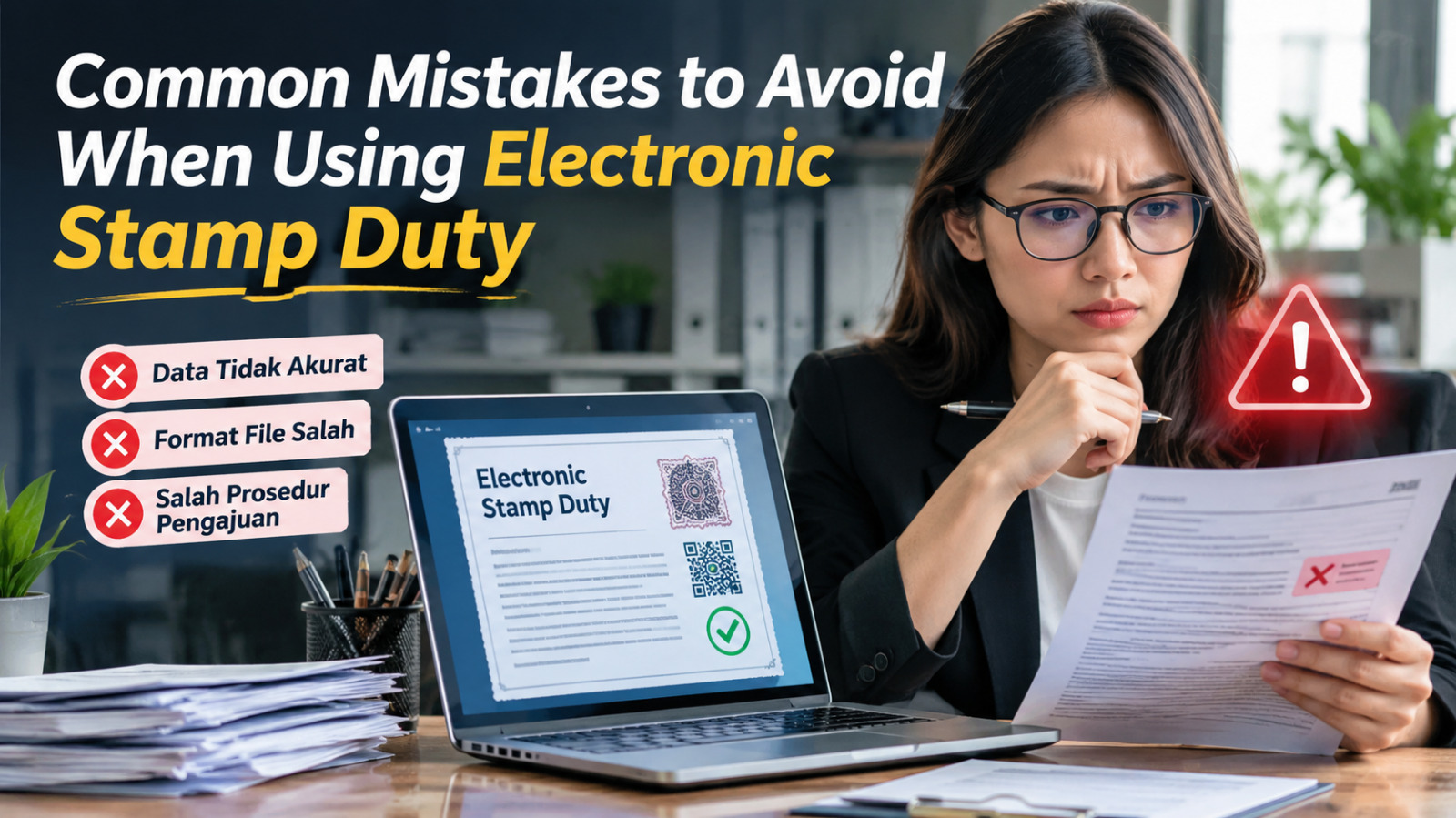
Digital document processing has become common in modern business and administration. Contracts, agreements, statements, and other documents can now be created, signed, stored, and shared electronically. In Indonesia, electronic stamp duty or e-Meterai provides a way to pay stamp duty on eligible electronic documents without printing them first. Under the current regulations, stamp duty is a tax imposed on certain documents, while the electronic stamp is one method used to pay it. The standard stamp duty rate is Rp10,000 per document.
However, using electronic stamp duty still requires attention to several important details. Mistakes in selecting documents, purchasing e-Meterai, placing it incorrectly, or using unofficial services can create administrative problems. Understanding these mistakes can help individuals and businesses manage digital documents more accurately and efficiently.
USING E-METERAI ON THE WRONG DOCUMENT
One common mistake is assuming that every electronic document must use e-Meterai. In reality, stamp duty applies to documents that meet the criteria established by the applicable regulations, including certain civil documents and documents used as evidence in court. Examples can include agreements, statements, certain financial documents, and other documents specified by regulation. Therefore, users should first determine whether a document is actually subject to stamp duty before purchasing or applying an electronic stamp.
Another mistake is focusing only on whether a document is digital without considering its purpose and contents. A PDF file, for example, does not automatically become a document subject to stamp duty simply because it is stored electronically. Checking the document category and transaction purpose first can prevent unnecessary costs and incorrect administrative treatment. When the situation is unclear, users should refer to current guidance from the Directorate General of Taxes or obtain professional tax advice.
BUYING ELECTRONIC STAMPS FROM UNOFFICIAL SOURCES
The second mistake is purchasing electronic stamps from an unreliable or unauthorized source. Because e-Meterai contains security elements and a unique code, users should be careful when choosing where to obtain it. Official information states that PERURI is assigned to produce and distribute electronic stamps, with distribution carried out through designated channels.
Using an unofficial source may create problems with authenticity, payment records, or document verification. Do not simply choose a seller because the price appears cheaper or the process looks easier. Businesses handling sensitive contracts should establish an internal policy requiring employees to use approved purchasing channels. This simple step can reduce the risk of invalid or questionable electronic stamps being attached to important documents.
PLACING THE E-METERAI INCORRECTLY
Another frequent mistake is placing the electronic stamp without following the requirements of the relevant system or document process. Users may rush through the process and fail to check whether the correct file has been uploaded or whether the stamp has been successfully applied. For certain systems, documents can be uploaded individually, while organizations with higher transaction volumes may use an integrated system through an API.
It is also important to distinguish e-Meterai from an electronic signature. An electronic stamp is used to pay stamp duty, while an electronic signature serves a different function related to signing an electronic document. They should not automatically be treated as substitutes for one another. Users should therefore make sure that the document has fulfilled all required signing and stamping procedures before sending it to another party.
FAILING TO CHECK THE E-METERAI DETAILS
A further mistake is failing to inspect the electronic stamp after it has been applied. An e-Meterai has specific identifying and security characteristics, including a unique serial code and information showing the stamp duty value. Current regulations specify that the unique code contains 22 alphanumeric characters, while other information includes the Garuda Pancasila symbol, the words METERAI ELEKTRONIK, and the applicable stamp duty value.
For important business documents, users should verify the result before distribution or storage. Checking the document immediately can help identify errors before they affect a contract or administrative process. Organizations can also maintain a simple verification procedure for employees who regularly process electronic documents. This is particularly useful when hundreds or thousands of documents are handled every month.
EDITING OR REUSING A STAMPED DOCUMENT CARELESSLY
Editing a document after applying e-Meterai can also cause unnecessary complications. Users may change important information, replace pages, or modify the document after the stamping process without checking whether the resulting file remains appropriate for its intended purpose. This can create inconsistencies between the stamped document and the version approved or signed by the parties.
For this reason, it is better to finalize the document before applying the electronic stamp whenever the workflow requires a final version. Businesses should establish a clear sequence such as drafting, reviewing, approving, signing, applying the required stamp duty, and securely storing the final file. Keeping version control is equally important because it helps employees identify which document is the official version. A well-organized process can reduce duplicate files and prevent employees from accidentally using an outdated document.
IGNORING DOCUMENT SECURITY AND RECORD KEEPING
The final mistake is treating e-Meterai as the only security measure for an electronic document. Although electronic stamps contain security features, document protection still depends on how the file is stored, shared, accessed, and managed. PERURI has explained that electronic stamps include multiple security layers, including visible and less visible security features as well as mechanisms supporting verification and audit trails.
Businesses should therefore combine electronic stamp duty with proper document security practices. Important files should be stored in controlled systems, access should be limited to authorized personnel, and final versions should be backed up appropriately. Employees should also avoid sending confidential documents through unsecured channels. By combining accurate stamping with good digital document management, organizations can make their administrative processes more reliable and professional.
CONCLUSION
Electronic stamp duty can make digital administration more practical because eligible documents can be processed without relying entirely on physical paper. However, users need to understand that applying an e-Meterai is not simply a matter of placing a digital stamp on any file. Choosing the correct document, using an official source, applying the stamp properly, checking its details, controlling document versions, and maintaining security are all important steps. These practices can help individuals and businesses reduce administrative errors and manage electronic documents more efficiently. As digital transactions continue to grow, careful use of electronic stamp duty will remain an important part of responsible document management.
About the Author
Gusti Ayu Tita P
Author — STEKOM University
An active author focused on academic issues, educational technology, and human resource development in the campus environment.















