Corruption Hinders National Progress
Gusti Ayu Tita P
23 Juli 2026
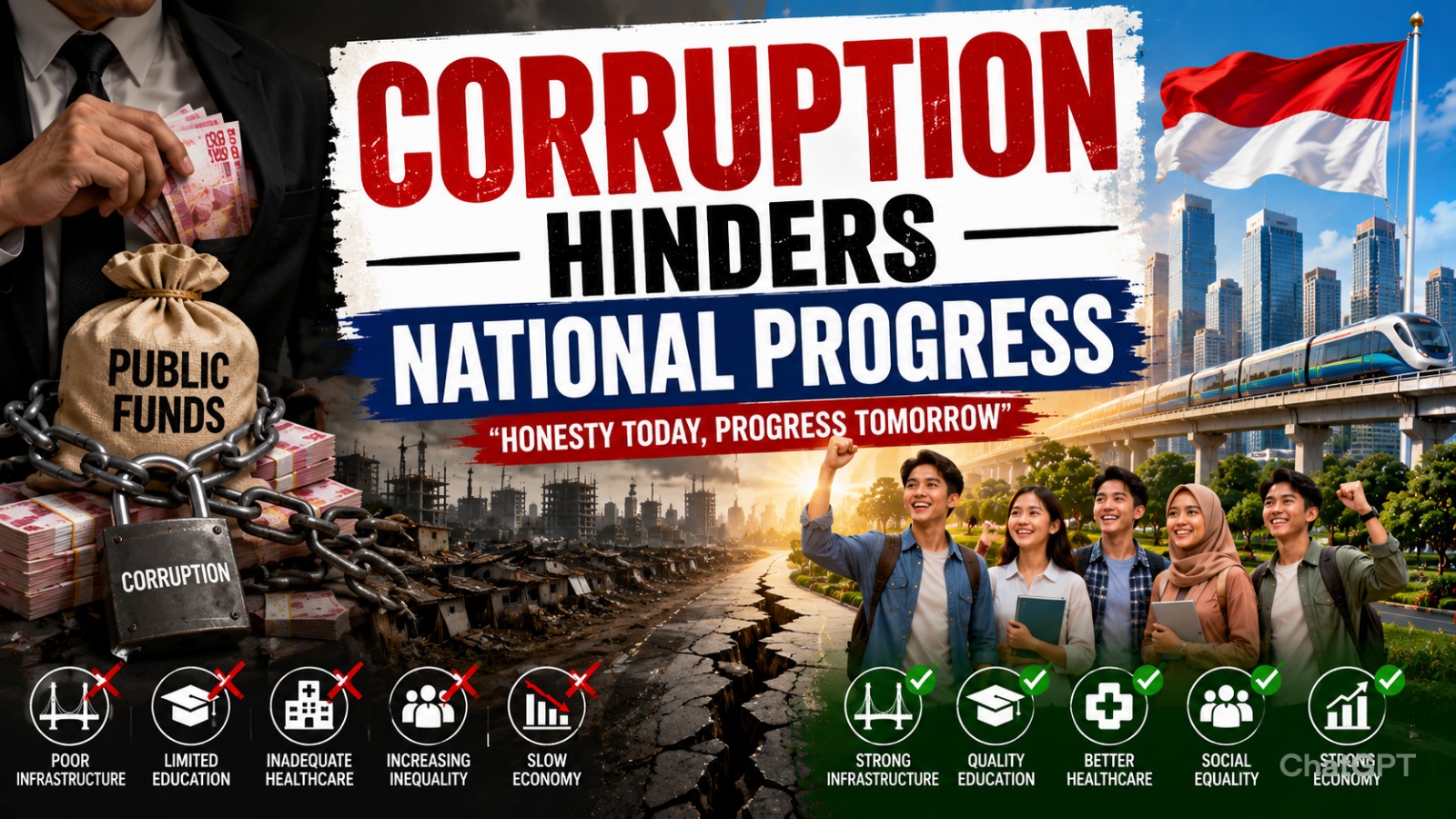
Corruption is one of the biggest challenges faced by many countries around the world. It not only causes financial losses for the government but also damages public trust and slows national development. When corruption becomes widespread, economic growth weakens, social inequality increases, and the quality of public services declines.
A nation can only achieve sustainable progress when honesty, transparency, and accountability are upheld. Therefore, fighting corruption is essential to creating a prosperous and developed society.
THE MEANING OF CORRUPTION
Corruption refers to the abuse of power or authority for personal gain. It can occur in many forms, such as bribery, embezzlement, misuse of public funds, and illegal favoritism.
Corruption often happens in government institutions, public services, and even private sectors. Although some people consider small dishonest actions harmless, these behaviors can grow into larger corrupt practices that seriously harm society.
Understanding the dangers of corruption is important so people can become more aware of the need to maintain integrity and honesty in everyday life.
THE IMPACT OF CORRUPTION ON THE ECONOMY
One of the most serious effects of corruption is economic damage. Government funds that should be used for education, healthcare, and infrastructure are often misused for personal interests.
As a result, development projects become delayed, public facilities remain inadequate, and economic growth slows down. Investors may also lose confidence in countries with high corruption levels, reducing job opportunities and weakening the national economy.
In the long term, corruption can increase poverty and widen the gap between rich and poor communities.
CORRUPTION WEAKENS PUBLIC TRUST
Public trust is an important foundation for national stability and progress. However, corruption can destroy people’s confidence in government institutions and public services.
When citizens frequently witness bribery, abuse of power, and unfair treatment, they may feel disappointed and lose faith in the system. This situation can create social tension and reduce public participation in supporting national development programs.
A government that lacks transparency and accountability will struggle to build strong relationships with its citizens.
THE EFFECT OF CORRUPTION ON EDUCATION AND HEALTHCARE
Corruption also negatively affects education and healthcare systems. Funds allocated for schools, scholarships, hospitals, and medical services may not reach the people who truly need them.
As a result, students may study in poor conditions with limited facilities, while patients may receive inadequate healthcare services. These problems reduce the quality of human resources and hinder future national development.
Without proper education and healthcare, a country will face difficulties in building a competitive and productive society.
THE ROLE OF YOUNG GENERATIONS IN FIGHTING CORRUPTION
Young people play a major role in building a corruption-free future. As future leaders, students and young communities must promote honesty, responsibility, and integrity in their daily lives.
They can also use social media and digital platforms to spread awareness about the dangers of corruption. Educational campaigns, discussions, and community activities can help encourage people to reject dishonest behavior.
By becoming role models of integrity, young generations can inspire positive change in society.
THE IMPORTANCE OF TRANSPARENCY AND ACCOUNTABILITY
Transparency and accountability are essential in preventing corruption. Governments should provide open access to public information and ensure that state budgets are managed responsibly.
Digital technology can also support transparency by improving public services and reducing opportunities for bribery and illegal practices. Online systems make administrative processes faster, more efficient, and easier to monitor.
Strong law enforcement and fair punishment for corrupt actions are also necessary to create justice and maintain public trust.
CONCLUSION
Corruption is a serious problem that hinders national progress and harms society in many ways. It weakens the economy, damages public trust, reduces the quality of education and healthcare, and slows infrastructure development.
To overcome corruption, cooperation between governments, communities, and young generations is essential. By promoting honesty, transparency, and accountability, countries can build a brighter future and achieve sustainable national progress.
About the Author
Gusti Ayu Tita P
Author — STEKOM University
An active author focused on academic issues, educational technology, and human resource development in the campus environment.