Corruption in Education and Its Solutions
Gusti Ayu Tita P
15 Juli 2026
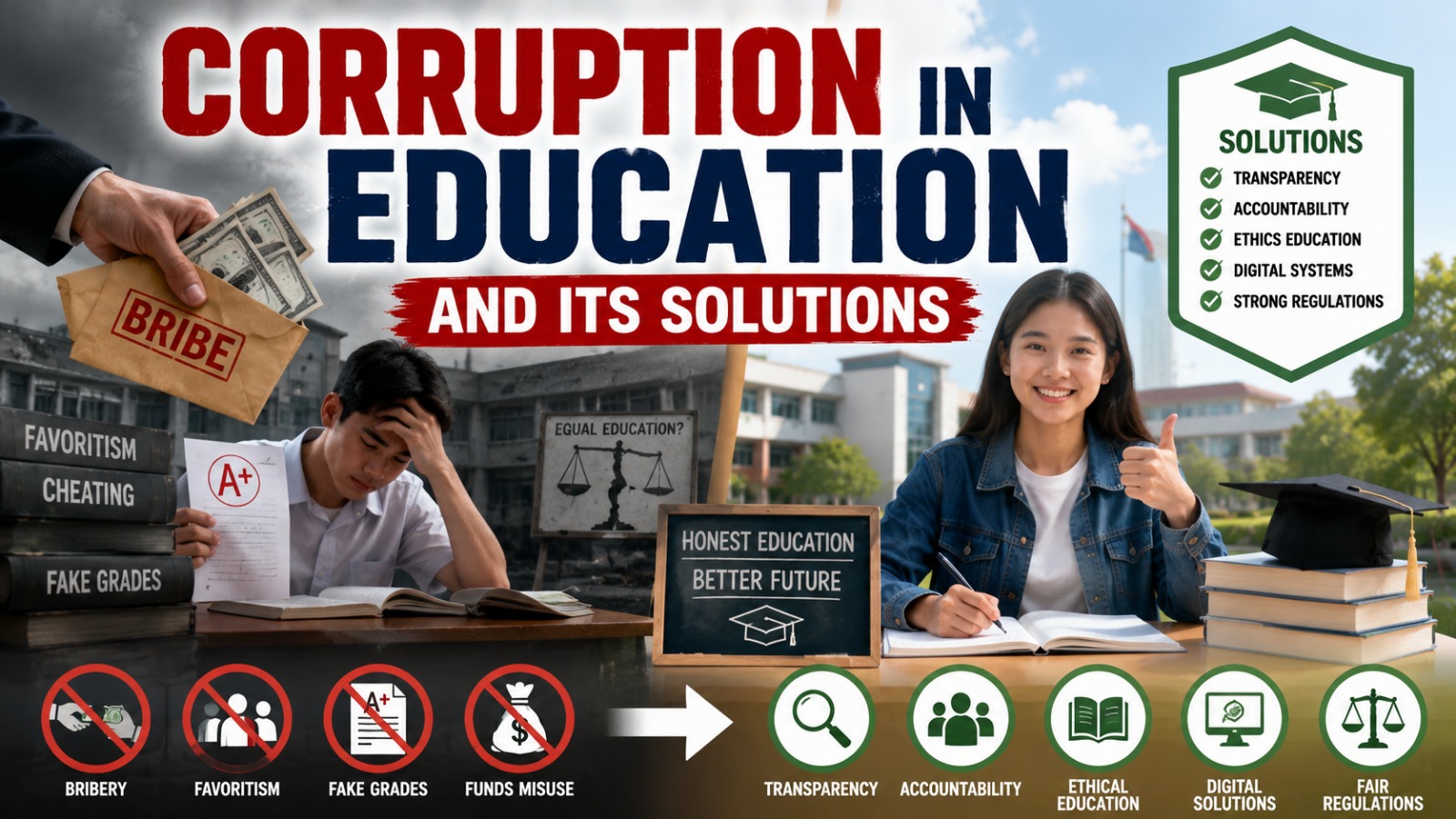
Education is one of the most important foundations of a successful society. It shapes future generations, develops human potential, and supports national progress. However, corruption in the education sector remains a serious problem in many countries. Dishonest practices in schools, universities, and educational institutions can damage learning quality and reduce equal opportunities for students.
Corruption in education not only affects academic systems but also influences moral values within society. When unethical behavior becomes common in educational environments, future generations may grow up believing that dishonesty is acceptable. Therefore, addressing corruption in education is essential for creating fair and high-quality learning systems.
UNDERSTANDING CORRUPTION IN EDUCATION
Corruption in education refers to dishonest or unethical actions carried out for personal benefit within educational systems. These actions may involve teachers, administrators, students, or other parties connected to educational institutions.
Common examples include bribery for school admissions, manipulation of grades, misuse of educational funds, illegal fees, plagiarism, and favoritism in academic opportunities.
CAUSES OF CORRUPTION IN EDUCATION
Several factors contribute to the growth of corruption in educational institutions.
1.WEAK MANAGEMENT SYSTEMS
Poor supervision and lack of transparency create opportunities for misuse of authority and financial resources.
2.LOW ETHICAL AWARENESS
Some individuals may not fully understand the long-term consequences of dishonest practices in education.
3.ECONOMIC PRESSURE
Financial difficulties can encourage unethical behavior such as bribery, illegal payments, or misuse of school resources.
4.LACK OF ACCOUNTABILITY
When violations are ignored or punished unfairly, corrupt behavior can continue without consequences.
NEGATIVE IMPACTS OF CORRUPTION IN EDUCATION
Corruption in education creates serious problems for students, institutions, and society as a whole.
1.REDUCING EDUCATION QUALITY
When grades or academic achievements can be manipulated, learning standards decline and students lose motivation to work honestly.
2.DESTROYING FAIR OPPORTUNITIES
Students who have talent and work hard may lose opportunities to those who use money or personal connections unfairly.
3.WEAKENING MORAL VALUES
Educational institutions are supposed to teach honesty and integrity. Corruption sends the wrong message to young people about ethics and responsibility.
4.DAMAGING PUBLIC TRUST
Parents and communities may lose confidence in schools and universities if corruption becomes widespread.
SOLUTIONS TO PREVENT CORRUPTION IN EDUCATION
Fighting corruption in education requires cooperation between governments, schools, teachers, parents, and students.
1.IMPROVING TRANSPARENCY
Educational institutions should provide clear information regarding budgets, admission processes, scholarships, and academic evaluations.
2.STRENGTHENING SUPERVISION
Regular monitoring and independent audits can help identify misuse of funds and unfair practices.
3.PROMOTING ETHICAL EDUCATION
Schools should teach honesty, discipline, and responsibility as part of character development programs.
4.USING DIGITAL TECHNOLOGY
Online systems for registration, grading, and financial management can reduce opportunities for manipulation and bribery.
5.ENFORCING STRICT REGULATIONS
Clear rules and fair punishment are necessary to discourage unethical behavior within educational institutions.
THE ROLE OF TEACHERS AND PARENTS
Teachers and parents have an important role in building integrity among students.
Teachers should become positive role models by demonstrating fairness and professionalism in classrooms. Parents should encourage honesty and teach children the importance of hard work rather than unfair shortcuts.
When families and schools work together, students are more likely to develop strong ethical values.
HOW STUDENTS CAN HELP FIGHT CORRUPTION?
Students also play a role in creating honest educational environments.
They can reject cheating, avoid plagiarism, report unfair practices, and support integrity programs at school or university. Small actions of honesty can contribute to larger positive changes.
CONCLUSION
Corruption in education is a serious issue that threatens fairness, learning quality, and public trust. If left unresolved, it can damage the moral foundation of future generations and weaken national development.
Creating transparent systems, strengthening accountability, promoting ethical values, and using digital technology are important solutions for preventing corruption in education. By working together, society can build educational institutions that prioritize honesty, equality, and quality for all students.
About the Author
Gusti Ayu Tita P
Author — STEKOM University
An active author focused on academic issues, educational technology, and human resource development in the campus environment.