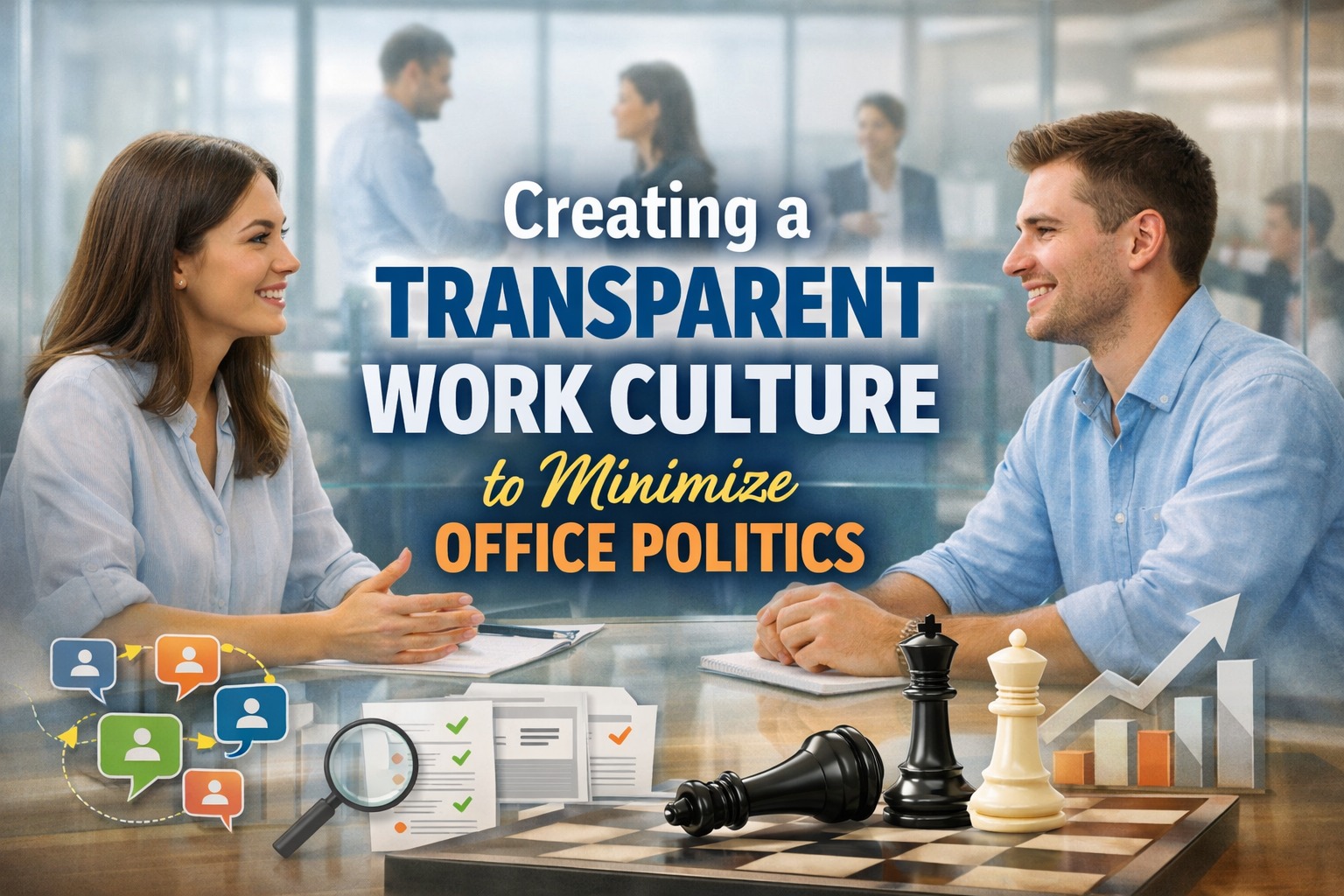
Office politics is a common challenge in many workplaces. It often appears when employees compete unfairly, hide information, or build unhealthy alliances for personal gain. While some level of workplace competition is natural, excessive office politics can reduce trust, lower productivity, and damage employee morale. Companies that fail to address this issue may experience poor teamwork and higher employee turnover. Because of this, many organizations are now focusing on creating a transparent work culture to build a healthier and more professional environment.
A transparent workplace encourages open communication, fairness, and honesty between employees and management. When people clearly understand company goals, responsibilities, and decision making processes, misunderstandings become less common. Employees feel more valued because they know their voices are heard and respected. Transparency also helps reduce rumors and hidden agendas that often trigger workplace conflict. As a result, organizations can create stronger teamwork and long term stability.
WHY OFFICE POLITICS HAPPENS
Office politics usually develops when communication inside the company is weak. Employees may compete for promotions, recognition, or influence without clear rules and fair evaluation systems. In some workplaces, managers may unintentionally create favoritism, causing employees to feel unfairly treated. These situations often encourage gossip, manipulation, and unhealthy competition among coworkers. Over time, the work environment becomes stressful and less productive.
Another major cause is the lack of transparency in leadership. When important decisions are made secretly, employees may assume negative intentions. This can create distrust between staff members and management. Workers may begin relying on personal relationships instead of performance to achieve career growth. A company that ignores these problems can face declining employee satisfaction and reduced collaboration across teams.
THE IMPORTANCE OF TRANSPARENT COMMUNICATION
Transparent communication is one of the most effective ways to minimize office politics. Employees should receive clear information about company policies, performance expectations, and organizational changes. Open communication helps prevent confusion and reduces the spread of misinformation. When employees understand how decisions are made, they are less likely to feel suspicious or excluded. This creates a more positive and cooperative workplace atmosphere.
Managers also play an important role in maintaining transparency. Leaders should encourage employees to ask questions and share feedback without fear. Regular meetings, performance discussions, and open forums can improve trust inside the organization. Honest communication allows employees to focus more on their work instead of workplace drama. In the long run, transparent communication improves both employee engagement and business performance.
BUILDING FAIR LEADERSHIP PRACTICES
Fair leadership is essential for reducing unhealthy office politics. Employees are more motivated when promotions, rewards, and opportunities are based on performance rather than personal connections. Companies should create clear evaluation systems that are easy for everyone to understand. Transparent performance standards help employees feel respected and treated equally. This reduces jealousy and internal conflict within teams.
Leaders should also become role models for professional behavior. Managers who act honestly and consistently can inspire employees to follow the same values. Fair leaders listen carefully to employee concerns and solve conflicts objectively. They avoid favoritism and support teamwork across departments. A workplace with ethical leadership usually experiences stronger trust and higher employee loyalty.
ENCOURAGING COLLABORATION AND TEAMWORK
Strong collaboration can significantly reduce office politics in the workplace. Employees who work together toward shared goals are less likely to compete in unhealthy ways. Team based projects encourage communication, mutual respect, and problem solving among coworkers. When people understand each other's strengths and responsibilities, workplace relationships become healthier. This helps create a more supportive work culture.
Companies can also organize activities that strengthen employee connections. Team discussions, workshops, and collaborative training sessions can improve cooperation between departments. Recognizing team achievements instead of only individual success can further reduce unhealthy competition. Employees become more focused on collective progress rather than personal power. As teamwork grows stronger, office politics naturally becomes less influential.
CREATING A SAFE FEEDBACK CULTURE
A healthy feedback culture allows employees to express concerns openly and professionally. Workers should feel comfortable discussing workplace issues without fear of punishment or discrimination. Companies that encourage constructive feedback can identify problems before they become serious conflicts. Open feedback also helps management understand employee needs more clearly. This improves workplace trust and communication.
Feedback systems should be fair, confidential, and accessible to all employees. Managers can use surveys, one on one meetings, or anonymous feedback tools to gather honest opinions. Employees who feel heard are more likely to remain loyal and motivated. Transparent feedback processes also reduce frustration that may lead to workplace gossip or manipulation. A company that values employee input often develops a stronger and healthier organizational culture.
CONCLUSION
Creating a transparent work culture is one of the best strategies for minimizing office politics. Transparency helps employees build trust, improve communication, and focus on professional growth instead of unhealthy competition. Organizations that prioritize fairness and collaboration often experience better teamwork and stronger employee satisfaction. Ethical leadership and open feedback systems also contribute to a healthier workplace environment. By building a culture based on honesty and respect, companies can achieve long term success while maintaining positive relationships among employees.
About the Author
Gusti Ayu Tita P
Author — STEKOM University
An active author focused on academic issues, educational technology, and human resource development in the campus environment.