Creative Scouting Activities That Improve Youth Skills And Creativity
Gusti Ayu Tita P
16 Juli 2026
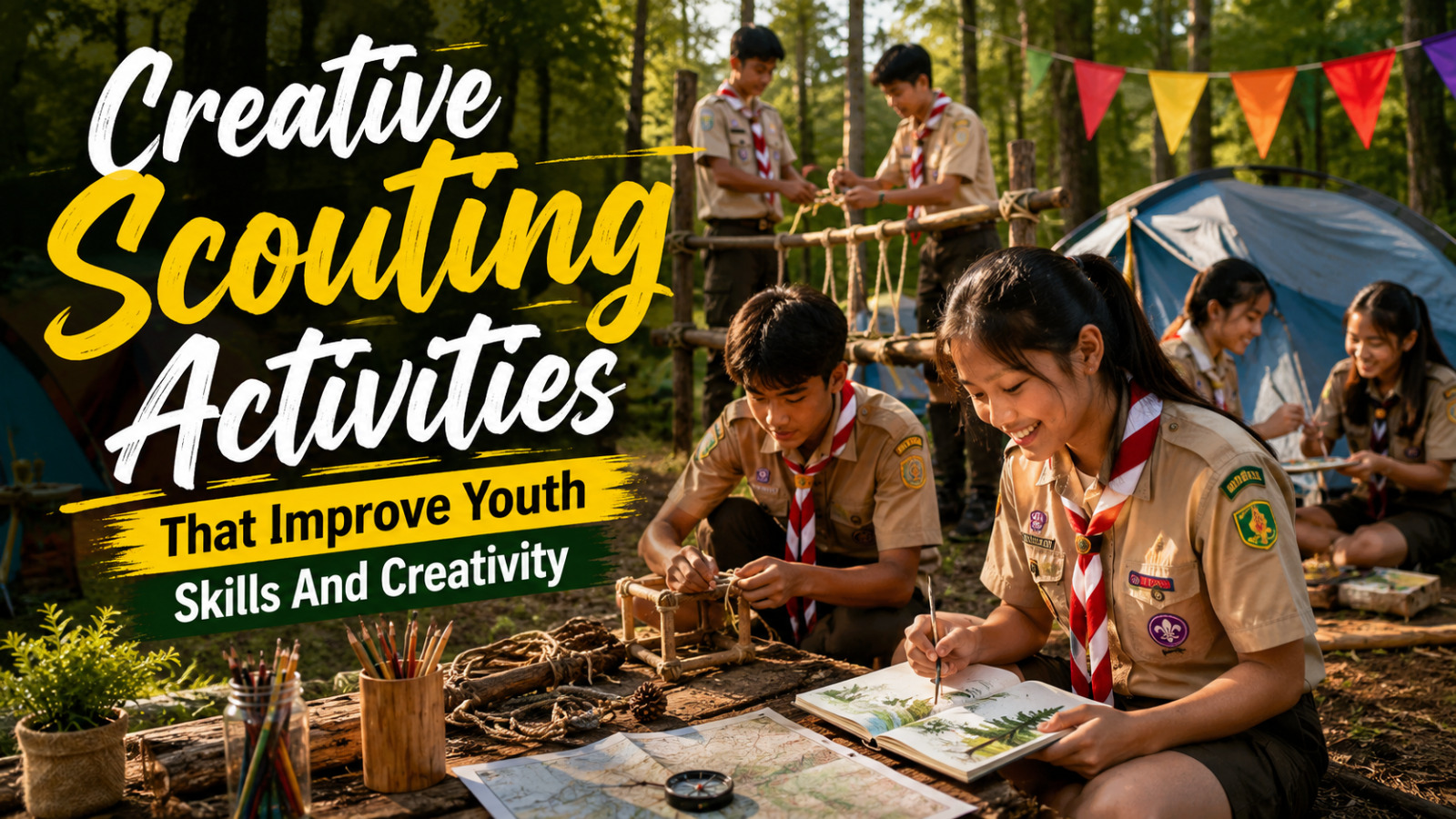
Scouting is more than just an outdoor hobby. It is an educational program that helps young people develop leadership, teamwork, problem-solving, and creative thinking through practical experiences. By participating in engaging scouting activities, children and teenagers learn valuable life skills while enjoying nature and working together with others.
Creative scouting activities encourage participants to think outside the box, communicate effectively, and become more confident in handling different situations. These experiences also strengthen friendships, improve responsibility, and prepare young people for future personal and professional challenges.
WHY CREATIVE SCOUTING ACTIVITIES MATTER
Creative scouting activities provide opportunities for young people to learn by doing instead of simply listening to instructions. Every challenge requires participants to observe, think, cooperate, and make decisions together. This learning approach keeps scouting enjoyable while improving practical knowledge that can be used in everyday life.
Beyond developing outdoor skills, these activities also improve critical thinking, adaptability, and self-confidence. Young people become more willing to take initiative, solve problems independently, and support their teammates. These qualities are valuable not only in school but also in future careers and community involvement.
TEAM BUILDING GAMES THAT STRENGTHEN COOPERATION
Team-building games are among the most effective scouting activities because they require every participant to contribute toward a shared goal. Activities such as obstacle courses, relay races, and group challenges teach members how to communicate clearly and trust one another. Every success depends on cooperation rather than individual achievement.
These games also encourage leadership by allowing different participants to take responsibility during each challenge. As they learn to organize tasks, motivate teammates, and solve conflicts, they naturally develop stronger interpersonal skills. Regular participation helps build lasting confidence and teamwork habits.
OUTDOOR SURVIVAL CHALLENGES THAT BUILD CONFIDENCE
Outdoor survival activities introduce practical skills that prepare young people for unexpected situations. Scouts learn how to build simple shelters, tie useful knots, navigate with a map and compass, and safely start campfires under supervision. These experiences improve both knowledge and responsibility.
Survival challenges also encourage participants to remain calm while solving real-world problems. They discover that careful planning, patience, and teamwork often produce the best results. Successfully completing these tasks creates a strong sense of achievement and motivates continuous learning.
NATURE EXPLORATION TO DEVELOP CREATIVITY
Exploring forests, rivers, parks, or mountains encourages scouts to observe the environment carefully. Nature-based activities such as wildlife identification, leaf collection, and photography stimulate curiosity while teaching environmental awareness. Participants begin to appreciate the beauty and importance of protecting natural resources.
Creative projects inspired by nature, including sketching landscapes, building miniature camps, or creating eco-friendly crafts, further strengthen imagination. These activities combine education with creativity, making learning more enjoyable and memorable. They also encourage participants to think creatively while respecting the environment.
PROBLEM SOLVING ACTIVITIES THAT ENCOURAGE INNOVATION
Problem-solving challenges help scouts improve their ability to analyze situations before making decisions. Activities such as treasure hunts, puzzle stations, bridge-building competitions, and rescue simulations require logical thinking and teamwork. Participants learn to evaluate different solutions before selecting the most effective one.
These experiences improve decision-making, communication, and innovation. Instead of giving up when difficulties appear, scouts become more resilient and resourceful. These valuable skills benefit students throughout their education and later in professional environments.
ARTS AND CRAFTS TO ENHANCE IMAGINATION
Scouting is not limited to physical activities. Arts and crafts provide excellent opportunities for participants to express creativity while learning useful skills. Scouts can design camp flags, decorate journals, build simple wooden projects, or create recycled art using natural materials.
Craft activities also improve patience, attention to detail, and fine motor skills. Working on creative projects teaches participants that every idea has value and that persistence often leads to impressive results. Sharing completed projects also boosts confidence and encourages positive feedback among team members.
LEADERSHIP ACTIVITIES THAT PREPARE FUTURE LEADERS
Leadership development is one of the main goals of scouting programs. Activities such as planning camp events, organizing community service, and leading group discussions allow young people to practice responsibility in supportive environments. They learn how to guide others while remaining respectful and fair.
These leadership experiences help participants become better communicators and decision-makers. They gain confidence in public speaking, delegation, and conflict resolution. As these abilities grow, scouts become more prepared for future academic, professional, and community leadership roles.
CONCLUSION
Creative scouting activities provide much more than outdoor entertainment. They help young people develop leadership, creativity, teamwork, problem-solving, and self-confidence through enjoyable hands-on experiences. Every activity offers meaningful lessons that contribute to personal growth and lifelong learning.
By participating regularly in creative scouting programs, youth become more responsible, adaptable, and prepared for future challenges. These valuable skills continue to benefit them in education, careers, and everyday life, making scouting an excellent foundation for lifelong success.
About the Author
Gusti Ayu Tita P
Author — STEKOM University
An active author focused on academic issues, educational technology, and human resource development in the campus environment.