
Cultural Beliefs That Shaped Stories of Black Magic
Gusti Ayu Tita P
11 September 2026
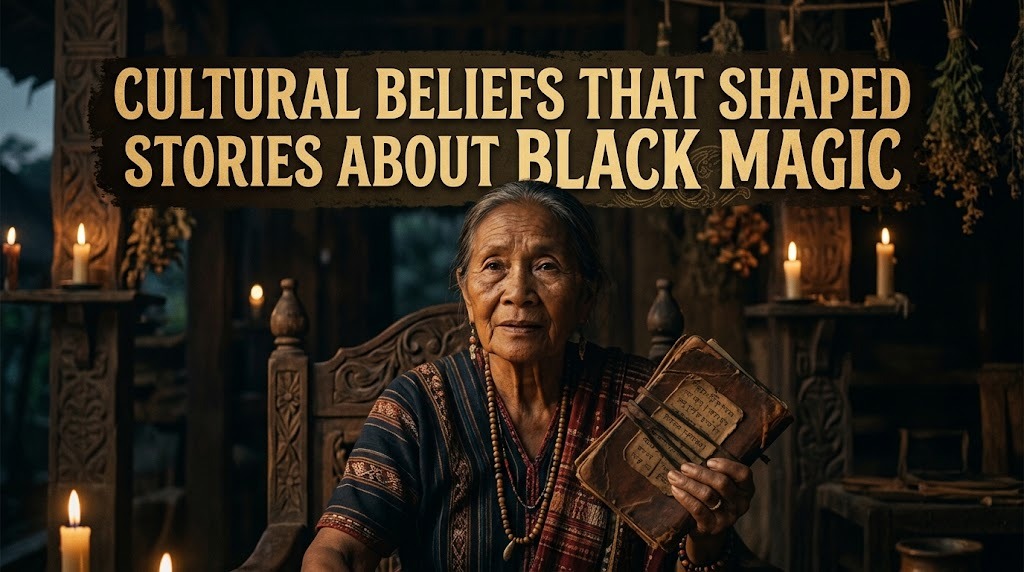
Throughout history, cultural beliefs have played an important role in shaping stories about black magic. Different societies created their own explanations for mysterious events, unusual behavior, illness, bad luck, and other situations that were difficult to understand. These explanations were often influenced by religion, traditions, social values, and local folklore. As stories were passed from one generation to another, ideas about supernatural powers became an important part of cultural storytelling. Understanding these beliefs can help us see black magic not only as a supernatural concept but also as a reflection of how people understood the world around them.
THE ROLE OF CULTURE IN BLACK MAGIC STORIES
Culture strongly influences how communities understand magic and supernatural beliefs. Practices viewed as acceptable in one society could be considered dangerous or forbidden in another. In many traditional communities, supernatural stories were connected to ideas about morality, social order, and the consequences of harmful actions. Stories about black magic therefore often reflected the values and fears of the people who told them. These stories were not always descriptions of actual events but could also function as symbolic explanations for problems within society.
The meaning of black magic has also changed across different historical periods. Some practices that were once described as magic could later be understood through medicine, psychology, or natural science. At the same time, traditional interpretations sometimes remained important because they were connected to family history and cultural identity. Folklore preserved these ideas even when people's understanding of the world changed. This helped supernatural stories survive across generations.
RELIGION AND SPIRITUAL BELIEFS
Religion and spirituality have influenced many stories involving supernatural powers. Religious traditions often contain ideas about good and evil, spiritual beings, temptation, protection, and forbidden practices. These concepts could become part of stories about people who were believed to use supernatural forces for harmful purposes. As a result, black magic was frequently presented as the opposite of spiritual practices associated with protection, morality, or divine authority.
However, religious views of magic are not identical everywhere. Different traditions have developed their own interpretations of supernatural practices and their consequences. Some communities distinguish between healing or protective rituals and practices believed to cause harm. These distinctions shaped the characters, conflicts, and moral lessons found in traditional stories. The connection between magic and morality became one of the most common themes in supernatural folklore.
FEAR OF THE UNKNOWN AND NATURAL EVENTS
Before modern scientific knowledge became widespread, people often searched for explanations for events they could not understand. Sudden illness, crop failure, unusual weather, accidents, or unexplained deaths could sometimes be connected to supernatural causes. In communities where black magic was part of local belief systems, such events could become the subject of stories about curses or harmful magical forces. These stories provided a way to make sense of uncertainty, even when there was no clear evidence about the real cause.
Fear also helped these stories become memorable. A mysterious event could be transformed into a warning about what might happen when someone violated an important cultural rule. Over time, repeated storytelling could make particular beliefs seem familiar and deeply rooted. The fear of the unknown therefore became an important factor in the development of supernatural folklore. Stories about black magic often represented broader human concerns about danger, uncertainty, and loss of control.
FOLKLORE AND ORAL TRADITIONS
Oral traditions were essential in preserving stories about magic before books and mass media became widely available. Elders, storytellers, families, and community members passed stories from one generation to another. During this process, details could change according to the location, storyteller, or cultural environment. This explains why similar supernatural themes can appear in different regions while having very different characters and meanings.
Folklore also gave communities a way to teach younger generations about expected behavior. A story involving a person accused of using black magic might contain lessons about trust, jealousy, greed, revenge, or respect for social rules. The supernatural elements made these lessons more memorable and emotionally powerful. Traditional storytelling was therefore both entertainment and cultural education. Even after modern forms of entertainment appeared, many of these stories continued to influence literature, films, and popular culture.
SOCIAL VALUES AND THE IMAGE OF THE MAGIC USER
The image of a person associated with black magic was often shaped by social fears and cultural expectations. In some stories, the suspected magic user is portrayed as a mysterious outsider, while in others the character may be someone within the community who is accused because of conflict or suspicion. Such portrayals can reveal how societies viewed people who were considered different, powerful, secretive, or difficult to understand. Accusations of supernatural wrongdoing could also emerge from personal disputes, social tensions, or fear of unfamiliar practices.
It is important to distinguish between folklore and historical reality. Belief in magic has sometimes contributed to real social consequences, including accusations and persecution of people believed to be involved in harmful supernatural practices. The details varied greatly between cultures and historical periods. Studying these stories can therefore provide insight into social relationships, fears, and power structures rather than simply treating them as supernatural accounts. This perspective makes the history of black magic stories more complex and meaningful.
BLACK MAGIC STORIES IN MODERN CULTURE AND CONCLUSION
Modern literature, television, films, games, and online media continue to use ideas about black magic and supernatural forces. Contemporary creators often combine traditional beliefs with fictional elements to create mysterious characters, dramatic conflicts, and imaginative worlds. Some modern stories present black magic as purely fictional, while others borrow symbols and themes from older folklore. This demonstrates how cultural beliefs can continue to influence storytelling even when the original social context has changed.
CONCLUTION
In conclusion, cultural beliefs have shaped stories about black magic for centuries. Religion, fear of the unknown, oral traditions, social values, and explanations for unexplained events all contributed to the development of these stories. Their meanings differ from one culture to another, so black magic should not be understood through a single universal definition. Exploring these traditions helps us understand how communities expressed their fears, values, and ideas about morality. More importantly, studying black magic folklore provides a broader view of human history, cultural imagination, and the way societies explain the unknown.
About the Author
Gusti Ayu Tita P
Author — STEKOM University
An active author focused on academic issues, educational technology, and human resource development in the campus environment.