
Cultural Tourism Experiences at Historic Royal Palaces
Gusti Ayu Tita P
4 September 2026
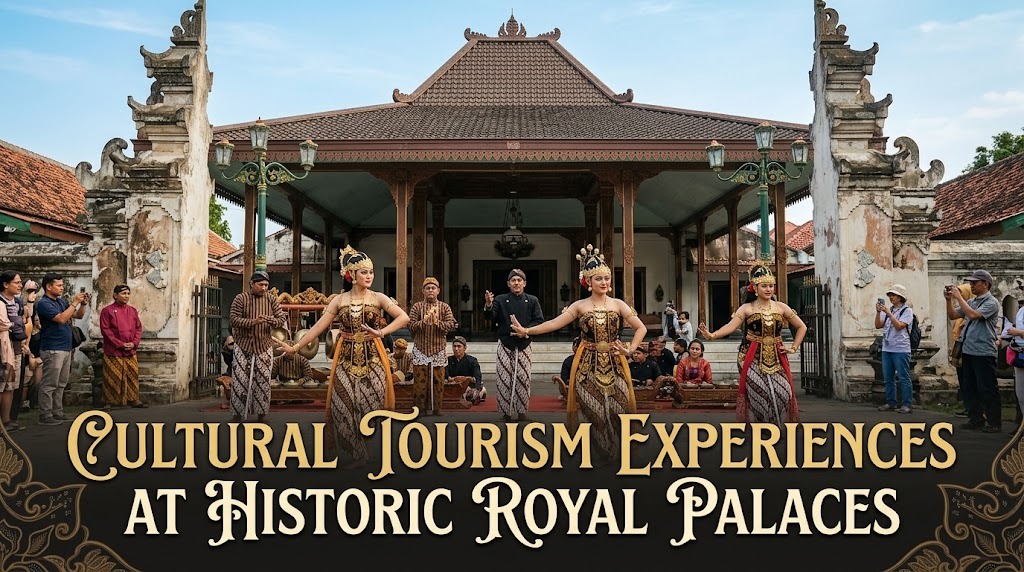
Royal palaces in Indonesia are more than impressive historical buildings. They are living cultural spaces where history, traditions, art, architecture, and local communities continue to interact. For travelers, visiting a royal palace can provide a deeper understanding of Indonesia beyond its natural attractions. Historic palaces, especially those in Java, offer unique experiences through traditional ceremonies, cultural performances, architecture, and heritage collections. This makes palace tourism an interesting choice for anyone who wants to explore the cultural richness of Indonesia.
DISCOVERING THE HISTORY OF INDONESIAN ROYAL PALACES
Historic royal palaces provide an opportunity to learn about the development of Indonesian kingdoms and traditional political systems. Many palaces were once important centers of government, culture, education, and artistic activities. Their history is closely connected with the development of Javanese culture and the wider history of Indonesia. Visitors can discover stories about royal families, traditional leadership, and important historical events through palace buildings and collections. These experiences make history more accessible because tourists can see and experience heritage sites directly.
Several famous palaces in Java continue to maintain their historical functions while welcoming visitors. The Keraton Ngayogyakarta Hadiningrat, for example, is an important cultural landmark in Yogyakarta. The Keraton Surakarta Hadiningrat also preserves various aspects of Surakarta's royal heritage. Visiting these places allows tourists to connect historical information with real architectural spaces and cultural objects.
EXPERIENCING TRADITIONAL PALACE ARCHITECTURE
Palace architecture is one of the most attractive parts of cultural tourism in Indonesia. Traditional Javanese palaces often contain distinctive buildings, courtyards, gates, halls, and open spaces with cultural meanings. Their layouts can reflect ideas about balance, social order, spirituality, and relationships between humans and nature. Visitors can observe details such as traditional roofs, wooden structures, ornaments, and carefully arranged spaces. Each architectural element can provide clues about the values held by the communities that built and maintained the palace.
The experience becomes more meaningful when visitors learn that palace architecture is not simply designed for visual beauty. The arrangement of spaces can represent philosophical ideas and traditional beliefs that have been passed down through generations. Guides, cultural interpreters, and museum information can help tourists understand these meanings. Photography may also be possible in designated areas, although visitors should always respect palace rules. By paying attention to architectural details, travelers can gain a deeper appreciation of Indonesia's cultural heritage.
ENJOYING PALACE ARTS AND CULTURAL PERFORMANCES
Royal palaces have historically played an important role in developing and preserving traditional Indonesian arts. Visitors may encounter traditional dances, gamelan music, wayang performances, batik, and other forms of cultural expression around palace communities. These artistic traditions are not merely entertainment because they can carry historical stories, moral values, and cultural symbolism. Some palace-related performances are presented on specific schedules or during particular cultural events. Therefore, tourists should check the available activities before planning their visit.
Cultural performances can create a more memorable tourism experience because visitors can observe traditions in their original cultural environment. Traditional music and dance can also introduce tourists to artistic forms that may be unfamiliar to them. Direct cultural experiences help connect younger generations and visitors with traditional heritage. At the same time, responsible tourism can support artists and cultural communities that continue to maintain these traditions. This makes palace tourism valuable not only for travelers but also for cultural preservation.
PARTICIPATING IN TRADITIONAL CEREMONIES AND CULTURAL ACTIVITIES
Some historic royal palaces continue to hold traditional ceremonies that reflect long-standing cultural practices. These activities may be connected with religious, historical, agricultural, royal, or community traditions. Events can attract both local residents and tourists who want to understand the meaning behind the ceremonies. However, visitors should remember that not every ceremonial activity is designed as a tourist attraction. Some parts may be private, sacred, or restricted to certain participants.
Tourists can still gain valuable cultural experiences by observing activities that are open to the public. Following instructions from palace staff and local communities is essential during these events. Visitors should dress appropriately, avoid disturbing ceremonies, and ask permission before taking photographs when necessary. Respectful cultural tourism allows visitors to learn without turning traditions into simple spectacles. This approach helps protect the dignity and authenticity of palace traditions.
SUPPORTING HERITAGE AND LOCAL COMMUNITIES
Cultural tourism can contribute to the preservation of historic royal palaces when it is managed responsibly. Visitors can support heritage preservation through entrance fees, guided tours, local cultural products, and services provided by surrounding communities. Tourism can also create opportunities for artisans, performers, guides, small businesses, and cultural organizations. Local economic benefits can encourage communities to continue protecting their cultural heritage. However, tourism development needs to be balanced with conservation so that historical sites are not damaged by excessive visitor activity.
Responsible visitors can contribute simply by following palace regulations and treating cultural objects with care. They should avoid touching protected artifacts, leaving waste, making excessive noise, or entering restricted areas. Purchasing authentic local crafts can also provide direct support for traditional artisans. Sustainable cultural tourism should protect both physical heritage and living traditions. When visitors, communities, cultural institutions, and palace authorities work together, historic palaces can remain valuable cultural destinations for future generations.
CONCLUSION
Historic royal palaces offer much more than beautiful buildings and interesting photographs. They provide opportunities to experience Indonesian history, traditional architecture, performing arts, ceremonies, and community traditions in a meaningful way. Cultural tourism at these sites can help visitors understand the values and stories behind Indonesia's diverse heritage. At the same time, responsible tourism can provide support for local communities and contribute to heritage preservation. A respectful visit to a royal palace is therefore not only a travel experience but also a way to appreciate and help protect Indonesia's cultural identity.
About the Author
Gusti Ayu Tita P
Author — STEKOM University
An active author focused on academic issues, educational technology, and human resource development in the campus environment.