
Developing Love For The Homeland In The Modern Era
Gusti Ayu Tita P
5 Agustus 2026
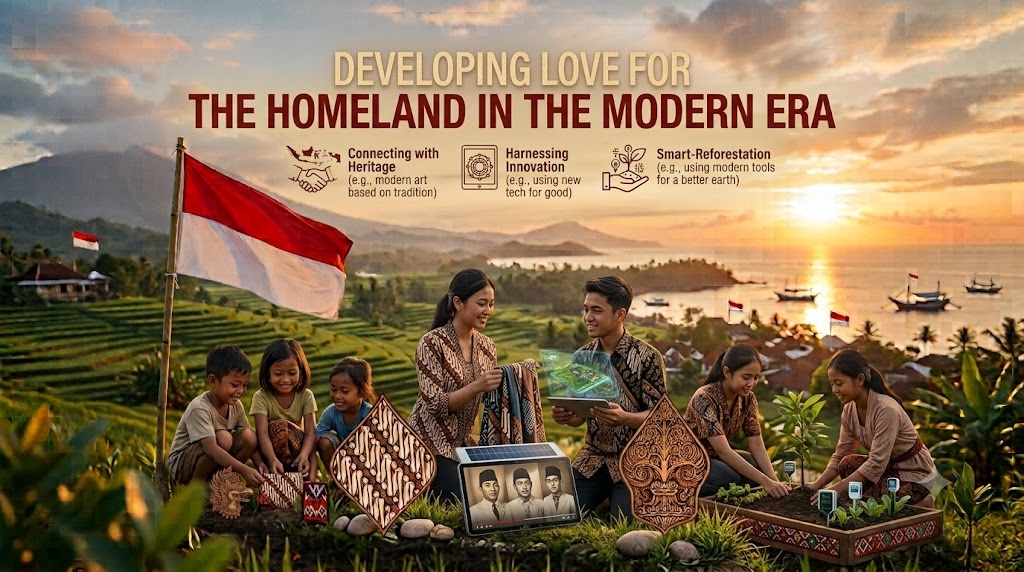
Love for the homeland remains an important value even as society continues to experience rapid technological and social changes. Modern life has changed the way people communicate, study, work, and interact with the world. These changes provide many opportunities to introduce Indonesian culture and achievements to a wider audience. However, people still need to maintain a strong connection with their national identity.
Developing love for the homeland in the modern era does not mean rejecting technology or global culture. Instead, it means using modern opportunities while maintaining respect for Indonesian values, culture, and diversity. Young people can express their national pride through education, creativity, digital activities, environmental care, and social participation. In this way, nationalism can remain relevant in everyday modern life.
UNDERSTANDING LOVE FOR THE HOMELAND IN MODERN LIFE
Love for the homeland means having pride, concern, respect, and responsibility toward one's country. In Indonesia, this attitude can be expressed by appreciating national culture, respecting diversity, following laws, and contributing to society. It also involves protecting Indonesia's identity while being open to positive developments. Therefore, love for the homeland should be understood as an active responsibility rather than simply an emotional feeling.
Modern society offers many ways to demonstrate national pride. Learning about Indonesian history, supporting local businesses, protecting the environment, and creating positive digital content are practical examples. People can also contribute through their professions, education, and community activities. These actions show that nationalism can adapt to changing lifestyles without losing its core values.
THE CHALLENGES OF NATIONAL PRIDE IN THE MODERN ERA
Modernization and globalization have created greater connections between Indonesia and other countries. People can easily access foreign cultures, international trends, and information from around the world. These developments can provide valuable knowledge, but they may also influence people's attitudes toward their own culture. Without proper awareness, some individuals may become less interested in local traditions and national identity.
Another challenge is the rapid spread of information through social media. Misinformation, hate speech, online conflicts, and negative content can affect social relationships. Young people need strong digital literacy to distinguish useful information from misleading content. Developing critical thinking and responsible online behavior can help protect both personal well-being and national unity.
USING TECHNOLOGY TO STRENGTHEN NATIONAL PRIDE
Technology provides opportunities to introduce Indonesian culture, tourism, products, history, and achievements to a global audience. Social media users can create videos, articles, photographs, podcasts, and other forms of content that highlight Indonesia's strengths. Digital platforms can also help local communities promote their businesses and cultural activities. These opportunities allow people to express national pride in modern and creative ways.
However, technology should be used responsibly. Users should verify information, respect other people's opinions, protect privacy, and avoid spreading harmful content. Digital communication should strengthen relationships instead of creating unnecessary conflict. Responsible technology use is therefore an important part of developing love for the homeland today.
PRESERVING INDONESIAN CULTURE IN A GLOBALIZED WORLD
Indonesia has a rich cultural heritage consisting of traditional languages, dances, music, clothing, food, crafts, and customs. Globalization provides opportunities to introduce this heritage to international audiences. Young people can participate by learning traditional arts and creating modern content inspired by Indonesian culture. This approach can make cultural preservation more attractive to younger generations.
Preserving culture does not mean refusing new influences. Instead, it involves appreciating Indonesian identity while learning from positive aspects of other cultures. Cultural exchange can provide new ideas for art, education, business, and creativity. What matters is maintaining respect for Indonesian heritage while adapting responsibly to modern developments.
SUPPORTING INDONESIAN PRODUCTS
Supporting Indonesian products is a practical way to demonstrate care for the national economy. Local products include food, fashion, handicrafts, creative works, services, and many other goods. Choosing quality local products can support entrepreneurs and small businesses. A strong domestic business sector can contribute to employment and economic development.
Young people can also become promoters and creators of local products. Social media marketing, online stores, creative branding, and entrepreneurship can help Indonesian businesses reach wider markets. Young entrepreneurs can combine local resources with modern technology to create innovative products. In this way, economic participation can become a meaningful form of modern nationalism.
DEVELOPING NATIONAL PRIDE THROUGH EDUCATION
Education plays an important role in developing love for the homeland. Through education, people can learn about Indonesian history, national values, culture, and the responsibilities of citizens. Education also helps young people develop critical thinking and problem-solving skills. These abilities are important for facing the challenges of a rapidly changing world.
Learning can take place beyond traditional classrooms. Reading, digital learning, cultural activities, organizations, training programs, and community projects can provide valuable experiences. Students can use their knowledge to create useful innovations and contribute to society. A well-educated generation can become an important foundation for Indonesia's future.
RESPECTING DIVERSITY AND STRENGTHENING TOLERANCE
Indonesia's diversity is one of its greatest national characteristics. People have different religions, ethnic backgrounds, languages, cultures, traditions, and opinions. Respecting these differences is essential for maintaining social harmony. Love for the homeland should encourage people to appreciate diversity rather than use differences as reasons for conflict.
Tolerance can be practiced through respectful communication, cooperation, fair treatment, and willingness to understand different perspectives. Young people can develop tolerance through school activities, organizations, community programs, and social interactions. They should also avoid discriminatory language and behavior. Strong tolerance can help maintain unity in a diverse modern society.
PROTECTING THE ENVIRONMENT AS A FORM OF NATIONAL RESPONSIBILITY
Indonesia's natural environment is an important national asset. Forests, oceans, rivers, mountains, and other natural resources provide benefits for communities and the economy. Protecting these resources is therefore a form of responsibility toward the homeland and future generations. Environmental awareness should be developed as part of modern citizenship.
People can contribute through reducing waste, saving energy, protecting water resources, planting trees, and keeping public areas clean. Young people can also participate in environmental campaigns and community projects. Social media can be used to educate others about sustainable habits. Caring for nature demonstrates that love for the homeland includes protecting the places where people live.
BUILDING UNITY THROUGH SOCIAL PARTICIPATION
National unity depends on people's willingness to cooperate and care for one another. Modern communities need citizens who are willing to participate in social, educational, cultural, and environmental activities. Community service and volunteer programs can bring people from different backgrounds together. These activities can strengthen trust and social relationships.
Young people can participate through student organizations, volunteer groups, community projects, and social campaigns. They can contribute their skills while learning about the needs of other people. Such experiences develop empathy, teamwork, and responsibility. Active social participation can therefore strengthen both individual character and national unity.
THE ROLE OF YOUNG PEOPLE IN THE MODERN ERA
Young people are among the most important groups in developing modern Indonesian nationalism. They are familiar with technology, social media, digital communication, and new forms of creativity. These abilities can be used to promote Indonesian culture, businesses, education, and positive social messages. Young people can become important contributors to Indonesia's development.
At the same time, they need strong character to use modern opportunities responsibly. Discipline, creativity, tolerance, critical thinking, and responsibility can help them make wise decisions. They should be proud of their national identity while remaining open to useful global knowledge. By combining modern skills with national values, young people can help create a stronger future for Indonesia.
PRACTICING LOVE FOR THE HOMELAND EVERY DAY
Love for the homeland does not have to involve complicated activities. It can begin with following rules, respecting others, studying seriously, keeping the environment clean, and supporting local products. People can also show national pride by using social media responsibly and promoting positive information about Indonesia. Everyday actions can become meaningful when they are practiced consistently.
The most important factor is consistency and genuine responsibility. A single positive action may have a limited effect, but repeated positive habits can influence others. Families, schools, communities, and young people can work together to create an environment where national values are practiced naturally. In this way, love for the homeland can remain strong despite rapid changes in modern society.
CONCLUSION
Developing love for the homeland in the modern era requires a balance between national identity and openness to positive change. Technology and globalization should not be seen only as challenges because they also provide opportunities to promote Indonesian culture, products, education, and achievements. People can use modern tools to create positive contributions while continuing to respect national values. This approach makes nationalism relevant to contemporary life.
Ultimately, love for the homeland is demonstrated through responsible actions. Preserving culture, supporting local products, respecting diversity, protecting the environment, using technology wisely, and participating in society are practical examples. Young people have a particularly important role because they can combine creativity and technology with strong national values. By practicing these values consistently, Indonesian society can remain united, proud, and prepared for the future.
About the Author
Gusti Ayu Tita P
Author — STEKOM University
An active author focused on academic issues, educational technology, and human resource development in the campus environment.















