Developing Practical Skills Through Quality Diploma Education
Gusti Ayu Tita P
16 September 2026
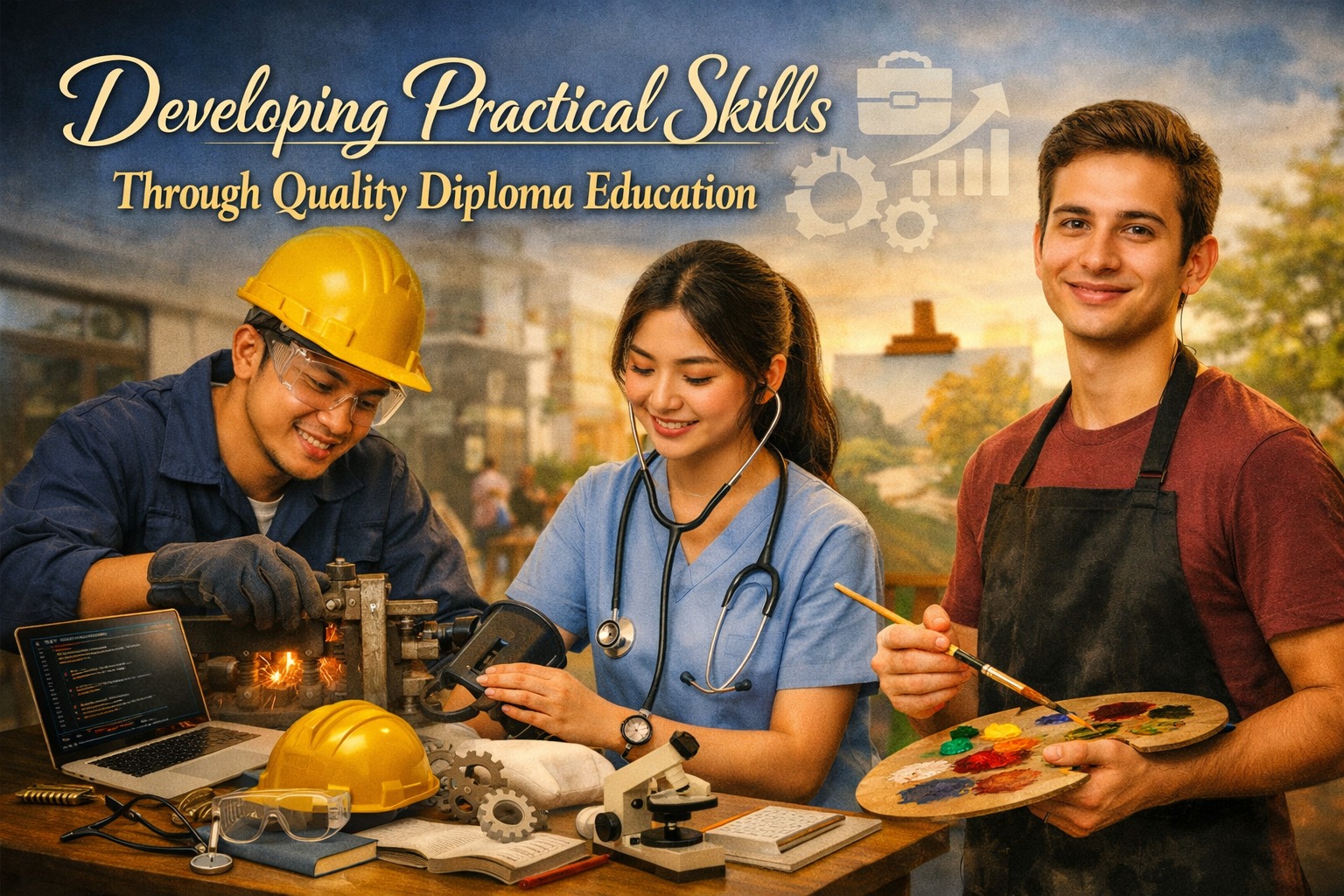
Diploma education is a learning pathway designed to focus on practical skills development rather than only theoretical knowledge. It prepares students to face real workplace challenges through structured and applied learning methods. In today’s competitive world, many learners choose vocational training because it offers faster entry into professional careers. This type of education emphasizes hands-on learning that directly relates to industry needs. As a result, graduates are often more confident and job-ready compared to those with purely academic backgrounds.
One of the key strengths of quality diploma education is its focus on real-world applications. Students are trained to solve practical problems using relevant tools and techniques. This approach helps build strong foundational skills that are essential in various industries. It also ensures that learners understand how to apply concepts in actual work environments. Therefore, diploma programs are increasingly seen as an effective path toward career readiness.
BENEFITS OF PRACTICAL SKILLS DEVELOPMENT IN DIPLOMA PROGRAMS
Practical skills development is one of the most important advantages of diploma programs. Students learn by doing, which helps improve understanding and retention of knowledge. This method allows learners to gain confidence in performing tasks independently. It also reduces the gap between education and industry expectations. Many employers prefer graduates who already have hands-on learning experience because they require less training time.
Another major benefit is improved problem-solving ability. Through real-life simulations and assignments, students learn how to think critically and act quickly. Diploma programs also encourage teamwork and communication skills, which are essential in the workplace. These abilities contribute to better adaptability in different job roles. Overall, practical training ensures that learners are better prepared for real professional environments.
INDUSTRY-BASED LEARNING AND HANDS-ON EXPERIENCE
Industry-based learning is a core component of modern diploma education. It allows students to gain exposure to actual workplace conditions through internships and practical projects. This experience helps bridge the gap between classroom learning and industry expectations. Students become familiar with tools, systems, and workflows used in their chosen fields. As a result, they develop stronger vocational training competencies that are highly valued by employers.
Hands-on experience also builds discipline and responsibility. Students learn how to manage time, complete tasks efficiently, and follow professional standards. This type of learning also helps them understand workplace ethics and communication styles. Many institutions collaborate with industries to ensure training remains relevant and updated. Therefore, graduates are better prepared for immediate employment opportunities.
CAREER READINESS AND EMPLOYABILITY ADVANTAGES
One of the main goals of diploma education is to improve career readiness among students. Graduates are equipped with job-specific skills that make them more competitive in the job market. Employers often seek candidates who already understand practical workflows and industry expectations. This is why diploma graduates tend to have higher employability rates in certain sectors. Their ability to adapt quickly gives them a strong advantage in early career stages.
In addition, quality diploma education helps students explore different career paths before entering the workforce. They can identify their strengths and interests through practical exposure. This reduces the risk of career mismatch and increases long-term job satisfaction. Employers also value candidates who demonstrate both technical and soft skills. Therefore, diploma programs play a significant role in building strong professional foundations.
HOW QUALITY DIPLOMA EDUCATION SHAPES FUTURE PROFESSIONALS
Quality diploma education plays a crucial role in shaping skilled and competent professionals. It combines theoretical understanding with strong hands-on learning experiences. This balanced approach ensures that students are not only knowledgeable but also capable of performing real tasks. Over time, learners develop confidence and independence in their chosen fields. This makes them valuable assets in any organization they join.
Furthermore, diploma programs encourage continuous improvement and lifelong learning. Students are trained to adapt to new technologies and industry changes. This adaptability is essential in today’s fast-changing job market. By focusing on practical skills development, institutions help create professionals who are ready for future challenges. As a result, diploma graduates remain relevant and competitive in various industries.
CONCLUSION
In conclusion, diploma education offers a powerful pathway for developing job-ready individuals. Its emphasis on vocational training, industry-based learning, and career readiness makes it highly effective. Students benefit from real-world exposure that strengthens both technical and soft skills. This approach ensures that graduates are prepared to meet industry demands with confidence. Ultimately, diploma programs help shape skilled professionals who can succeed in a competitive global workforce.
About the Author
Gusti Ayu Tita P
Author — STEKOM University
An active author focused on academic issues, educational technology, and human resource development in the campus environment.