
Difference Between Village BLT and Other Social Assistance Programs
Gusti Ayu Tita P
9 September 2026
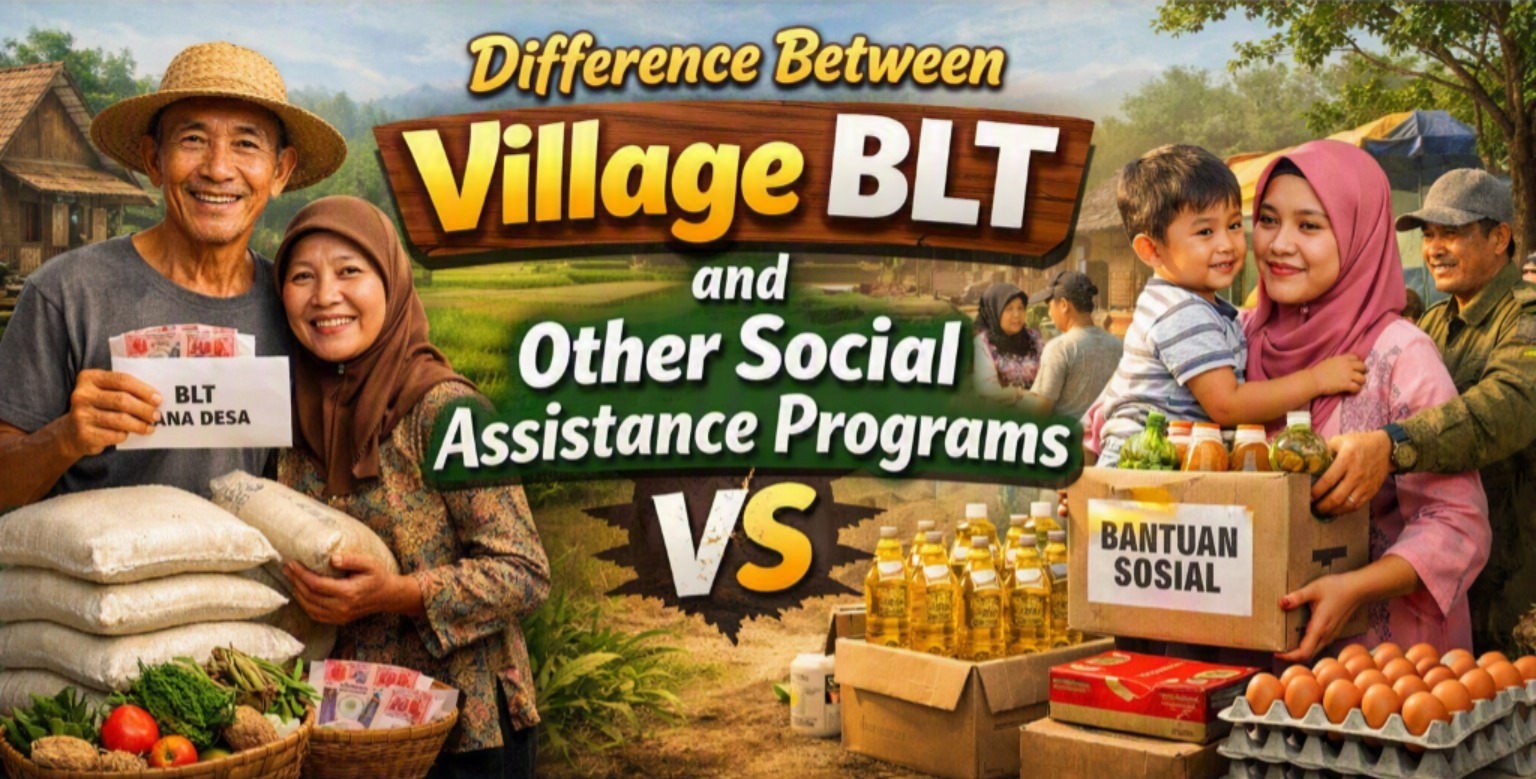
Social assistance programs in Indonesia are designed to help people facing economic difficulties, but each program has a different purpose, target group, and distribution mechanism. Village BLT is one form of assistance specifically connected to villages and funded through the Village Fund. Meanwhile, other programs such as PKH, Program Sembako, and PIP are designed for different needs and administered through different government systems. Understanding these differences can help families identify which assistance may be relevant to their circumstances. This article explains the difference between Village BLT and other social assistance programs in a simple and practical way.
WHAT IS VILLAGE BLT?
Village BLT or Bantuan Langsung Tunai Desa is direct cash assistance funded from the Village Fund and intended to support efforts to address extreme poverty. For the 2026 fiscal year, the use of Village Funds for Village BLT is guided by Minister of Villages and Development of Disadvantaged Regions Regulation Number 16 of 2025. The regulation prioritizes poor families who live in the relevant village, with government data used as a reference for identifying potential beneficiaries.
The maximum assistance is Rp300,000 per beneficiary family per month, and payments may be made for up to three months at once. The beneficiary list is discussed and agreed upon through a Village Deliberation and then formally determined by the village head. Therefore, Village BLT has a strong village-level selection process compared with national social assistance programs. Its main role is to provide a social safety net for families experiencing serious economic vulnerability.
HOW IS VILLAGE BLT DIFFERENT FROM PKH?
Program Keluarga Harapan or PKH is a conditional social assistance program managed within the national social protection system. According to the Ministry of Social Affairs, PKH provides assistance to poor and vulnerable families and is distributed in stages during the year through designated banks or the postal system. Unlike Village BLT, PKH is not a Village Fund program because it belongs to the national social assistance framework. Its eligibility and assistance structure are also associated with specific beneficiary components and conditions within the program.
The main difference is therefore found in the source of funding, administration, and program design. Village BLT is connected to Village Funds and is implemented through village-level decision-making, while PKH is a national program administered through the social protection system. A family should not assume that receiving one type of assistance automatically means receiving every other program. In fact, the 2026 Village BLT guidance specifically provides that certain selection criteria can consider whether a family receives PKH.
VILLAGE BLT AND PROGRAM SEMBAKO
Program Sembako is another social assistance program, but its primary purpose is to help low-income, poor, and vulnerable families meet their food needs. The Ministry of Social Affairs explains that Program Sembako is the development of the former Bantuan Pangan Nontunai or BPNT program. Beneficiary families can use the assistance to obtain various food commodities, including sources of carbohydrates, animal protein, plant protein, vitamins, and minerals.
This makes the difference between Village BLT and Program Sembako particularly clear. Village BLT provides cash assistance, while Program Sembako is focused on food assistance and is distributed through a designated mechanism such as the KKS. Village BLT is also specifically linked to the use of Village Funds and village-level beneficiary determination. Program Sembako, on the other hand, operates as part of the broader national food social assistance system. Both programs aim to reduce economic pressure, but they address different types of household needs.
VILLAGE BLT AND PROGRAM INDONESIA PINTAR
Program Indonesia Pintar or PIP has a different focus because it is intended to support access to education. The program provides assistance to students from poor or vulnerable families so that economic difficulties do not prevent them from continuing their education. In 2026, the government also expanded PIP to include TK students, with assistance of Rp450,000 per year for the targeted beneficiaries.
Unlike Village BLT, PIP is not intended to function as general household cash assistance. Its purpose is closely related to educational expenses and preventing school dropout. PIP is administered through the education system, with assistance paid to the accounts of designated student beneficiaries. Therefore, a household may need to understand the specific purpose and requirements of each program instead of viewing all government assistance as the same type of benefit.
KEY DIFFERENCES IN ELIGIBILITY AND DISTRIBUTION
The eligibility criteria are one of the most important differences between Village BLT and other social assistance programs. Village BLT for 2026 prioritizes poor families living in the relevant village, with government data serving as a reference and village deliberation playing a role in finalizing the beneficiary list. When government data is insufficient, the regulation also provides criteria that can be considered, including loss of livelihood, households with members experiencing chronic illness or disability, single elderly households, and poor families headed by women.
Other programs have their own targeting mechanisms and administrative systems. PKH focuses on poor and vulnerable families under its conditional assistance framework, while Program Sembako focuses on food assistance for eligible beneficiary families. PIP focuses on students who need educational support because of economic circumstances. Consequently, eligibility for one program does not automatically guarantee eligibility for another program. Families should check the applicable requirements and official beneficiary information rather than relying only on assumptions or informal lists.
WHY UNDERSTANDING THE DIFFERENCE MATTERS?
Understanding the difference between Village BLT and other social assistance programs helps families avoid confusion about who qualifies, what assistance is provided, and how it is distributed. Village BLT is particularly connected to village-level poverty reduction and the use of Village Funds. PKH provides conditional social assistance through the national social protection system, while Program Sembako focuses on household food needs. PIP has an educational purpose and supports students from economically disadvantaged families. These differences show that government assistance programs are not interchangeable, even when they serve people facing economic hardship.
People should also use official information when checking assistance status or asking about eligibility. Village governments can provide information related to the Village BLT beneficiary determination process, while national programs have their respective government agencies and administrative channels. Keeping personal and household information updated can also help ensure that government data reflects current circumstances. Most importantly, receiving or not receiving a particular program should not be interpreted without considering the specific rules that apply to that program.
CONCLUSION
The difference between Village BLT and other social assistance programs can be understood by looking at their funding source, objectives, beneficiaries, and distribution methods. Village BLT is funded through the Village Fund and is intended to help address extreme poverty at the village level. PKH provides conditional social assistance, Program Sembako helps meet food needs, and PIP supports access to education. Each program therefore has a distinct function within Indonesia's broader social protection system.
For communities, understanding these differences makes it easier to seek the right information and avoid misinformation about government assistance. The rules for Village BLT can also change according to the applicable fiscal-year regulations, so information should be checked against the latest official guidance. For 2026, the governing regulation for Village Fund priorities is Permendesa PDT Number 16 of 2025, which is currently in force.
About the Author
Gusti Ayu Tita P
Author — STEKOM University
An active author focused on academic issues, educational technology, and human resource development in the campus environment.















