
Differences Between Genuine and Duplicate Land Certificates
Gusti Ayu Tita P
28 Agustus 2026
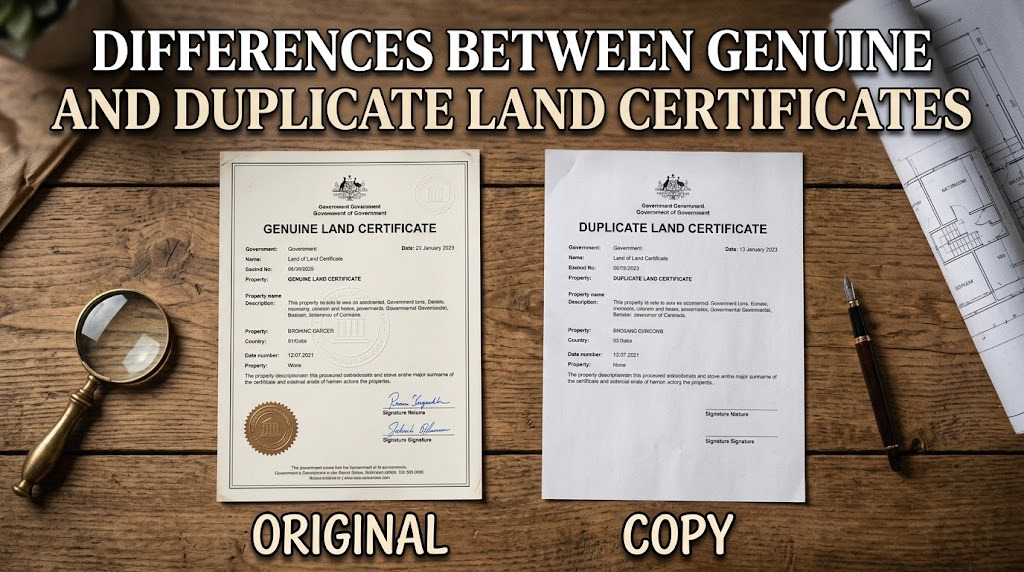
Understanding the difference between a genuine land certificate and a duplicate land certificate is important before buying, selling, or transferring land. A genuine certificate is connected to an officially registered land right and should correspond with the relevant land records. A duplicate certificate, on the other hand, refers to a situation where more than one certificate is associated with the same land parcel or overlapping areas.
The distinction cannot be determined only by looking at the physical document. Official land records, ownership history, physical data, and legal documents need to be examined to establish the actual status of a certificate. Careful verification can help prevent disputes and reduce the risk of problematic land transactions.
UNDERSTANDING A GENUINE LAND CERTIFICATE
A genuine land certificate is a legitimate document issued through the applicable land registration system. It contains information related to the registered land rights, such as the rights holder, land area, location, and survey information. The information should correspond with the official land records. A genuine certificate therefore needs to be considered together with the registration data behind it.
However, the word genuine does not simply mean that the certificate looks authentic. A document may appear convincing while its information still needs to be verified. Buyers and landowners should compare the certificate with official records before relying on it for an important transaction. This is especially important when there are indications of conflicting documents or ownership claims.
UNDERSTANDING A DUPLICATE LAND CERTIFICATE
A duplicate land certificate refers to a situation in which more than one certificate is associated with the same land parcel or overlapping land areas. This can create uncertainty because different parties may rely on different documents to claim rights over the property. The issue may result from administrative problems, inaccurate surveys, overlapping boundaries, or complications in the history of land registration. The exact cause needs to be established through proper examination.
A duplicate certificate should also be distinguished from a forged certificate. A duplicate situation concerns conflicting or overlapping registered documents, while a forged certificate involves a document that has been unlawfully created or altered. These are different problems and may require different methods of handling. Therefore, an official examination is important before determining what has actually happened.
KEY DIFFERENCES BETWEEN THE TWO
The main difference is the relationship between the certificate and the registered land data. A genuine certificate should correspond with the official registration information for the relevant land parcel. In a duplicate certificate situation, another certificate may also refer to the same parcel or an overlapping area. This creates a conflict that needs to be investigated through the appropriate procedures.
Another important difference concerns the ownership and registration history. A genuine certificate should have a traceable basis for its issuance and transfer of rights. A duplicate certificate situation may involve conflicting histories, inaccurate boundaries, or inconsistencies between records. The date of issuance alone should not be used to determine which certificate has the stronger legal position.
HOW TO VERIFY THE CERTIFICATE?
The safest way to determine the status of a land certificate is to conduct official verification through the relevant Land Office. The certificate information can be compared with registered physical and legal data. Important details include the land area, location, boundaries, survey information, and registered rights holder. The applicable verification procedures should be confirmed with the relevant authority.
The ownership history should also be reviewed by examining sale and purchase deeds, inheritance documents, gift documents, and other relevant records. Physical inspection of the land can help determine whether the boundaries match the documents. If discrepancies are found, the transaction should not be rushed. Additional clarification should be obtained before buying or transferring the property.
WHAT TO DO IF A DUPLICATE IS FOUND?
If verification indicates a possible duplicate certificate, the landowner should collect all relevant documents and follow the official dispute-resolution process. Avoid altering or destroying original certificates and supporting records. The issue can be reported or discussed with the relevant land authority according to the applicable procedures. Keeping complete documentation can make the examination easier.
If another party claims the same land, mediation may be considered when appropriate. If the dispute cannot be resolved through mediation, further administrative or legal measures may be necessary. A land law professional can help explain the options when the matter becomes complicated. Until the status is clarified, avoid selling or transferring the disputed land.
CONCLUSION
The main difference between genuine and duplicate land certificates lies in their relationship with official land registration data and the existence of conflicting or overlapping certificates. A genuine certificate should correspond with the registered information for the relevant land parcel. A duplicate certificate situation occurs when more than one certificate is associated with the same or overlapping land.
Because physical appearance alone cannot establish legal status, verification through the relevant Land Office is essential. Ownership history and supporting documents should also be examined carefully. If a dispute occurs, mediation or appropriate legal measures can be considered to achieve greater certainty regarding land rights.
About the Author
Gusti Ayu Tita P
Author — STEKOM University
An active author focused on academic issues, educational technology, and human resource development in the campus environment.















