Differences Between Indie Game Developers and Large Studio Developers
Gusti Ayu Tita P
24 Juli 2026
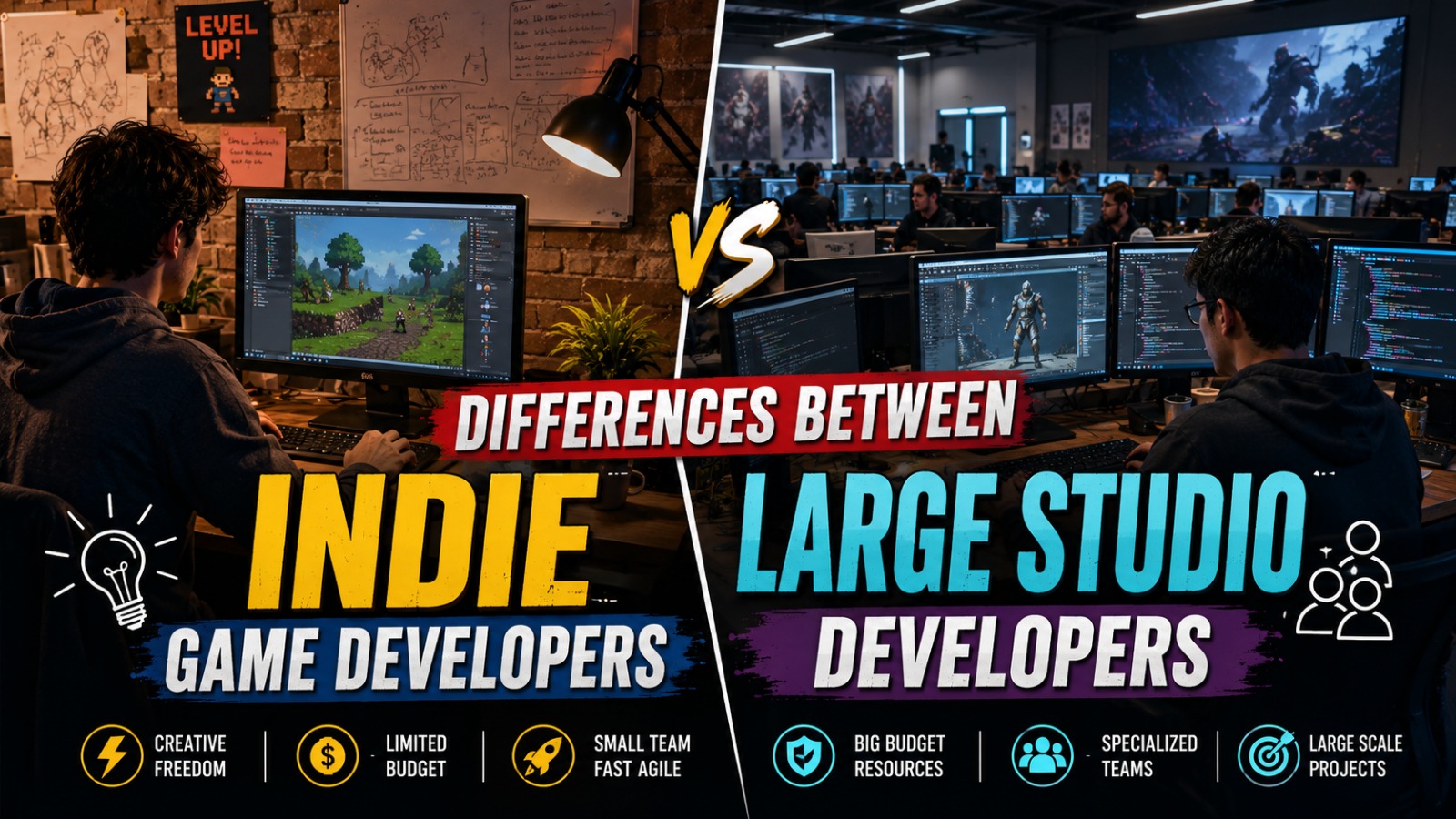
The gaming industry offers a wide range of career opportunities for developers with different skills, interests, and ambitions. One of the biggest decisions for aspiring Game Developers is choosing between working as an Indie Developer or joining a Large Studio. While both paths focus on creating engaging video games, they differ significantly in terms of team structure, creative freedom, budgets, and project management.
Understanding these differences can help developers choose a career path that matches their goals and working style. Whether you dream of building original independent games or contributing to blockbuster titles, each option offers unique challenges and rewarding experiences.
TEAM STRUCTURE AND WORK ENVIRONMENT
An Indie Game Developer usually works alone or with a small team where every member handles multiple responsibilities. A programmer may also contribute to game design, marketing, testing, or customer support. This flexible environment encourages developers to learn a wide variety of skills while actively participating in every stage of production.
In contrast, Large Studio Developers typically work in specialized departments. Each team member focuses on a specific role such as programming, animation, sound design, or quality assurance. This structured workflow improves efficiency and allows developers to master their particular area of expertise.
CREATIVE FREEDOM AND DECISION MAKING
One of the greatest advantages of Indie Development is creative freedom. Independent developers have complete control over gameplay, storytelling, visual style, and overall project direction. They can experiment with innovative ideas without needing approval from multiple management levels.
Large studios generally follow established production processes and business strategies. Creative decisions often involve producers, directors, investors, and publishers. Although developers still contribute valuable ideas, major design choices usually require team discussions and careful planning to meet commercial objectives.
BUDGET AND AVAILABLE RESOURCES
Budget is another major difference between independent developers and large studios. Indie Developers often work with limited financial resources, requiring them to prioritize essential features and manage expenses carefully. They frequently rely on affordable software, crowdfunding, or personal investment to complete their projects.
Large studios usually have significantly larger budgets that support advanced technologies, professional equipment, experienced specialists, and extensive marketing campaigns. These resources enable developers to create visually stunning games with complex mechanics and large-scale content. However, larger investments also increase production expectations and financial risks.
PROJECT SCALE AND DEVELOPMENT PROCESS
Independent games are generally smaller in scope, allowing teams to complete projects within shorter development cycles. Developers can quickly test new ideas, make design adjustments, and release updates based on community feedback. This flexibility often leads to highly innovative and unique gaming experiences.
Large studio projects typically involve hundreds of professionals working together over several years. Every stage, including concept development, production, testing, optimization, and marketing, follows a detailed schedule. While this process requires more coordination, it often results in highly polished games with exceptional production quality.
CAREER GROWTH AND LEARNING OPPORTUNITIES
Working as an Indie Developer allows individuals to gain experience across multiple disciplines. Developers improve programming, design, marketing, business management, and communication skills while handling various responsibilities. This broad experience is especially valuable for entrepreneurs planning to establish their own game studios.
Large studios provide structured career development with mentorship, specialized training, and opportunities to work alongside experienced professionals. Developers can focus on mastering advanced technical skills while contributing to internationally recognized game franchises. Both career paths offer valuable learning experiences depending on personal goals.
RISK AND LONG TERM STABILITY
An Indie Game Developer enjoys greater independence but also faces higher financial uncertainty. The success of an independent project often depends on market demand, player reception, and effective promotion. Developers must carefully manage resources while adapting to changing industry trends.
Large studio employment generally provides greater financial stability through regular salaries, employee benefits, and long-term projects. However, developers may have less creative flexibility and must follow company policies and production schedules. Choosing between independence and stability depends on each developer's personal priorities and career aspirations.
CONCLUSION
Both Indie Game Developers and Large Studio Developers play essential roles in advancing the gaming industry. Independent development encourages innovation, creative freedom, and versatile skill development, while large studios offer specialization, advanced resources, and structured career growth.
There is no universally better career path because each offers unique advantages and challenges. By understanding these differences, aspiring Game Developers can make informed decisions and pursue opportunities that align with their interests, strengths, and long-term professional goals.
About the Author
Gusti Ayu Tita P
Author — STEKOM University
An active author focused on academic issues, educational technology, and human resource development in the campus environment.