Differences Between Major and Small Train Stations You Should Know
Gusti Ayu Tita P
10 Agustus 2026
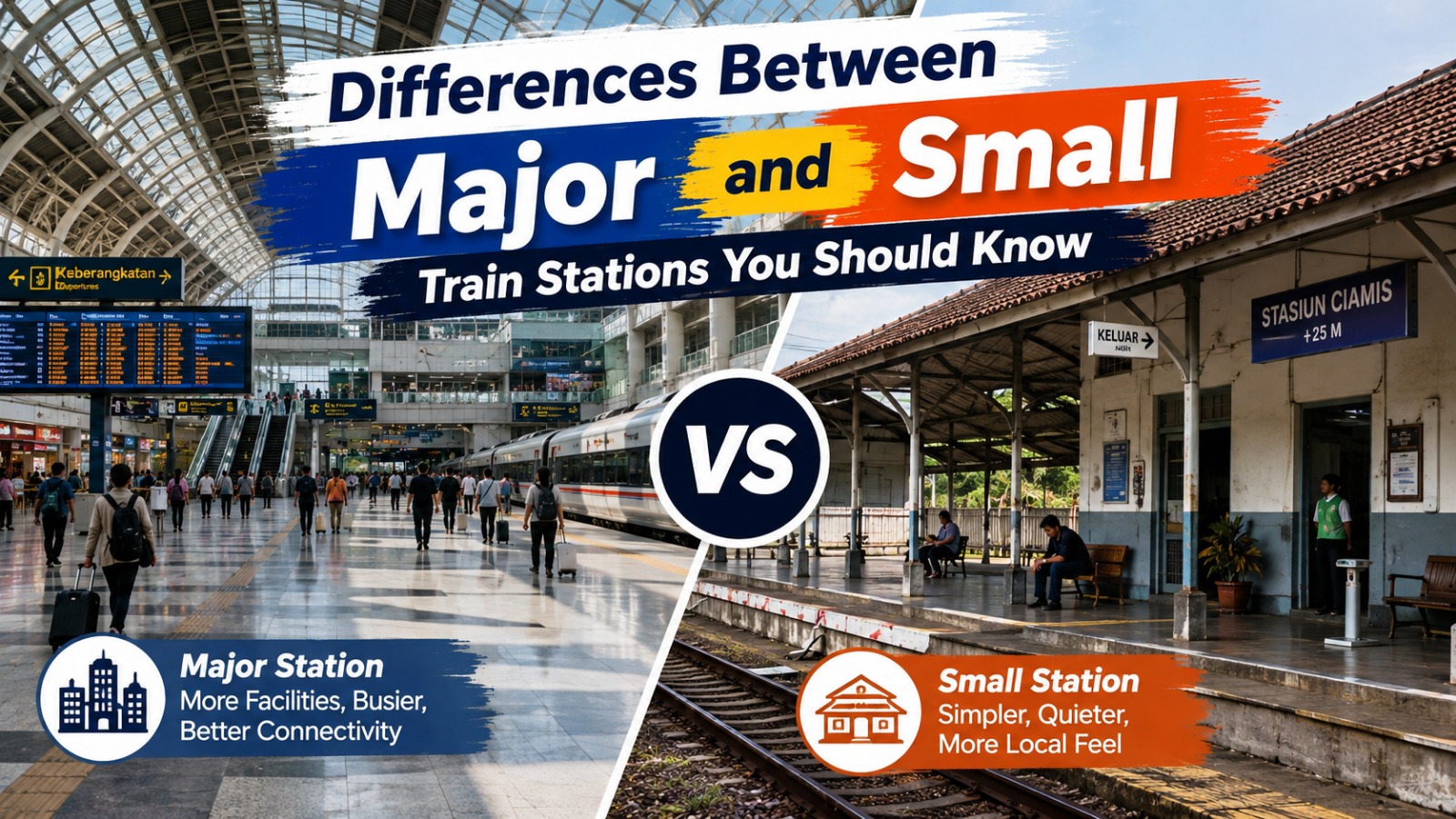
Train stations come in different sizes and serve different transportation needs. Major train stations usually handle large numbers of passengers and provide many services, while small train stations generally serve local communities with simpler facilities. Understanding these differences can help passengers know what to expect before arriving. The size of a station can affect navigation, waiting time, available facilities, and transportation connections. Although their features may differ, both types of stations play important roles in the railway network.
PASSENGER VOLUME AND STATION SIZE
The most obvious difference between major and small stations is the number of passengers they serve. Major stations are often located in large cities, transportation centers, or important railway corridors. They may handle thousands of passengers throughout the day and can become extremely busy during peak hours. Small stations generally serve fewer passengers and are more focused on local or regional travel. Their smaller passenger volume usually makes them quieter and easier to navigate.
Because of their different passenger volumes, station buildings are designed differently. Major stations may have large halls, multiple entrances, several platforms, and extensive passenger facilities. Small stations may have a single main building, fewer platforms, and limited indoor space. The design of each station usually reflects its operational requirements. Station capacity is therefore closely related to the size and function of the railway facility.
NUMBER OF PLATFORMS AND TRAIN SERVICES
Major stations usually have multiple platforms because they accommodate many train services. Different platforms may serve different routes, train types, or departure directions. Passengers need to check electronic displays and announcements carefully to identify the correct platform. A large station may require several minutes to walk from the entrance to the boarding area. Good navigation skills are therefore useful when traveling through a major station.
Small stations generally have fewer platforms and train services. In some locations, only a limited number of trains stop throughout the day. This can make the boarding process simpler, although passengers still need to check schedules carefully. A smaller station may have fewer alternative services if a train is delayed or canceled. Limited service frequency is one factor travelers should consider when using smaller stations.
DIFFERENCES IN FACILITIES
Major stations usually provide a wider range of passenger facilities. These may include restaurants, cafés, convenience stores, ATMs, waiting lounges, elevators, escalators, information counters, charging points, and accessible toilets. Some large stations may also provide commercial areas, prayer rooms, luggage services, or connections to other transportation systems. These facilities are designed to support large passenger volumes and longer waiting periods.
Small stations generally provide only essential facilities needed for basic railway travel. These may include ticketing services, waiting areas, toilets, platforms, and information boards. Some smaller stations may have limited commercial services or no shops at all. Passengers traveling through small stations should therefore prepare food, drinks, or other necessities in advance when appropriate. Knowing available facilities can help travelers avoid inconvenience.
TRANSPORTATION CONNECTIONS
Major train stations are often designed as transportation hubs. They may connect railway services with buses, taxis, urban rail systems, ride-hailing services, bicycles, and other transportation options. This allows passengers to transfer between different modes without traveling far from the station. Integrated transportation can make major stations particularly useful for long-distance and urban travel.
Small stations may have fewer transportation connections. Passengers may depend on local buses, taxis, motorcycles, private vehicles, or walking to reach their final destination. In some areas, transportation options may be limited outside the station. Travelers should check their onward transportation before arriving. Last-mile connectivity can be an important consideration when using a smaller station.
NAVIGATION AND PASSENGER EXPERIENCE
Navigating a major station can be challenging for first-time visitors. Large buildings, multiple platforms, different entrances, and high passenger volumes can make finding the correct location more complicated. Digital signs, maps, announcements, and station staff are useful resources for navigating these environments. Passengers should arrive early enough to find their platform without rushing.
Small stations usually offer a simpler passenger experience. Fewer platforms and smaller buildings can make it easier to identify important areas. However, simpler facilities may also mean fewer information services or staff members. Passengers should remain attentive to signs and announcements regardless of station size. Simple does not mean that preparation is unnecessary.
WAITING AREAS AND COMFORT
Major stations often have larger waiting areas because they serve more passengers. Some may provide comfortable seating, air conditioning, Wi-Fi, charging stations, and commercial services. These facilities can be especially useful when passengers have long waiting periods. However, major stations may become crowded during peak travel times, which can reduce comfort.
Small stations typically have more limited waiting facilities. Seating may be available but could be smaller in quantity or located in open-air areas. The quieter environment can be an advantage for passengers who prefer less crowded spaces. At the same time, there may be fewer services available during long delays. Passenger comfort depends on both facilities and operating conditions.
SECURITY AND STATION MANAGEMENT
Major stations generally require more complex security and crowd management systems because of their high passenger volumes. They may use surveillance cameras, security personnel, controlled gates, emergency systems, and detailed passenger-flow management. Staff may be present in several parts of the station to assist travelers. These systems help maintain safety in busy environments.
Small stations also require security, although their systems may be simpler depending on their location and passenger volume. Staff may perform several responsibilities at the same time, including ticketing and passenger assistance. Travelers should still follow all safety rules and report problems to authorized personnel. Safety remains important regardless of station size.
TICKET SERVICES AND TECHNOLOGY
Major stations are more likely to offer a variety of digital and automated services. These may include ticket machines, electronic gates, digital information displays, mobile ticketing, and cashless payment systems. Such technology helps manage large passenger volumes efficiently. Passengers can often complete several travel processes without visiting a traditional ticket counter.
Small stations may have fewer automated facilities, although this varies depending on the railway operator and location. Some passengers may still need to purchase tickets through staff or use digital services before arriving. Travelers should check the available ticketing method in advance. Technology levels can vary significantly between stations, so preparation is useful.
IMPORTANCE WITHIN THE RAILWAY NETWORK
Major stations often serve as important points within regional or national railway networks. They may function as intercity hubs, transfer points, or major destinations. A large number of routes may pass through these stations, allowing passengers to travel to many locations. Their strategic importance can make them central to transportation planning and urban development.
Small stations are equally important because they provide access to railway services for local communities. They can connect smaller towns and rural areas with larger cities and regional centers. Without these stations, some communities may have fewer public transportation options. A small station can have a major social and economic role even if its physical size is limited.
WHICH STATION IS BETTER FOR PASSENGERS?
There is no universal answer because the best station depends on the passenger's travel needs. A major station may be preferable for travelers who need more transportation connections, facilities, and train options. A small station may be more convenient for passengers who value a quieter environment and simpler navigation. The location of the station and available train services are also important factors.
Passengers should consider departure schedules, transportation connections, available facilities, and travel distance when choosing a station. Checking station information before traveling can prevent unexpected problems. Both major and small stations can provide effective railway services when properly managed. Convenience depends more on the travel situation than station size alone.
CONCLUSION
Major and small train stations differ in size, passenger volume, facilities, train services, transportation connections, technology, and station management. Major stations generally provide more services and connections but can be crowded and more difficult to navigate. Small stations are often simpler and quieter but may offer fewer facilities and transportation options. Despite these differences, both types are essential to a functioning railway network. Understanding their characteristics allows passengers to prepare better and enjoy a smoother travel experience.
About the Author
Gusti Ayu Tita P
Author — STEKOM University
An active author focused on academic issues, educational technology, and human resource development in the campus environment.