
Differences Between Ministers and Deputy Ministers in Government
Gusti Ayu Tita P
12 Agustus 2026
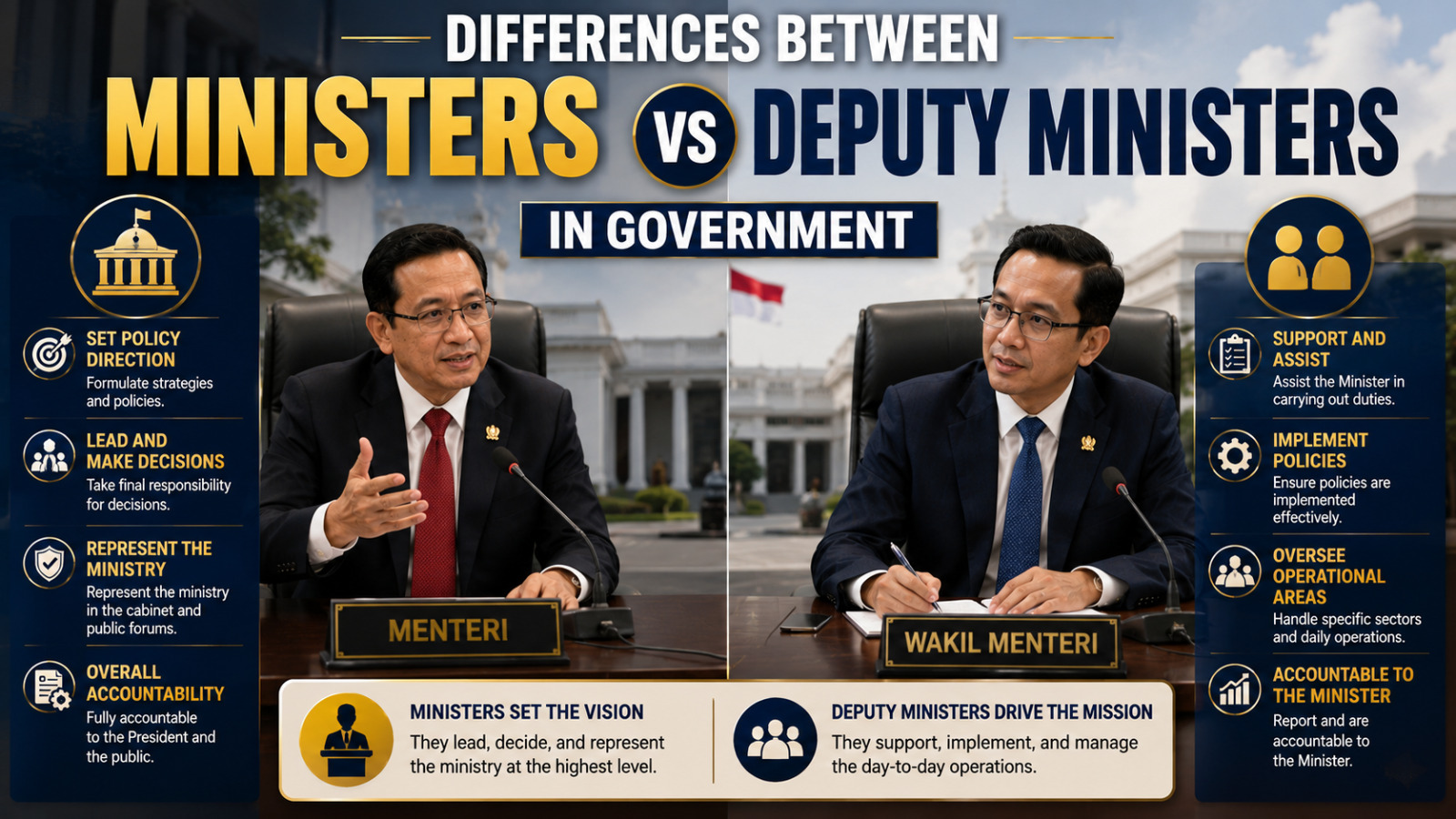
Ministers and deputy ministers both contribute to the administration of government, but they have different positions and responsibilities. A minister leads a ministry and is responsible for the overall management of government affairs assigned to that ministry. A deputy minister assists the minister in carrying out specific duties. The main difference lies in their authority, responsibilities, and position within the ministry's leadership structure. Understanding this distinction helps explain how work is divided within a government ministry.
POSITION OF MINISTERS
A minister is a state official who leads a ministry and assists the President in administering a particular area of government. Ministers are appointed and dismissed by the President according to the Constitution. The minister has overall responsibility for the policies and administration of the ministry they lead.
Ministers provide strategic direction and oversee the implementation of government programs within their respective fields. They also coordinate with other ministries and government institutions when necessary. Because they lead the ministry, ministers have broad responsibilities covering its policies, programs, and administration. Their position places them at the highest level of leadership within the ministry.
POSITION OF DEPUTY MINISTERS
A deputy minister is appointed to assist a minister in carrying out the duties of a ministry. The President appoints deputy ministers according to applicable regulations. A deputy minister does not replace the minister as the head of the ministry.
The specific duties of a deputy minister can depend on the needs of the ministry and the responsibilities assigned to them. They may assist with program implementation, coordination, supervision, or other tasks within the ministry. Their work is carried out in coordination with the minister. This arrangement allows certain responsibilities to be distributed more effectively.
DIFFERENCES IN RESPONSIBILITIES
The main difference is the scope of responsibility. The minister has overall responsibility for leading the ministry, while the deputy minister assists the minister in carrying out particular responsibilities. The minister establishes strategic direction within the ministry's authority and oversees its overall administration.
A deputy minister focuses on duties assigned by the minister or established according to applicable regulations. Their role can help the ministry handle complex or specialized responsibilities. However, the presence of a deputy minister does not transfer the minister's overall responsibility. Clear communication between the two positions is therefore important.
COORDINATION BETWEEN MINISTERS AND DEPUTY MINISTERS
Good coordination allows ministers and deputy ministers to work effectively together. The minister provides overall direction, while the deputy minister supports the implementation of assigned tasks. Cooperation helps prevent overlapping responsibilities and keeps ministry programs aligned with established policies.
Deputy ministers may also assist the minister in coordinating specific programs or organizational units. They need to understand the ministry's strategic priorities so their work remains consistent with the minister's direction. Regular communication can help resolve problems and improve implementation. Through clear division of duties, both positions can support effective government administration.
CONCLUSION
Ministers and deputy ministers have complementary but different roles in government. Ministers lead ministries and have overall responsibility for their policies and administration, while deputy ministers assist ministers in carrying out specific duties. Ministers have broader authority and responsibility, whereas deputy ministers support the execution of assigned tasks. Effective coordination between them can improve the management and implementation of government programs. Their distinct roles help create a more organized structure within government ministries.
About the Author
Gusti Ayu Tita P
Author — STEKOM University
An active author focused on academic issues, educational technology, and human resource development in the campus environment.















