
Differences Between Passenger Ships and Cargo Ships
Gusti Ayu Tita P
11 Agustus 2026
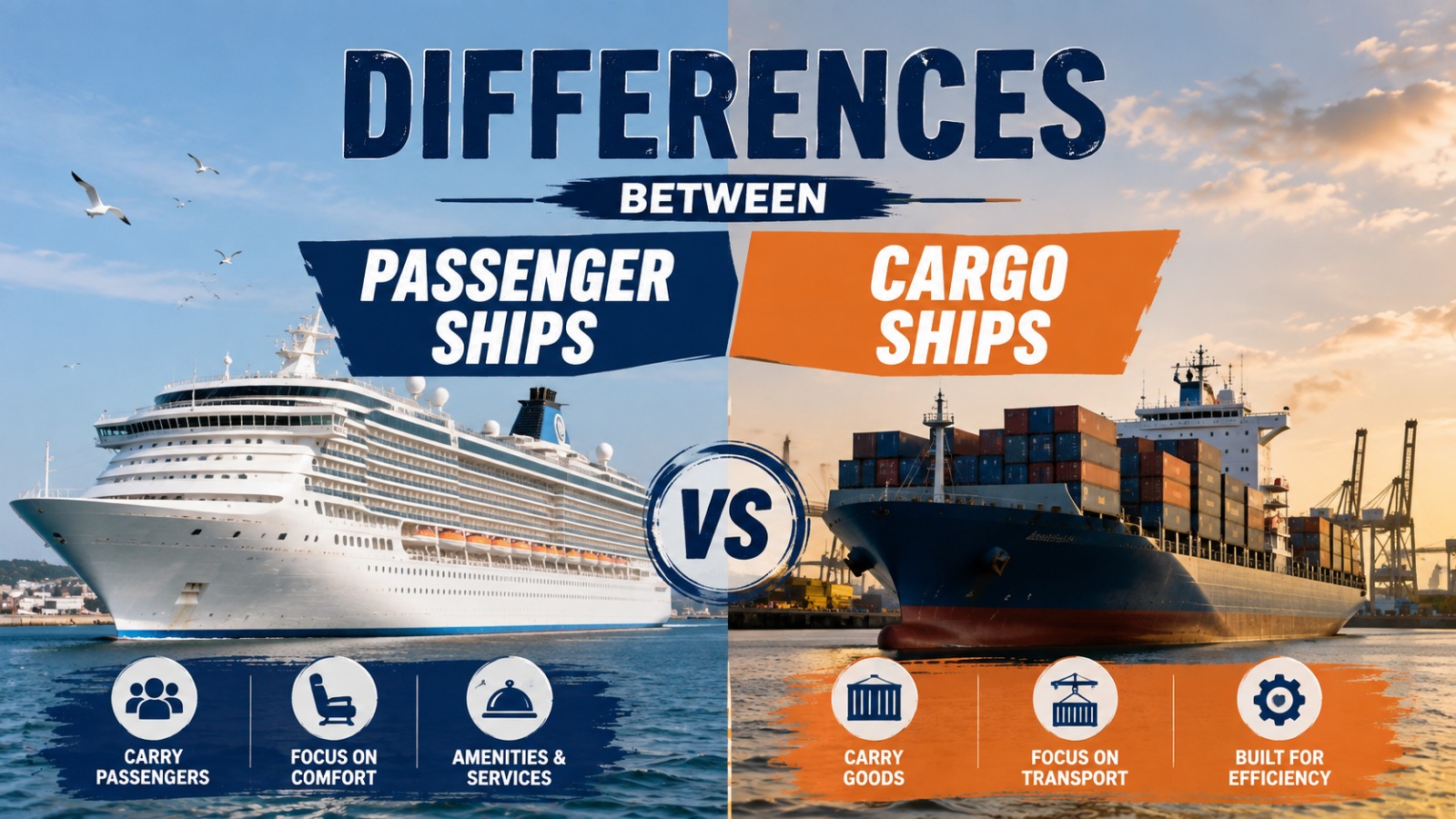
Ships play an important role in modern transportation because they can move people and goods across seas and oceans. However, not every ship has the same purpose, design, or operating system. Passenger ships are mainly designed to transport people, while cargo ships are built to carry goods and materials. Understanding the differences between these vessels can help people recognize their functions more clearly. Both types contribute significantly to maritime transportation and international trade.
MAIN PURPOSE OF PASSENGER SHIPS
Passenger ships are specifically designed to transport people from one destination to another. They include ferries, cruise ships, and other vessels that provide services for travelers. Their design focuses on passenger safety, comfort, accessibility, and efficient boarding. Many passenger ships provide seating areas, cabins, dining facilities, restrooms, and entertainment spaces.
Ferries usually operate on shorter routes and may transport both passengers and vehicles. Cruise ships, on the other hand, are designed for longer journeys where accommodation and onboard activities are important. The facilities depend on the type and size of the vessel. Safety remains a major priority for every passenger ship.
MAIN PURPOSE OF CARGO SHIPS
Cargo ships are designed primarily to transport goods across waterways. They can carry products such as food, machinery, fuel, vehicles, raw materials, and manufactured goods. These vessels are essential to global trade because large quantities of products can be transported efficiently by sea. Their design focuses more on cargo capacity, stability, and transportation efficiency.
Different cargo ships are built for different types of goods. Container ships carry standardized containers, while bulk carriers transport materials such as grain, coal, or minerals. Tankers are designed to transport liquids such as petroleum and chemicals under specialized safety requirements. Each vessel has equipment and storage systems suited to its cargo.
DIFFERENCES IN SHIP DESIGN
The physical design of passenger and cargo ships can be very different. Passenger ships usually have larger areas dedicated to people, including cabins, seating areas, restaurants, and public spaces. Their interiors are designed to provide comfort during the journey. Emergency exits, evacuation equipment, and safety systems are also carefully arranged for passengers.
Cargo ships usually dedicate most of their available space to cargo storage. They may have large cargo holds, container areas, tanks, or specialized loading equipment. Their structures are designed to handle heavy loads while maintaining stability at sea. This difference in design reflects the main purpose of each vessel.
CAPACITY AND CARGO HANDLING
Passenger ships measure capacity largely by the number of people they can safely accommodate. Operators must consider passenger seating, sleeping arrangements, emergency equipment, and other facilities. Passenger capacity is controlled by safety regulations and the vessel's design. Exceeding the permitted capacity can create serious safety risks.
Cargo ships measure their capabilities according to the amount and type of cargo they can transport. Cargo capacity may be described using measures such as deadweight tonnage or container capacity. Loading must be carefully planned to maintain the ship's balance and stability. Improperly distributed cargo can affect the vessel's performance and safety.
CREW AND OPERATING REQUIREMENTS
Both passenger and cargo ships require trained crews to operate safely. However, passenger ships may have additional personnel responsible for customer service, food service, housekeeping, and passenger assistance. Crew members must also be prepared to guide passengers during emergency situations. Their responsibilities therefore include both navigation and passenger support.
Cargo ship crews focus more heavily on navigation, machinery operation, cargo management, and maintenance. Some cargo vessels have specialized personnel depending on the type of goods being transported. For example, ships carrying certain hazardous materials require specific safety procedures. Crew training is essential for maintaining safe maritime operations.
SAFETY AND SECURITY FEATURES
Safety is essential for both types of ships, but the specific requirements can differ. Passenger ships need systems that can protect large numbers of people during emergencies. These include lifeboats, life jackets, emergency alarms, evacuation routes, and communication systems. Regular safety procedures help passengers and crew respond effectively to unexpected situations.
Cargo ships also require extensive safety systems, especially when carrying heavy, hazardous, or flammable materials. Fire protection, cargo securing systems, navigation equipment, and emergency procedures are important components. International maritime standards help establish safety requirements for ships operating across different regions. Proper maintenance is equally important for both passenger and cargo vessels.
ROLE IN MODERN MARITIME TRANSPORTATION
Passenger and cargo ships serve different needs within modern maritime transportation. Passenger vessels connect islands, coastal communities, tourist destinations, and international ports. They provide an important transportation option for people who need to travel across waterways. In some regions, ferries are an essential part of everyday transportation.
Cargo ships support international supply chains by moving huge quantities of goods between countries. Many products used in everyday life depend on maritime shipping at some stage of their distribution. Cargo vessels can transport large loads more efficiently than many other transportation methods. Together, passenger and cargo ships help connect economies and communities around the world.
CONCLUSION
The main difference between passenger ships and cargo ships is their primary purpose. Passenger ships focus on transporting people safely and comfortably, while cargo ships are designed to move goods efficiently across seas and oceans. Their designs, facilities, capacity, crew responsibilities, and safety systems reflect these different functions. Despite their differences, both are important parts of the global transportation system. Understanding their roles helps passengers and businesses better appreciate the importance of maritime transportation.
About the Author
Gusti Ayu Tita P
Author — STEKOM University
An active author focused on academic issues, educational technology, and human resource development in the campus environment.















