
Different Types Of Fuel And Their Effects On Vehicles
Gusti Ayu Tita P
10 Agustus 2026
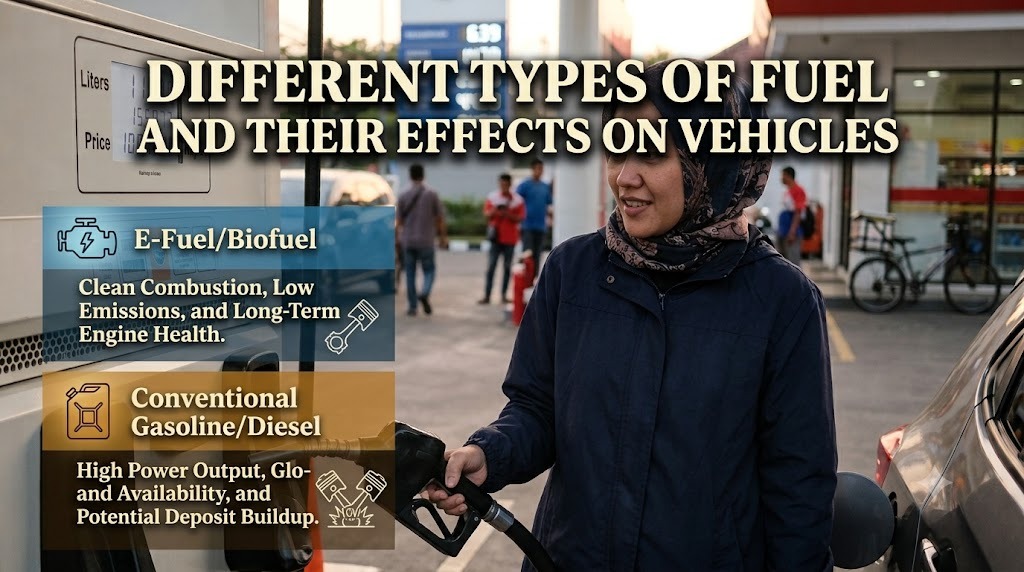
Fuel is an essential source of energy for many vehicles. Different vehicles are designed to use specific types of fuel, and each fuel has different characteristics that can affect engine performance, efficiency, emissions, and maintenance needs. Understanding these differences can help vehicle owners choose and use fuel correctly.
The most common vehicle fuels include gasoline, diesel, and several alternative energy sources. Each type has advantages and limitations depending on the vehicle's engine and design. Using the recommended fuel is important because the wrong fuel type can reduce performance and potentially cause serious mechanical problems.
GASOLINE AND ITS EFFECTS ON VEHICLES
Gasoline is one of the most widely used fuels for passenger cars and motorcycles with spark ignition engines. It is designed to burn relatively quickly and is ignited by spark plugs inside the engine. Gasoline engines generally provide smooth acceleration and are commonly used for everyday transportation.
The octane rating of gasoline indicates its resistance to engine knocking, not simply its energy content. Using the octane level recommended by the vehicle manufacturer helps the engine operate as intended. Using a fuel with an unsuitable specification may affect performance, especially in engines designed for higher octane fuel.
Gasoline quality can also influence engine cleanliness and fuel system performance. Contaminated or unsuitable fuel may contribute to deposits or poor combustion. Regular maintenance and using fuel that meets the manufacturer's specifications can help maintain efficient engine operation.
DIESEL FUEL AND ITS EFFECTS ON VEHICLES
Diesel fuel is mainly used in compression ignition engines. Unlike gasoline engines, diesel engines typically ignite the fuel through the heat created by compressing air rather than using spark plugs. Diesel engines are often valued for their high torque and efficiency, especially in vehicles carrying heavy loads.
Diesel vehicles can provide good fuel economy when operated under suitable conditions. However, modern diesel engines use complex emission control systems that require proper maintenance. Components such as diesel particulate filters and exhaust treatment systems can be affected by driving conditions and maintenance practices.
Using the correct diesel fuel is essential for proper engine operation. Contaminated fuel or water in the fuel system can cause serious problems with injectors and other components. Regular servicing and using fuel that meets the manufacturer's requirements can help protect the engine and fuel system.
ETHANOL BLENDED FUEL
Ethanol is an alcohol-based fuel that can be blended with gasoline. Common blends include E10, which contains up to about 10 percent ethanol, although available blends vary between countries and vehicles. Ethanol can help reduce reliance on petroleum and may have environmental benefits depending on how it is produced.
However, not every vehicle is designed for every ethanol blend. Higher ethanol concentrations may require compatible fuel system components and engine calibration. Vehicle owners should always check the manufacturer's guidance before using a higher ethanol blend.
Ethanol can also have different storage and material compatibility characteristics compared with conventional gasoline. In suitable vehicles, the correct ethanol blend can operate normally. Using an incompatible blend, however, may cause fuel system problems or affect engine performance.
BIODIESEL AND ITS EFFECTS ON VEHICLES
Biodiesel is a renewable fuel made from vegetable oils, animal fats, or other biological sources. It can be blended with conventional diesel and is often identified using labels such as B5 or B20, depending on the percentage of biodiesel. Biodiesel can provide an alternative to conventional petroleum diesel.
One potential benefit of biodiesel is that it can reduce dependence on fossil fuel resources. However, its environmental benefits depend on the feedstock, production process, land use, and transportation involved. Biodiesel can also have different properties from conventional diesel, so compatibility should be considered.
Vehicle manufacturers specify which biodiesel blends their engines can safely use. Following these specifications is important because unsuitable fuel may affect fuel system components or engine operation. Proper storage and fuel quality are also important when using biodiesel fuel.
LPG AS AN ALTERNATIVE VEHICLE FUEL
Liquefied petroleum gas, or LPG, can be used as a vehicle fuel in engines that are designed or converted for LPG operation. LPG is stored under pressure in liquid form and becomes a gas when supplied to the engine. Some vehicles use dedicated LPG systems, while others use dual-fuel systems.
LPG can produce fewer particulate emissions than some conventional fuels, although total environmental effects depend on the vehicle and fuel system. Conversion systems must be properly designed and installed to maintain safe and reliable operation. Poorly installed systems can create performance and safety problems.
LPG vehicles require components that differ from conventional gasoline systems. Regular inspection of the tank, valves, hoses, and fuel system is important. Drivers should use LPG systems that meet applicable safety and vehicle requirements.
ELECTRIC POWER AS AN ALTERNATIVE TO LIQUID FUEL
Electric vehicles do not burn conventional liquid fuel. Instead, they use electricity stored in a battery pack to power electric motors. This eliminates tailpipe emissions during operation and provides a different approach to vehicle energy use.
Electric motors are highly efficient because they convert a large portion of electrical energy into movement. Electric vehicles also have fewer moving powertrain components than conventional internal combustion vehicles. This can reduce some maintenance requirements, although battery health and charging systems still need attention.
The overall environmental impact of an electric vehicle depends partly on how the electricity is generated and how the battery is produced and managed. Charging infrastructure and driving range are also important considerations. Therefore, electric vehicles offer different advantages and challenges compared with fuel-powered vehicles.
HYDROGEN FUEL AND ITS EFFECTS ON VEHICLES
Hydrogen can be used in fuel cell electric vehicles to generate electricity through an electrochemical reaction. The electricity powers an electric motor, while the main tailpipe output is water vapor and heat. Hydrogen fuel cell vehicles therefore operate differently from gasoline and diesel vehicles.
One advantage of hydrogen fuel cell technology is that refueling can be relatively quick compared with some battery charging methods. However, hydrogen infrastructure is still limited in many regions. The environmental benefits also depend on how hydrogen is produced.
Hydrogen systems require specialized tanks, fuel cells, and safety systems. These technologies must be maintained according to manufacturer and regulatory requirements. As the technology develops, hydrogen may become more relevant for certain transportation applications.
HOW FUEL TYPE AFFECTS VEHICLE PERFORMANCE
The type of fuel can influence several aspects of vehicle performance, including acceleration, fuel economy, engine operation, and emissions. However, fuel characteristics alone do not determine performance. Engine design, vehicle weight, driving conditions, maintenance, and driving habits also have significant effects.
Using fuel that matches the manufacturer's specifications is one of the most important considerations. A fuel designed for a particular engine allows the combustion or energy conversion system to operate as intended. Choosing the correct vehicle fuel can therefore support reliable performance and reduce the risk of fuel-related problems.
HOW TO CHOOSE THE RIGHT FUEL
The best way to choose fuel is to follow the vehicle manufacturer's recommendations. The owner's manual or fuel label near the filler area usually provides information about the required fuel type and specification. Drivers should not assume that a more expensive or higher-rated fuel is automatically better for every vehicle.
Fuel availability, vehicle compatibility, operating conditions, and cost can also be considered. Alternative fuels may provide benefits in certain situations but require compatible systems and infrastructure. Making an informed choice helps protect the engine while supporting fuel efficiency and long-term vehicle reliability.
CONCLUSION
Different types of fuel have different characteristics and effects on vehicles. Gasoline is widely used in spark ignition engines, while diesel is commonly used in compression ignition engines that prioritize torque and efficiency. Alternative options such as ethanol, biodiesel, LPG, electricity, and hydrogen offer different benefits and limitations.
The most important principle is to use the fuel recommended by the vehicle manufacturer. Choosing the correct fuel helps maintain engine performance, fuel efficiency, reliability, and safety. Understanding fuel types allows vehicle owners to make better decisions and avoid problems caused by incompatible or unsuitable fuel.
About the Author
Gusti Ayu Tita P
Author — STEKOM University
An active author focused on academic issues, educational technology, and human resource development in the campus environment.















