Digital Detox Habits to Reduce Gadget Addiction
Gusti Ayu Tita P
8 Oktober 2026
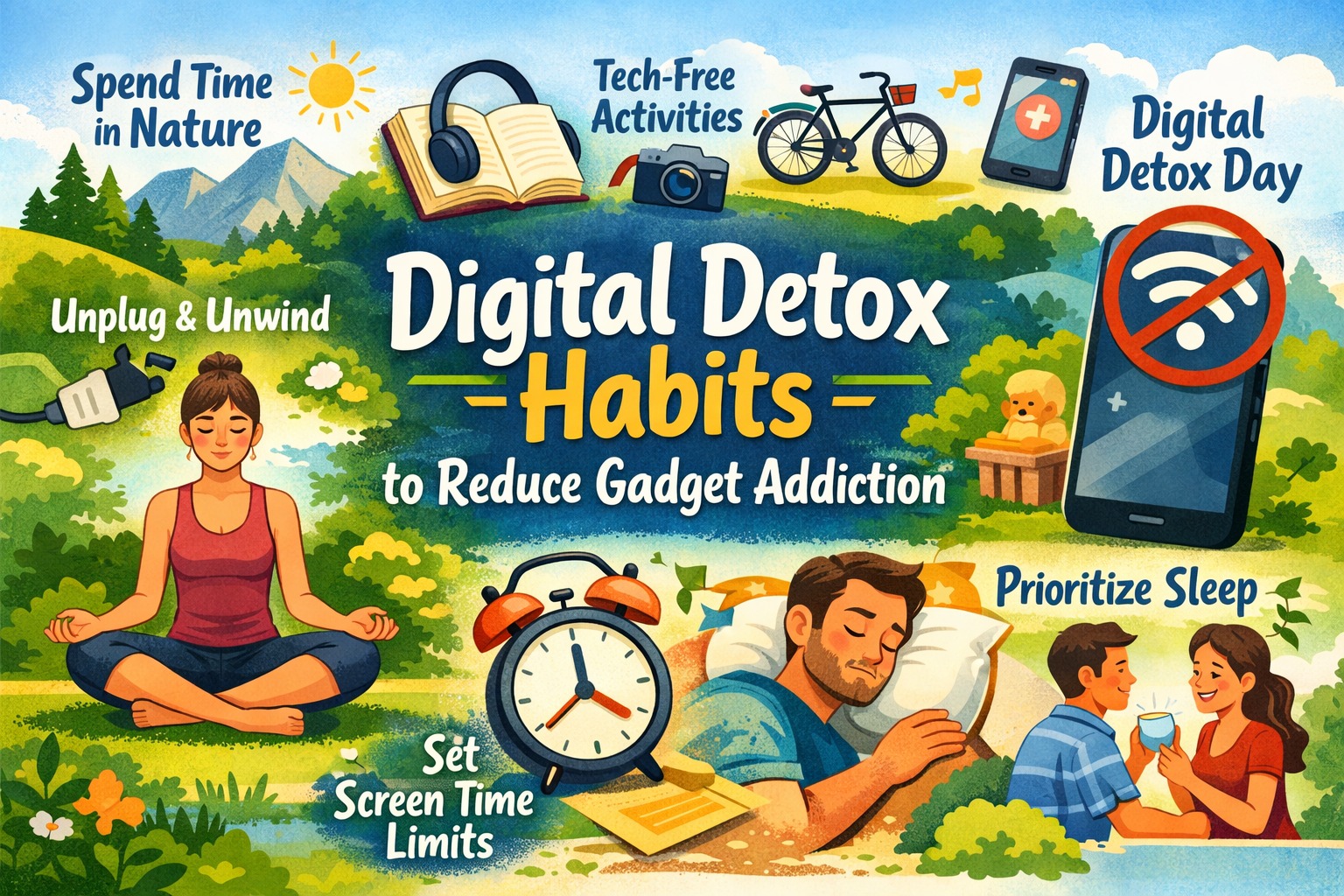
In today’s fast-paced digital world, gadgets have become an inseparable part of daily life. From smartphones to laptops, people spend hours scrolling, working, and entertaining themselves online. While technology brings convenience, excessive usage can lead to addiction, reduced productivity, and mental fatigue. Practicing digital detox habits is an effective way to restore balance and improve overall well-being.
UNDERSTANDING DIGITAL ADDICTION
Digital addiction refers to the compulsive use of devices such as smartphones, tablets, and computers, often at the expense of real-life interactions and responsibilities. Many people do not realize how deeply they are affected until they experience symptoms like poor concentration, sleep disruption, or anxiety when away from their devices.
Social media platforms, mobile games, and endless streaming content are designed to keep users engaged for long periods. As a result, people may find it difficult to disconnect even for a short time.
WHY DIGITAL DETOX IS IMPORTANT
Taking a break from gadgets is not about rejecting technology completely, but about creating a healthier relationship with it. A digital detox helps the brain reset from constant stimulation and reduces mental overload.
Some key benefits include improved focus, better sleep quality, stronger face-to-face relationships, and reduced stress levels. It also encourages individuals to reconnect with offline activities such as reading, exercising, or spending time in nature.
SIMPLE DIGITAL DETOX HABITS TO START TODAY
Building digital detox habits does not require drastic changes. Small, consistent steps can make a big difference over time.
One effective habit is setting screen time limits. Many devices now offer built-in features that track and restrict usage. By setting daily limits for social media or entertainment apps, users can become more aware of their digital consumption.
Another helpful practice is creating device-free zones. For example, keeping phones away from the dining table or bedroom can significantly reduce unnecessary usage and improve personal interactions and sleep quality.
Scheduling offline time is also important. Allocating specific hours during the day to stay away from gadgets allows the mind to rest. This time can be used for hobbies, physical activities, or simply relaxing without screens.
BUILDING HEALTHY DIGITAL BOUNDARIES
Establishing boundaries with technology is essential for long-term balance. Turning off non-essential notifications can reduce distractions and help maintain focus throughout the day.
It is also helpful to avoid checking the phone immediately after waking up or before sleeping. These moments are critical for mental clarity, and replacing screen time with mindful routines such as stretching or journaling can improve emotional well-being.
Additionally, practicing mindful usage—such as asking yourself whether you really need to open an app—can help reduce unconscious scrolling habits.
THE ROLE OF REAL-LIFE ACTIVITIES
One of the most effective ways to reduce gadget addiction is to replace screen time with meaningful real-world activities. Physical exercise, outdoor walks, social gatherings, and creative hobbies can significantly reduce the urge to constantly check devices.
Engaging in offline activities not only improves mental health but also strengthens relationships and builds a more balanced lifestyle. The more fulfilling real-life experiences become, the less dependent individuals are on digital entertainment.
CONCLUSION
Digital detox is not about eliminating technology but about using it more consciously and intentionally. By adopting simple habits such as setting screen limits, creating device-free zones, and engaging in offline activities, anyone can reduce gadget addiction and improve their quality of life. Consistency is key—small changes made today can lead to a healthier digital future.
About the Author
Gusti Ayu Tita P
Author — STEKOM University
An active author focused on academic issues, educational technology, and human resource development in the campus environment.