
Digital Innovation Reshaping the Modern Mining Industry
Gusti Ayu Tita P
20 Agustus 2026
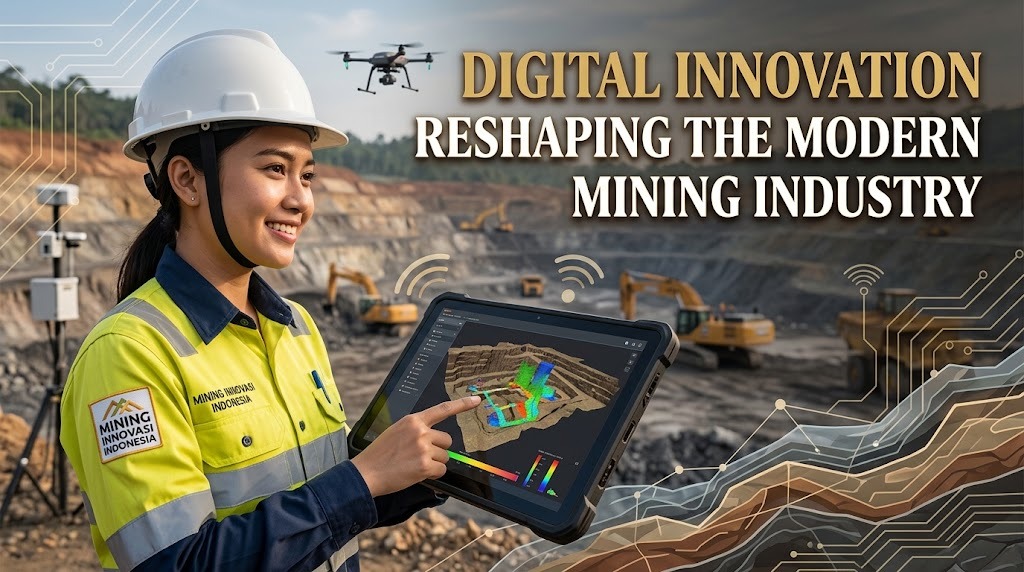
The modern mining industry is undergoing major changes as digital technology becomes increasingly integrated into daily operations. Mining companies are adopting advanced systems to improve exploration, production, equipment management, safety, and environmental monitoring. Technologies such as artificial intelligence, automation, cloud computing, and connected sensors are changing how mining activities are planned and managed.
Digital transformation is not simply about replacing traditional equipment with newer machines. It involves using real time data, intelligent systems, and automated processes to make operations more accurate and efficient. When implemented responsibly, digital innovation can help mining companies improve productivity while reducing operational risks and supporting more sustainable practices.
DIGITAL TRANSFORMATION IN MINING OPERATIONS
Digital transformation allows mining companies to collect and process information more efficiently. Data from geological surveys, equipment, vehicles, and production systems can be combined to provide a clearer picture of mining activities. This information helps managers monitor operations and make decisions based on measurable conditions rather than relying only on manual observations.
Digital platforms can also connect different parts of a mining operation. Production teams, maintenance personnel, engineers, and management can access relevant information through integrated systems. This can improve communication and reduce delays when operational problems occur. As a result, digital mining is becoming an important part of modern resource management.
ARTIFICIAL INTELLIGENCE SUPPORTING MINING DECISIONS
Artificial intelligence is increasingly being explored for applications across the mining value chain. AI can process large datasets and identify patterns that may be difficult to recognize through manual analysis. In exploration, it can support the interpretation of geological information and help identify areas that may deserve further investigation.
AI can also contribute to equipment management through predictive analysis. Data collected from machinery can be analyzed to identify unusual operating patterns and potential maintenance needs. Early detection may help reduce unexpected equipment failures and improve maintenance planning. However, AI should support rather than replace professional judgment, particularly when decisions involve complex geological or safety conditions.
AUTOMATION IMPROVING PRODUCTIVITY AND SAFETY
Automation is one of the most visible forms of digital innovation in mining. Some operations use automated haulage systems, remotely operated equipment, and advanced control systems to perform specific tasks. These technologies can reduce the amount of time workers spend in potentially hazardous areas while maintaining operational control.
Automation can also improve consistency in repetitive activities. Machines can operate according to predefined parameters, while monitoring systems provide information about performance and operating conditions. Nevertheless, automated operations still require trained personnel to supervise systems, respond to unexpected situations, and maintain equipment.
CONNECTED SENSORS AND REAL TIME MONITORING
The Internet of Things enables mining equipment and monitoring devices to communicate through connected digital networks. Sensors can collect information about machinery performance, vehicle locations, fuel consumption, and environmental conditions. The data can then be analyzed to support operational decisions.
Real time monitoring can help companies respond more quickly when abnormal conditions are detected. For example, equipment data may indicate that a machine requires inspection before a major failure occurs. Environmental sensors can also provide information that supports monitoring of water, air quality, or other site conditions. This makes connected technology valuable for both productivity and environmental management.
DIGITAL TECHNOLOGY SUPPORTING SUSTAINABLE MINING
Digital innovation can contribute to sustainable mining by improving the way companies monitor and use resources. Data systems can track energy consumption, fuel use, water management, and operational efficiency. This information can help identify areas where resources are being used inefficiently.
Technology can also support environmental monitoring and land rehabilitation planning. Digital mapping and remote sensing can provide information about changes in mining areas over time. However, technology must be combined with effective environmental policies, regulatory compliance, responsible waste management, and proper rehabilitation practices to achieve meaningful sustainability.
DEVELOPING A DIGITAL MINING WORKFORCE
The introduction of advanced technology is changing the skills required in the mining sector. Workers increasingly need to understand automated equipment, digital platforms, data interpretation, and modern safety systems. Digital skills are becoming an important complement to traditional technical knowledge.
Mining companies therefore need to invest in training and workforce development. Upskilling programs can help existing employees adapt to new systems, while partnerships with educational institutions can prepare new workers for technology-based mining careers. A capable workforce is essential because even advanced systems require human supervision, technical expertise, and responsible decision-making.
THE FUTURE OF DIGITAL MINING
Digital innovation is likely to remain a major driver of change in the mining industry. Artificial intelligence, automation, connected sensors, cloud-based systems, and advanced data analytics can create more integrated mining operations. These technologies may help companies improve productivity, strengthen safety management, and respond more effectively to operational challenges.
The future of digital mining will depend on more than simply adopting new technology. Companies must also consider investment requirements, cybersecurity, workforce readiness, environmental responsibility, and community interests. By combining technological innovation with skilled people and responsible management, the mining industry can become more efficient, safer, and better prepared for long-term challenges.
About the Author
Gusti Ayu Tita P
Author — STEKOM University
An active author focused on academic issues, educational technology, and human resource development in the campus environment.















