
Discovering New Opportunities Across Indonesia’s Mining Sector
Gusti Ayu Tita P
20 Agustus 2026
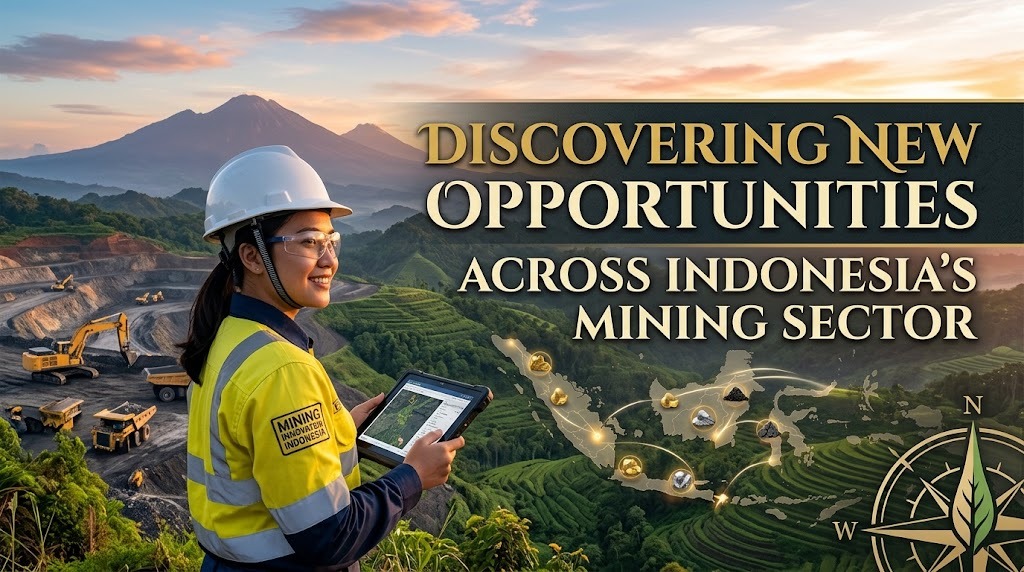
Indonesia has a significant mining sector supported by diverse mineral and energy resources. Commodities such as nickel, copper, bauxite, tin, coal, and other minerals contribute to domestic industries and international supply chains. As global demand changes and technology develops, Indonesia's mining industry is also facing opportunities to create greater economic value from its natural resources.
The future of the sector is not limited to extracting minerals from the ground. Downstream processing, technological development, workforce improvement, and responsible environmental management are becoming increasingly important. By combining natural resource potential with innovation and better management, Indonesia can create broader opportunities across the mining value chain.
NICKEL CREATES OPPORTUNITIES FOR INDUSTRIAL DEVELOPMENT
Nickel is one of Indonesia's most strategically important mineral resources. It is widely used in stainless steel production, while certain nickel products are also relevant to battery supply chains. This makes nickel an important commodity as industries develop new technologies and expand electrification.
Indonesia's opportunity extends beyond mining nickel ore. Investment in mineral processing can create additional economic value by producing refined and intermediate materials domestically. Developing these industries can also generate demand for skilled workers, supporting businesses, infrastructure, logistics, and other services.
COPPER SUPPORTS THE GROWING ELECTRIFICATION ECONOMY
Copper has important applications because of its excellent electrical conductivity. It is used in power cables, electrical equipment, electronics, construction, and many technologies associated with electrification. As demand for electricity infrastructure and modern technology grows, copper remains an important industrial mineral.
Indonesia has copper resources that can support domestic and international supply chains. Developing these resources responsibly can create opportunities in mining, processing, engineering, logistics, and supporting industries. Copper development can therefore contribute not only to mineral production but also to broader industrial activity.
BAUXITE AND ALUMINUM OFFER DOWNSTREAM POTENTIAL
Bauxite is the primary ore used to produce alumina, which can then be processed into aluminum. Aluminum is widely used in transportation, construction, packaging, manufacturing, and other industries. This gives bauxite resources strategic importance for Indonesia's industrial development.
Developing domestic processing can increase the value generated from bauxite before products enter the market. It can also encourage investment in refining and supporting infrastructure. With appropriate environmental controls and efficient technology, bauxite development can become part of a broader strategy to strengthen Indonesia's industrial base.
DOWNSTREAM PROCESSING CAN CREATE MORE VALUE
One of the major opportunities in Indonesia's mining sector is downstream development. Instead of focusing primarily on the extraction and export of raw materials, downstream industries can process minerals into products with higher economic value. This approach can create additional stages of production within Indonesia.
A stronger downstream industry can also generate employment and encourage the growth of local suppliers. Engineering companies, transportation providers, maintenance services, technology firms, and other businesses can participate in the expanding industrial ecosystem. The success of downstream development, however, depends on infrastructure, investment, skilled workers, energy availability, and effective regulations.
DIGITAL TECHNOLOGY IS CHANGING MINING OPERATIONS
Technology is opening new opportunities for companies to improve mining productivity and resource management. Digital mining can involve automation, artificial intelligence, remote sensing, connected equipment, and real time data analysis. These technologies can help companies monitor operations and make decisions based on more accurate information.
Digital systems can also support safety and environmental management. Sensors may monitor equipment conditions, while digital platforms can track production and environmental indicators. As technology becomes more important, demand is likely to grow for workers who understand both mining operations and digital systems.
MINING CAN SUPPORT LOCAL ECONOMIC DEVELOPMENT
Mining activities can create opportunities beyond the mine itself. Local communities may benefit from employment, business opportunities, transportation services, accommodation, food services, and other supporting activities. Local economic development can become stronger when communities are able to participate in mining-related supply chains.
Companies and local governments can support this process through training, entrepreneurship programs, and access to business opportunities. Developing local suppliers can help ensure that more economic benefits remain within mining regions. At the same time, communities need opportunities to develop businesses outside mining so that local economies are not overly dependent on a single industry.
SUSTAINABILITY WILL SHAPE FUTURE MINING OPPORTUNITIES
The expansion of Indonesia's mining sector needs to be accompanied by strong environmental management. Mining activities can affect land, water, ecosystems, and surrounding communities, making responsible planning essential. Companies need to manage waste, monitor environmental conditions, and conduct rehabilitation according to applicable requirements.
Sustainability can also become a source of innovation. More efficient equipment, better water management, renewable energy applications, and digital environmental monitoring can help reduce operational impacts. Companies that successfully combine economic development with environmental responsibility may be better prepared for the changing expectations of global markets.
BUILDING A STRONGER FUTURE FOR INDONESIAN MINING
Indonesia's mining sector has opportunities across the entire value chain, from exploration and extraction to processing, manufacturing, technology, and supporting services. Mineral resources provide an important foundation, but long-term success will depend on how effectively those resources are managed. Investment in infrastructure, technology, education, and industrial capacity can help transform resource potential into lasting economic benefits.
The future of Indonesian mining will require collaboration among companies, government institutions, workers, local communities, and educational organizations. Responsible resource management can help ensure that mining contributes to economic growth while protecting environmental and social interests. With the right strategy, Indonesia can develop a mining sector that is more productive, innovative, competitive, and sustainable.
About the Author
Gusti Ayu Tita P
Author — STEKOM University
An active author focused on academic issues, educational technology, and human resource development in the campus environment.















