
Do Youngest Children Have Greater Opportunities To Become Creative Individuals?
Gusti Ayu Tita P
7 September 2026
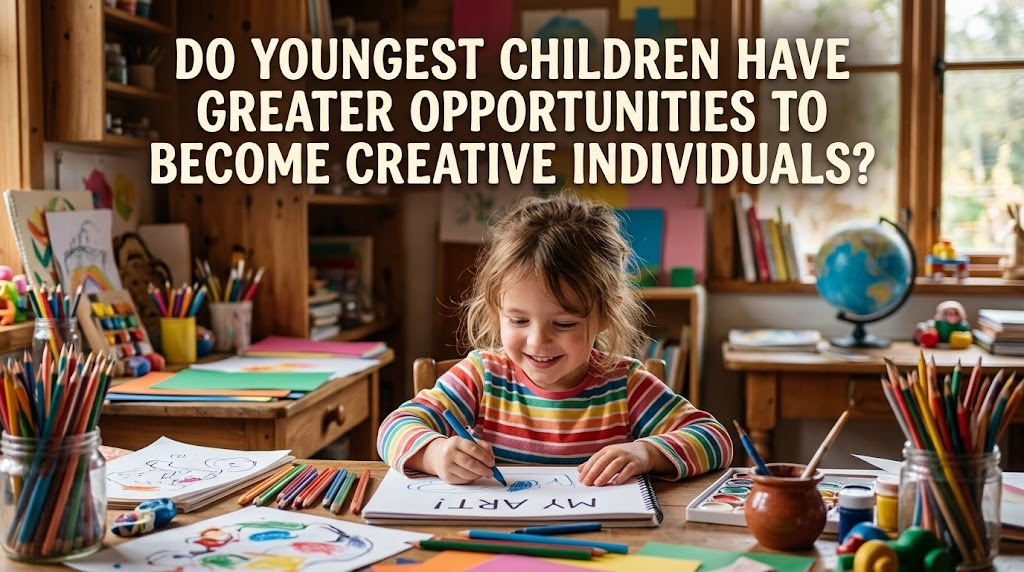
Many people believe that youngest children tend to have more creative personalities. This assumption may come from the way they interact with older siblings and experience different situations while growing up. They may observe others, develop their own interests, and find different ways to express themselves.
However, birth order does not automatically determine whether someone will become creative. Family environment, education, personality, experiences, and opportunities to explore can have a stronger influence on creativity. Youngest children may have certain experiences that encourage creativity, but every individual has the potential to develop creative thinking.
LEARNING THROUGH OBSERVATION
Youngest children often have the opportunity to observe older siblings as they grow. They may watch how their siblings solve problems, communicate, study, play, or respond to different situations. These observations can give them various examples of how people approach everyday challenges.
Learning through observation can encourage children to think about different possibilities. They do not necessarily copy everything they see, but they can adapt useful ideas to their own situations. This process may support the development of creative and flexible thinking.
EXPLORING DIFFERENT INTERESTS
Youngest children may explore different activities based on what they see within their families. They might become interested in hobbies, technology, sports, arts, books, or other activities introduced by parents and siblings. Having access to different experiences can provide more opportunities to discover personal interests.
Exploration is an important part of creativity. When children are allowed to try different activities, they can discover new ways of expressing their ideas. Encouraging curiosity and exploration can therefore help youngest children develop their creative potential.
DEVELOPING FLEXIBLE THINKING
Growing up around different family members can expose youngest children to various opinions and personalities. They may need to adjust to different communication styles and situations. This experience can help them become more flexible when approaching problems.
Flexible thinking allows individuals to consider several possible solutions instead of relying on one method. Youngest children can strengthen this ability by asking questions and trying alternative approaches. Over time, flexible thinking can become an important foundation for creativity.
FINDING PERSONAL WAYS TO STAND OUT
Youngest children may sometimes want to develop an identity that is different from their older siblings. They may choose different hobbies, interests, or personal goals. This search for individuality can encourage them to explore their own strengths.
Having a unique identity does not mean competing with older siblings. Instead, it can motivate children to understand what makes them different. Discovering personal strengths can support self-expression and creative development.
USING CREATIVITY TO SOLVE PROBLEMS
Creativity is not limited to drawing, music, writing, or other artistic activities. It can also appear when someone finds an effective solution to a difficult problem. Youngest children can develop this ability through puzzles, projects, games, and everyday challenges.
Problem-solving activities teach children to consider different approaches. They can learn that one problem may have several possible solutions. Developing creative problem-solving skills can benefit them in education, relationships, and future careers.
RECEIVING SUPPORT FROM FAMILY
A supportive family environment can make it easier for children to express creative ideas. Parents and older siblings can encourage youngest children to ask questions and explore new activities. Positive feedback can also make children feel more comfortable sharing their ideas.
Support does not mean solving every problem for the child. Youngest children also need opportunities to experiment and make decisions independently. A healthy balance between family support and personal freedom can encourage creativity while building confidence.
TURNING CREATIVITY INTO A LONG TERM STRENGTH
Creativity becomes more valuable when it is practiced consistently. Youngest children can develop creative habits by reading, writing, experimenting, learning new skills, and working on personal projects. These activities can gradually improve their ability to generate and evaluate new ideas.
Creativity can also become useful in professional environments. Many careers require people to adapt, solve problems, communicate ideas, and develop new approaches. By continuing to develop their abilities, youngest children can turn creativity into a long-term personal and professional strength.
CONCLUSION
Youngest children may have experiences that encourage creativity, particularly through observation, exploration, flexible thinking, and interaction with family members. However, being the youngest child does not guarantee a higher level of creativity. Individual personality, environment, education, and opportunities remain important factors.
The best way to develop creativity is to provide opportunities to explore, make decisions, solve problems, and express ideas. With consistent practice and support, youngest children can strengthen their creative thinking and problem-solving abilities. These skills can become valuable advantages in education, daily life, and future careers.
About the Author
Gusti Ayu Tita P
Author — STEKOM University
An active author focused on academic issues, educational technology, and human resource development in the campus environment.















