
Documents Needed To Manage Inheritance Tax
Gusti Ayu Tita P
28 Agustus 2026
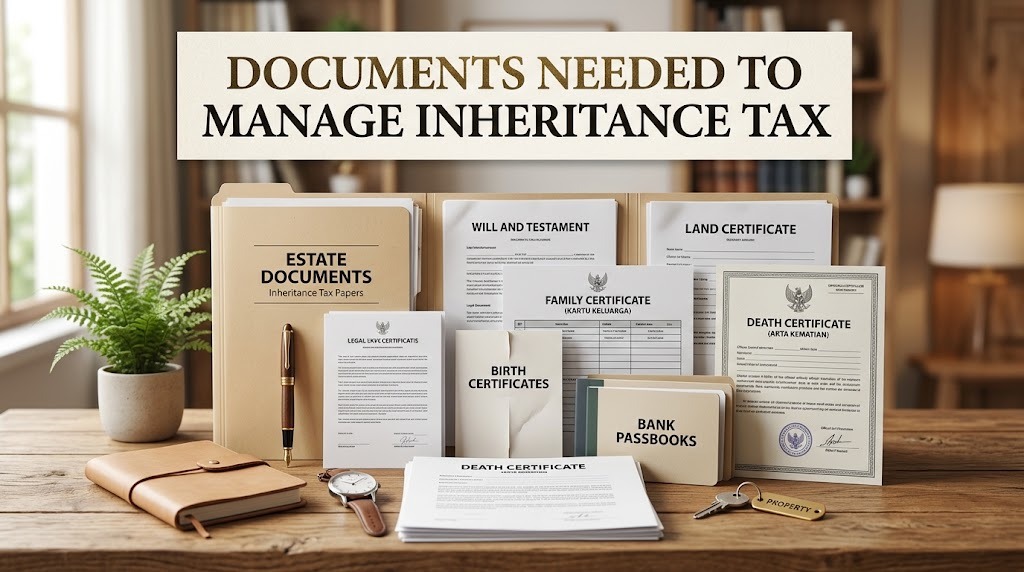
Managing an inheritance requires more than simply receiving assets from a family member. Complete and accurate documents help heirs prove ownership, establish their legal status, and fulfill applicable tax or administrative requirements. The documents needed can vary depending on the type of inherited asset and the regulations in the relevant country. In Indonesia, heirs should also understand that inheritance itself is generally excluded from the Income Tax object, although certain transactions involving inherited assets may have other tax consequences.
Preparing documents early can make the inheritance process more organized and reduce the risk of delays. It can also help heirs understand the financial position of the inherited estate before making decisions. Good documentation is especially important for land, buildings, investments, and other valuable assets.
DEATH CERTIFICATE
A death certificate is one of the fundamental documents used to establish that the asset owner has died. It is commonly required when heirs need to process changes in ownership or access financial and property records. The document can also support the legal process for determining the distribution of the estate. Heirs should ensure that the information on the certificate is accurate.
The death certificate may be requested by government offices, banks, notaries, or other institutions involved in the inheritance process. Keeping several official copies or certified copies can be useful when dealing with multiple institutions. Requirements can vary, so heirs should check the current procedures of the relevant authority.
WILL OR INHERITANCE DOCUMENTS
A will or other valid inheritance document can provide important information about how the deceased intended assets to be distributed. Where a valid will exists, it may help clarify the rights and responsibilities of beneficiaries. However, the legal effect of a will depends on the applicable law and the circumstances of the inheritance. Not every inheritance situation involves a will.
Heirs should keep the original document and obtain appropriate copies when necessary. If the document was prepared through a notary, heirs may need to coordinate with the relevant notarial office. A clear inheritance document can make the distribution process more orderly and reduce uncertainty among beneficiaries.
PROPERTY OWNERSHIP DOCUMENTS
For inherited land or buildings, property ownership documents are particularly important. These may include land certificates and other documents showing the legal status of the property. The documents help authorities and professionals verify the property before ownership is transferred. Heirs should check that the information corresponds with the deceased owner's identity.
Inherited land and buildings can involve BPHTB or Land and Building Acquisition Duty, which is a regional tax. Certain transfers due to inheritance can also have specific Income Tax treatment or exemption procedures when the requirements are fulfilled. Therefore, property documents should be reviewed before completing the transfer. Tax and legal requirements should be checked separately because different obligations can apply.
TAX IDENTIFICATION DOCUMENTS
Tax identification information may be needed when heirs report assets or complete tax-related procedures. In Indonesia, taxpayers generally use a Taxpayer Identification Number or NIK as the tax identification number under the applicable system. The relevant identification details should be accurate and consistent with official records. Heirs may need to provide tax information when dealing with certain administrative processes.
Tax documents can also help establish a clear record of the heir's financial position. This is useful when inherited assets later generate income or are involved in taxable transactions. Accurate tax identification information helps reduce administrative errors. Heirs should check the latest requirements before submitting documents.
DOCUMENTS FOR ASSET TRANSFER
When inherited assets are transferred into the heir's name, additional documents may be required. These can include identity documents, proof of heirs, inheritance documents, ownership certificates, and tax-related evidence. The exact requirements depend on whether the asset is land, a vehicle, financial investment, or another form of property. Each institution can also have its own administrative requirements.
Heirs should organize the documents before starting the transfer process. A checklist can help ensure that no important document is forgotten. Keeping both physical and secure digital copies can also make future transactions easier.
HOW TO ORGANIZE INHERITANCE DOCUMENTS
The first step is to create a complete inventory of the deceased person's assets. Group the documents according to categories such as property, financial assets, vehicles, business interests, and tax records. Then check whether the names, identification numbers, and ownership information are consistent. Organized records make the inheritance process easier to track.
Heirs should also store important documents securely and restrict access to sensitive information. Digital copies can be useful as backups, but original documents should still be preserved when legally required. If the inheritance involves complex tax or legal issues, professional advice can help verify the documents and procedures before any major transaction is completed.
CONCLUSION
Managing inheritance tax and related obligations requires careful preparation of supporting documents. Important records can include a death certificate, proof of heirs, inheritance documents, property certificates, financial records, tax identification information, and asset valuation documents. The exact requirements depend on the type of inheritance and the transaction being performed.
In Indonesia, receiving an inheritance itself is generally not subject to Income Tax because inheritance is excluded from the Income Tax object. However, BPHTB, Income Tax procedures, PBB, or other obligations may become relevant depending on the inherited asset and subsequent transaction. By preparing complete documents and checking the latest regulations, heirs can manage inherited assets more accurately and reduce administrative problems.
About the Author
Gusti Ayu Tita P
Author — STEKOM University
An active author focused on academic issues, educational technology, and human resource development in the campus environment.















