
Does Having Different Love Languages Mean You Are Incompatible?
Gusti Ayu Tita P
11 September 2026
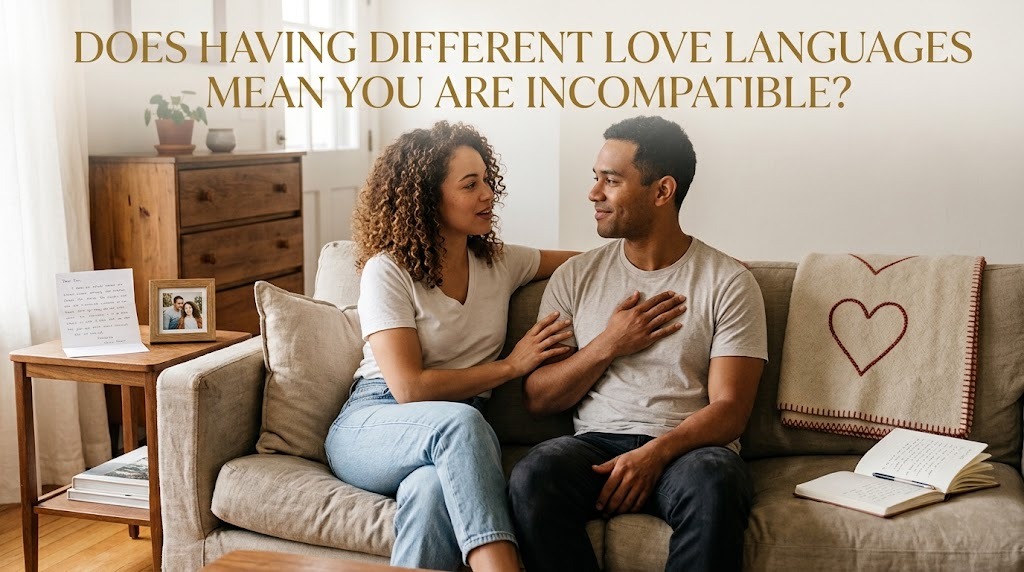
Having different love languages does not automatically mean that two people are incompatible. People can express and receive affection in different ways while still having a healthy and meaningful relationship. One partner may value quality time, while the other may appreciate acts of service or words of affirmation. What matters most is how both people understand, communicate, and respond to each other's emotional needs.
DIFFERENT LOVE LANGUAGES ARE NORMAL
Every person has different experiences, habits, and expectations when it comes to affection. These differences can influence how someone shows care and what makes them feel appreciated. A person may naturally express love by helping their partner, while another may prefer giving compliments or spending time together. Having different preferences is a normal part of relationships.
Problems usually appear when partners assume that their own way of showing love is the only correct way. Someone might feel they have done enough because they regularly give thoughtful gifts, while their partner may still feel disconnected because they want more meaningful conversations. Understanding these differences can help couples avoid unnecessary assumptions.
LOVE LANGUAGE DOES NOT DETERMINE COMPATIBILITY
Compatibility involves much more than love language. Trust, communication, respect, values, emotional maturity, and willingness to compromise can have a much greater influence on how a relationship develops. Two people can have different love languages and still build a strong relationship when they respect each other's needs.
On the other hand, couples with similar love languages may still experience problems if they cannot communicate or respect each other. Similar preferences do not automatically create a healthy relationship. Love language should therefore be viewed as one tool for understanding a partner, not as a test that determines whether two people belong together.
PARTNERS CAN LEARN EACH OTHER'S PREFERENCES
One benefit of having different love languages is that partners can learn new ways to express affection. Someone who naturally prefers words of affirmation can learn to show care through quality time if that matters to their partner. This process can encourage empathy and greater awareness of the other person's emotional needs.
Learning does not require completely changing your personality. It can involve simple actions that show consideration, such as making time for a conversation, helping with a task, or giving sincere encouragement. Small adjustments can make affection easier for both partners to recognize and appreciate.
COMMUNICATION MATTERS MORE THAN SIMILARITY
Different love languages can become easier to manage when partners communicate openly. Instead of expecting the other person to automatically understand their needs, they can explain what makes them feel appreciated. Clear communication reduces guesswork and gives both partners a better chance to respond appropriately.
For example, someone might say that they feel closer when their partner puts away their phone and spends focused time with them. Their partner may not have realized this before, but the conversation provides useful information. Over time, these discussions can help couples understand each other's preferences without turning affection into an obligation.
COMPROMISE CAN STRENGTHEN THE RELATIONSHIP
Compromise is important when partners have different ways of expressing love. Both people may need to make an effort to step outside their usual habits. One partner can learn to provide more quality time, while the other can become more comfortable expressing appreciation through supportive words or helpful actions.
Healthy compromise should not mean ignoring personal boundaries or constantly doing things that feel uncomfortable. It means finding reasonable and genuine ways to meet each other's needs. When both partners are willing to make an effort, their differences can become an opportunity to strengthen the relationship.
LOVE LANGUAGE CAN CHANGE OVER TIME
A person's emotional needs are not always exactly the same throughout a relationship. Stress, work, family responsibilities, personal growth, and major life changes can influence what someone needs from their partner. A person who usually prefers quality time may need practical support during a busy period. Someone who normally enjoys words of affirmation may instead want quiet companionship during a difficult moment.
Because of this, couples should not treat love language as a permanent label. Regular communication and observation are more useful than relying on an old assumption. Checking in with each other can help partners understand how their needs may have changed.
CONCLUSION
Having different love languages does not mean that two people are incompatible. Different preferences can coexist in a healthy relationship when both partners are willing to communicate, understand, and make reasonable efforts for each other. What matters is not having identical love languages but knowing how to respond to differences with empathy and respect.
Love language should be used as a guide rather than a strict relationship rule. A strong relationship also depends on trust, honesty, respect, communication, and consistent effort. When partners are willing to learn how each other experiences affection, different love languages can become a way to build deeper emotional connection rather than a reason to separate.
About the Author
Gusti Ayu Tita P
Author — STEKOM University
An active author focused on academic issues, educational technology, and human resource development in the campus environment.















