
Dynamics of Modern Functional Positions
Gusti Ayu Tita P
12 Agustus 2026
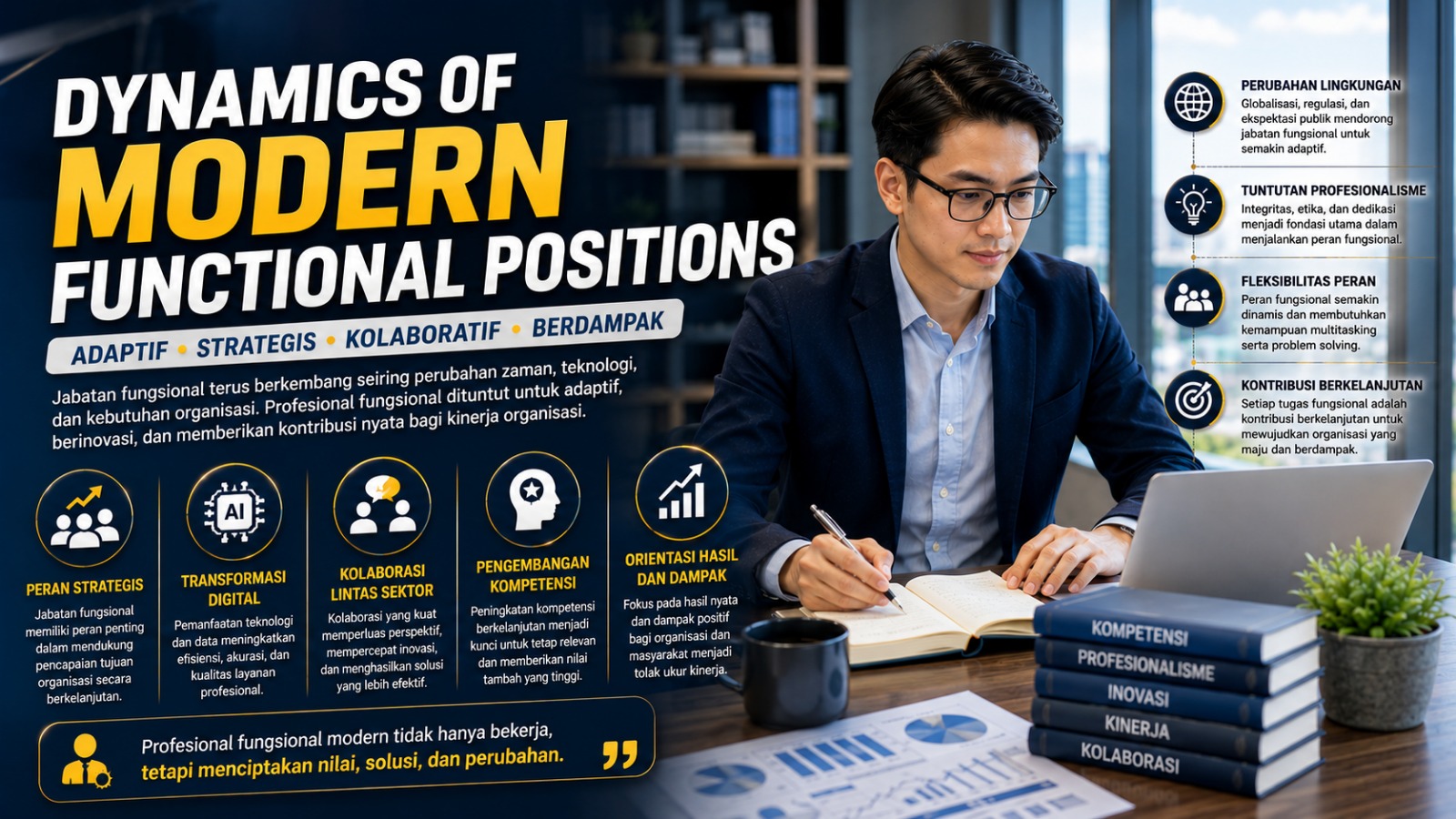
The modern workplace is changing rapidly due to digital transformation, evolving organizational needs, and new professional standards. These changes also influence how functional positions are performed. Professionals are no longer expected to rely only on technical expertise but also need adaptability, communication skills, and digital competence. Understanding these dynamics can help employees remain effective and prepared for future career opportunities.
Modern functional positions provide opportunities for professionals to develop deeper expertise while contributing to organizational performance. At the same time, changing responsibilities require continuous learning and flexibility. Professionals who can combine specialized knowledge with adaptability are better positioned to respond to workplace developments.
THE CHANGING ROLE OF FUNCTIONAL POSITIONS
Functional positions traditionally focus on specific areas of professional expertise. However, modern organizations increasingly expect employees to contribute beyond routine responsibilities. Professionals may need to analyze problems, improve processes, and provide recommendations based on their expertise. This makes functional positions more connected to organizational strategy and performance.
The growing complexity of workplace challenges also increases the value of specialized professionals. Organizations need employees who can understand specific issues and provide practical solutions. As a result, functional positions can become important contributors to innovation, efficiency, and service quality.
DIGITAL TRANSFORMATION IN FUNCTIONAL WORK
Technology is one of the strongest forces shaping modern functional positions. Digital systems are increasingly used for communication, data management, reporting, analysis, and workflow management. Professionals who understand relevant technologies can complete many responsibilities more efficiently. Digital competence has therefore become an important part of modern professional development.
However, technology does not eliminate the need for human expertise. Professionals still need judgment, analytical thinking, and contextual understanding when using digital tools. Combining technical expertise with digital skills can help employees adapt to new working methods while maintaining quality.
CONTINUOUS COMPETENCY DEVELOPMENT
Modern functional positions require professionals to keep their competencies updated. New technologies, regulations, procedures, and organizational priorities can change the skills required for a particular role. Employees who continue learning are better prepared to respond to these developments. Continuous learning is therefore an important part of maintaining professional relevance.
Competency development can take many forms, including training, education, practical experience, mentoring, and independent study. Professionals should focus on learning activities that are connected to their responsibilities and career objectives. This approach helps create relevant and sustainable professional growth.
ADAPTABILITY IN A CHANGING WORKPLACE
Workplace changes can affect responsibilities, processes, and performance expectations. Professionals need to adjust their methods without losing sight of established standards. Adaptability helps employees respond to new situations and learn unfamiliar processes more effectively.
Adaptability also requires a willingness to evaluate existing practices. A method that worked well in the past may become less effective when technology or organizational needs change. Professionals who are willing to improve their methods can maintain effective performance in changing conditions.
COLLABORATION ACROSS PROFESSIONAL AREAS
Modern work often requires collaboration between people with different areas of expertise. Functional professionals may need to cooperate with technical teams, administrators, managers, or other specialists. Effective collaboration allows different forms of knowledge to be combined when addressing complex problems. Teamwork and communication are therefore increasingly important in functional positions.
Collaboration does not mean reducing professional specialization. Instead, it allows specialized knowledge to be applied more effectively within broader organizational projects. Professionals who can communicate their expertise clearly can contribute more effectively to cross-functional problem solving.
PERFORMANCE AND PROFESSIONAL ACCOUNTABILITY
Modern functional positions are increasingly evaluated based on measurable results and professional standards. Employees are expected to demonstrate quality, efficiency, accuracy, and accountability in their work. Clear performance expectations can help professionals understand how their contributions support organizational objectives.
Accountability also encourages professionals to take responsibility for their decisions and results. Regular evaluation can identify strengths and areas that require improvement. When performance measurement is combined with continuous learning, it can support better professional development and organizational effectiveness.
PREPARING FOR THE FUTURE OF FUNCTIONAL WORK
The future of functional positions will likely continue to be influenced by technology, changing organizational structures, and evolving professional requirements. Professionals should therefore avoid relying entirely on existing skills. Developing future-ready competencies can help employees respond to emerging responsibilities and opportunities.
Preparing for the future does not require predicting every workplace change. Instead, professionals can focus on becoming adaptable learners who are capable of acquiring new skills when needed. A combination of expertise, digital competence, communication, and adaptability can create a strong foundation for long-term career growth.
CONCLUSION
The dynamics of modern functional positions are shaped by technological development, changing workplace expectations, continuous competency requirements, and greater collaboration. Professionals need to maintain their specialized expertise while developing digital skills, adaptability, communication, and accountability. Continuous learning can help employees remain relevant as professional demands evolve. By embracing these changes, functional professionals can improve their performance and build a sustainable career in the modern workplace.
About the Author
Gusti Ayu Tita P
Author — STEKOM University
An active author focused on academic issues, educational technology, and human resource development in the campus environment.















