
Eco Friendly Train Stations for Sustainable Transportation
Gusti Ayu Tita P
10 Agustus 2026
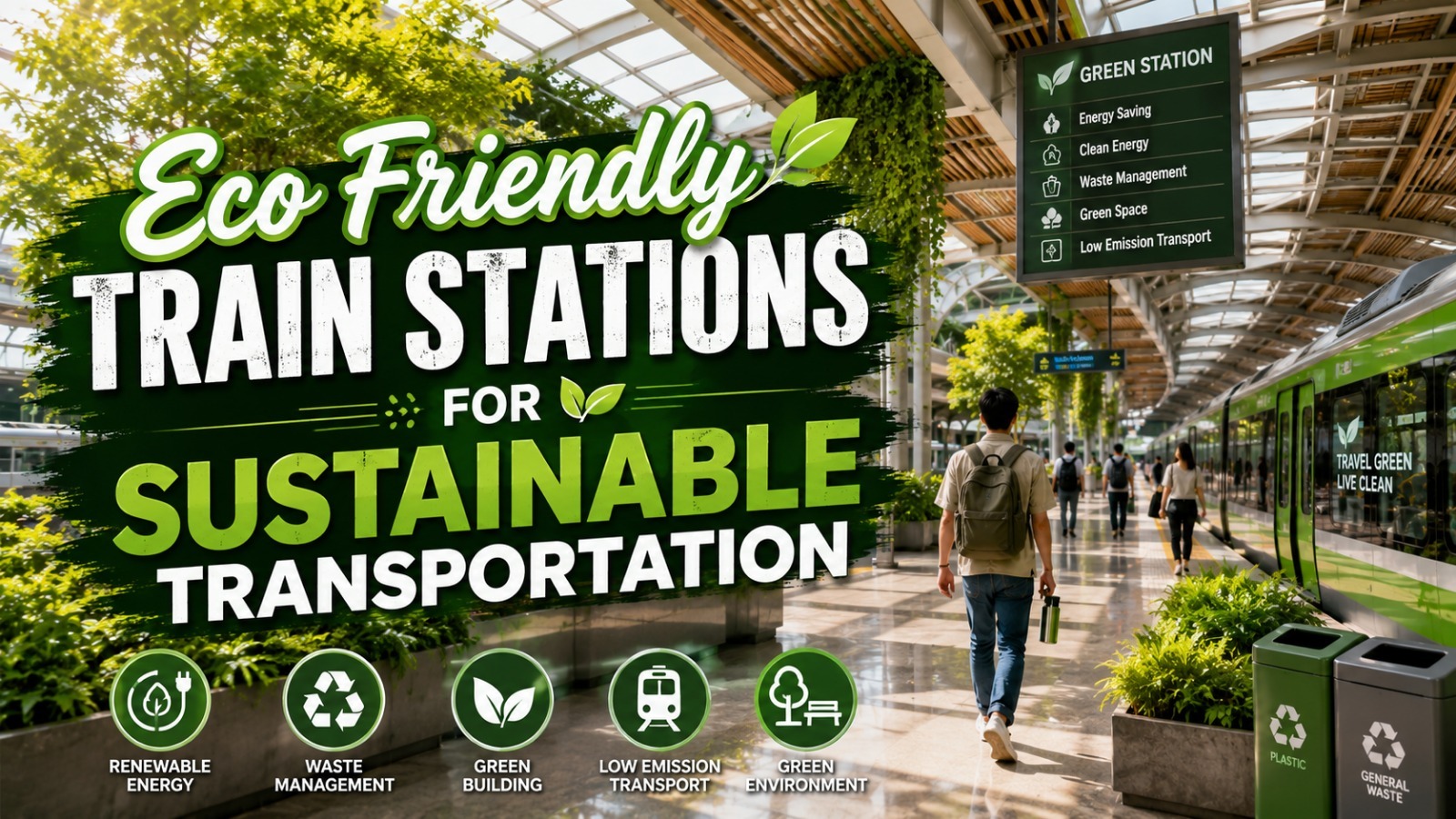
As cities continue to grow, transportation systems face increasing challenges related to traffic, energy consumption, and environmental pollution. Train stations can become an important part of the solution by adopting eco-friendly designs and sustainable technologies. A green train station is designed to reduce environmental impact while maintaining safety, comfort, and efficient passenger services. Sustainable features can be applied to the station building, energy system, water management, and transportation connections. These improvements can make railway infrastructure more responsible toward the environment.
WHAT IS AN ECO FRIENDLY TRAIN STATION?
An eco-friendly train station is a railway facility designed and operated with the goal of reducing its environmental impact. It may use energy-efficient equipment, renewable energy, sustainable materials, and systems that reduce waste and water consumption. The concept is not limited to installing solar panels on the roof. It involves considering environmental performance throughout the station's design, construction, operation, and maintenance.
Sustainable stations also aim to provide a comfortable environment for passengers. Natural lighting, effective ventilation, green spaces, and energy-efficient cooling systems can improve the passenger experience. At the same time, these features can reduce unnecessary energy consumption. Sustainable station design therefore combines environmental responsibility with practical passenger needs.
USING RENEWABLE ENERGY
One important strategy for creating greener stations is the use of renewable energy. Solar panels can be installed on suitable roofs, canopies, or other station structures to generate electricity. The energy produced can support lighting, information displays, ticketing systems, or other station equipment. The actual benefits depend on factors such as local climate, available space, and system design.
Renewable energy can reduce dependence on electricity generated from fossil fuels where grid conditions allow. Some stations may combine solar generation with energy storage systems to improve energy management. Smart energy monitoring can also help operators understand how electricity is being consumed. Efficient energy management is essential because renewable generation alone does not guarantee that a station will operate sustainably.
ENERGY EFFICIENT BUILDINGS
Station buildings can consume significant amounts of energy, particularly when they require lighting, ventilation, air conditioning, and other electrical systems. Energy-efficient design can reduce this consumption without sacrificing passenger comfort. Large windows or skylights can provide natural daylight where appropriate. Efficient lighting systems can also adjust brightness based on occupancy or available daylight.
Building design can also consider local weather conditions. Appropriate insulation, shading, ventilation, and building orientation can reduce the need for excessive heating or cooling. Smart building management systems may automatically control lighting and temperature according to actual usage. These measures can lower operating costs while reducing environmental impacts. A well-designed station can therefore achieve better energy performance throughout its lifetime.
WATER CONSERVATION AND MANAGEMENT
Water management is another important part of an environmentally responsible station. Stations can use water-efficient toilets, faucets, and cleaning systems to reduce unnecessary consumption. Rainwater collection systems may also be used for suitable non-potable purposes, depending on local regulations and infrastructure. These methods can reduce pressure on local water resources. Proper water management is especially important in areas facing seasonal water shortages.
Stations should also maintain effective drainage systems to manage rainwater safely. Green areas and permeable surfaces can help reduce excessive surface runoff in suitable locations. Wastewater must be handled according to applicable environmental standards. Responsible water use benefits both the station and the surrounding community. Sustainable water management can become an important part of long-term railway infrastructure planning.
WASTE REDUCTION AND RECYCLING
Train stations generate waste from passengers, food outlets, retail activities, maintenance, and daily operations. An eco-friendly station should have systems that support waste reduction, separation, and recycling. Clearly labeled waste bins can encourage passengers to separate recyclable materials from general waste. Station operators can also work with service providers to reduce unnecessary packaging and disposable materials.
Waste management should focus on reducing waste at its source whenever possible. Reusable materials and environmentally responsible products can replace some disposable alternatives. Educational signs can also encourage passengers to dispose of waste correctly. Good waste management keeps stations cleaner while reducing the amount of waste sent to landfills. Consistent implementation is important because infrastructure alone cannot solve waste problems.
GREEN SPACES AND NATURAL FEATURES
Green spaces can improve both the environmental performance and visual quality of train stations. Trees, plants, rooftop gardens, and other suitable landscaping can provide shade and natural cooling in certain environments. Vegetation can also improve the appearance of public spaces and create a more pleasant atmosphere for passengers. However, landscaping should be selected according to local climate and maintenance requirements.
Green infrastructure can also support rainwater management and urban biodiversity where appropriate. Stations located in densely developed areas may benefit from carefully designed green areas that provide relief from hard surfaces. Plants should be chosen based on their suitability for the local environment rather than simply for appearance. Well-planned greenery can support both passenger comfort and environmental goals.
SUPPORTING LOW CARBON TRANSPORTATION
A sustainable train station should make it easier for passengers to use transportation options with lower environmental impacts. Walking, cycling, buses, and trains can be integrated through appropriate station planning. Safe pedestrian routes and bicycle parking can encourage passengers to reach stations without private cars. Convenient connections with buses and other public transportation can further reduce dependence on individual vehicles.
Station location and surrounding urban design also matter. A station that is easy to reach by walking or public transportation can support more sustainable travel patterns. Transportation integration should therefore be considered alongside the environmental design of the station building. Low-carbon mobility requires a connected system rather than a single green feature.
SMART TECHNOLOGY FOR SUSTAINABILITY
Technology can help eco-friendly stations monitor and reduce resource consumption. Smart energy meters, automated lighting, building management systems, and environmental sensors can provide useful information about station performance. Operators can use this data to identify areas where energy or water is being wasted. Automated systems can also adjust equipment based on passenger numbers and actual usage.
Smart technology can support long-term sustainability by making station operations more measurable. Regular monitoring allows operators to compare energy use, identify problems, and improve efficiency over time. However, technology should be selected based on real operational needs rather than simply being installed for appearance. Data-driven management can make sustainable station operations more effective and practical.
BENEFITS FOR PASSENGERS AND COMMUNITIES
Eco-friendly train stations can provide several benefits beyond environmental protection. Energy-efficient buildings and improved ventilation can contribute to better passenger comfort. Cleaner public spaces, improved greenery, and efficient waste management can create a more pleasant station environment. Sustainable transportation connections can also make it easier for communities to travel without relying heavily on private vehicles.
Local communities can benefit from reduced environmental impacts and improved public spaces. Sustainable station projects may also create opportunities for green jobs, local businesses, and environmental education. However, projects should consider the needs of surrounding communities and avoid creating unnecessary costs or access barriers. Sustainability should be practical, inclusive, and beneficial to passengers.
THE FUTURE OF SUSTAINABLE TRAIN STATIONS
The future of train stations is likely to involve greater integration of renewable energy, smart technology, efficient buildings, green infrastructure, and low-carbon transportation. New stations can incorporate sustainability from the earliest stages of planning. Existing stations can also be improved through renovations, energy upgrades, better waste management, and improved public transportation connections.
The most effective approach will depend on local conditions. Climate, available technology, passenger demand, budget, and existing infrastructure all influence which sustainable solutions are appropriate. Rather than applying the same design everywhere, railway operators can choose solutions that provide measurable environmental and passenger benefits. Smart and adaptable sustainability strategies can help train stations support transportation needs while reducing their environmental footprint.
CONCLUSION
Eco-friendly train stations can play an important role in creating more sustainable transportation systems. Renewable energy, energy-efficient buildings, water conservation, waste reduction, green spaces, and smart technology can all contribute to better environmental performance. Strong connections with walking, cycling, buses, and rail services can further encourage low-carbon travel. Sustainable stations should focus not only on environmental goals but also on passenger comfort, accessibility, and practical operation. By combining thoughtful design with efficient management, train stations can become important examples of sustainable infrastructure for the future.
About the Author
Gusti Ayu Tita P
Author — STEKOM University
An active author focused on academic issues, educational technology, and human resource development in the campus environment.















