
Economic Justice for Public Welfare
Gusti Ayu Tita P
13 Agustus 2026
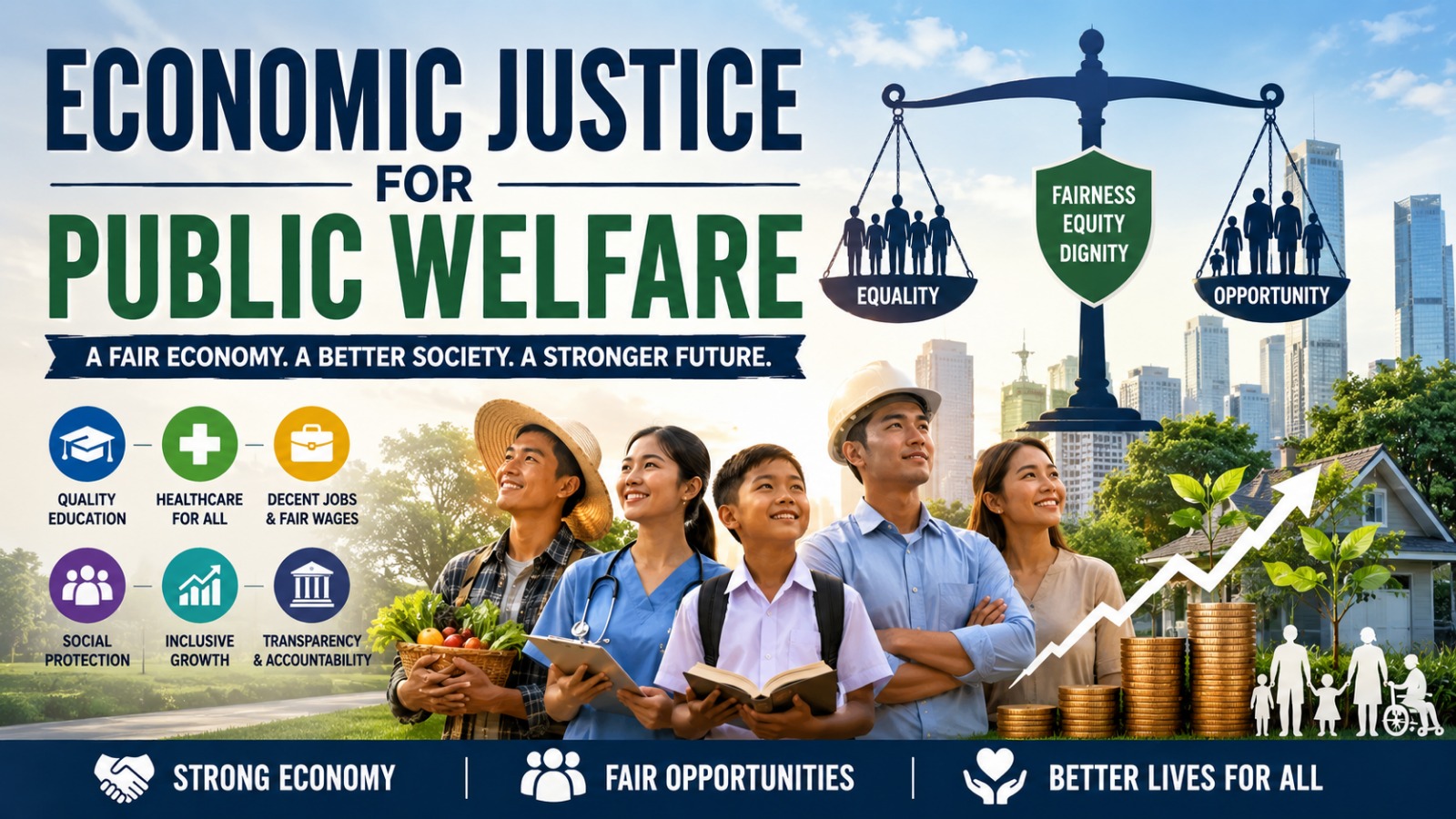
Economic Justice is an important concept that focuses on creating fairness in the distribution of wealth, opportunities, and resources within society. Every individual deserves equal access to education, healthcare, employment, and financial stability. When economic systems are fair, people can improve their quality of life and contribute positively to national development. This is why economic justice plays a major role in supporting public welfare and social stability.
In many countries, economic inequality continues to become a serious challenge. Some communities still struggle with poverty, unemployment, and limited access to basic services. Governments, businesses, and society must work together to reduce these inequalities. Through fair economic policies and inclusive growth, societies can build a stronger and more prosperous future for everyone.
THE IMPORTANCE OF ECONOMIC JUSTICE
Public Welfare cannot be achieved without economic fairness. When wealth is distributed more equally, people have better opportunities to live healthy and productive lives. Access to affordable healthcare, quality education, and decent jobs helps reduce poverty and improve social conditions. Economic justice also strengthens trust between citizens and government institutions.
Another important benefit of Economic Equality is social stability. Large income gaps often create social tension, crime, and dissatisfaction within society. By providing equal economic opportunities, governments can reduce conflict and create a more peaceful environment. Fair wages and worker protection also encourage people to participate actively in economic development.
FACTORS THAT INFLUENCE PUBLIC WELFARE
Several factors strongly influence the success of public welfare programs. One major factor is access to education. Education gives people the skills and knowledge needed to find better employment opportunities and improve their financial conditions. Countries with strong educational systems usually experience higher economic growth and lower poverty rates.
Healthcare also plays a vital role in achieving Social Welfare. Healthy citizens are more productive and able to contribute effectively to society. In addition, stable employment opportunities and fair business practices support economic security for families. Governments must ensure that economic policies protect both workers and businesses in a balanced way.
THE ROLE OF GOVERNMENT IN ACHIEVING ECONOMIC JUSTICE
Governments have a significant responsibility in promoting Fair Economic Policies. They can create laws that protect workers’ rights, regulate minimum wages, and provide social assistance for vulnerable communities. Tax systems should also be designed fairly so that wealth can be redistributed to support public services such as education and healthcare.
Besides creating policies, governments should encourage investment and job creation. Supporting small businesses and local industries can strengthen the economy and reduce unemployment. Transparency and accountability are also necessary to prevent corruption and misuse of public funds. Effective leadership helps ensure that economic growth benefits all citizens, not only certain groups.
CHALLENGES IN IMPLEMENTING ECONOMIC JUSTICE
Although economic justice is important, implementing it is not always easy. One major challenge is the unequal distribution of resources between urban and rural areas. Many rural communities still lack proper infrastructure, healthcare, and educational facilities. This creates economic gaps that are difficult to overcome without long-term planning.
Global economic competition is another challenge for Economic Development. Rapid technological changes and international market pressures can increase unemployment in some sectors. In addition, corruption and weak policy enforcement often reduce the effectiveness of welfare programs. Therefore, cooperation between government, private sectors, and society is essential to achieve sustainable economic justice.
CONCLUSION
Economic Justice is a key foundation for improving public welfare and creating a balanced society. Fair access to education, healthcare, and employment opportunities allows individuals to live with dignity and security. Economic fairness not only reduces poverty but also strengthens national stability and social harmony.
To achieve long-term prosperity, governments and communities must continue supporting inclusive economic growth and fair policies. By working together, societies can create equal opportunities for all citizens regardless of their background. A fair economic system will help build a stronger future where public welfare becomes a reality for everyone.
About the Author
Gusti Ayu Tita P
Author — STEKOM University
An active author focused on academic issues, educational technology, and human resource development in the campus environment.















