Electric Vehicles and the Future of Road Travel
Gusti Ayu Tita P
11 Agustus 2026
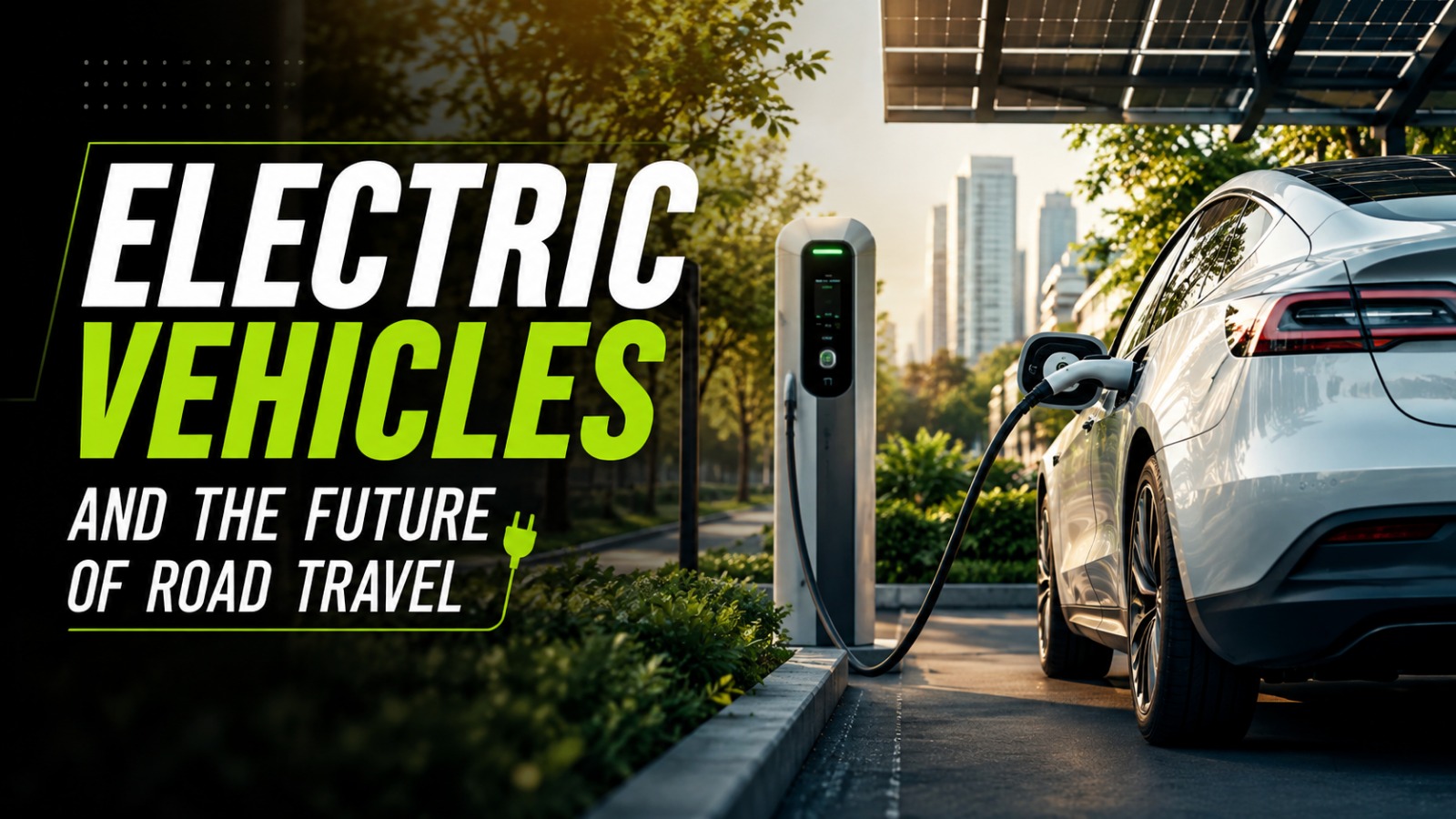
The transportation sector is changing as electric vehicles EVs become an increasingly important part of modern road travel. Unlike conventional vehicles that mainly use internal combustion engines powered by gasoline or diesel, electric vehicles use electric motors and batteries for propulsion. This technology can reduce direct exhaust emissions and offer a quieter driving experience. As battery technology, charging infrastructure, and vehicle design continue to improve, electric mobility is becoming more practical for everyday transportation.
The growth of electric vehicles is also influenced by efforts to create cleaner and more efficient transportation systems. Governments, manufacturers, energy providers, and consumers are increasingly considering how road travel can become less dependent on fossil fuels. However, the transition to electric mobility also involves challenges such as charging availability, battery production, purchase costs, and electricity supply.
HOW ELECTRIC VEHICLES WORK?
Electric vehicles use electric motors powered by rechargeable batteries to generate movement. When the driver accelerates, electrical energy from the battery is delivered to the motor, which converts that energy into mechanical power. Compared with conventional engines, electric motors have fewer moving parts and can deliver strong torque quickly. This allows many electric vehicles to provide smooth and responsive acceleration.
Most battery electric vehicles are charged by connecting them to an external electricity supply. Charging can take place at home, workplaces, public charging stations, or dedicated charging facilities. Charging speed depends on the vehicle, charger, battery condition, and electrical system, so drivers need to consider charging time when planning longer journeys.
REDUCING DIRECT VEHICLE EMISSIONS
One of the main advantages of electric vehicles is that battery electric vehicles produce no tailpipe emissions while driving. This can help reduce local air pollution in areas with heavy road traffic, particularly when electric vehicles replace conventional combustion vehicles. Lower direct emissions can be especially valuable in densely populated cities where large numbers of vehicles operate close to residential and commercial areas.
However, electric vehicles are not completely free from environmental impacts. Electricity generation, battery manufacturing, raw material extraction, and vehicle production also require energy and resources. The overall environmental benefit depends partly on how electricity is generated and how efficiently batteries and vehicles are produced and managed.
ADVANCES IN BATTERY TECHNOLOGY
Battery technology is one of the most important factors influencing the future of electric vehicles. Modern batteries are becoming more energy dense, allowing vehicles to store more energy without proportionally increasing battery size. Improvements in battery management systems can also help control charging, temperature, and overall battery performance.
Researchers and manufacturers continue to explore new battery chemistries and improved cell designs to increase energy density, durability, safety, and charging performance. Battery development is particularly important because vehicle range and charging convenience strongly influence consumer confidence. Continued innovation could make electric vehicles increasingly suitable for longer-distance travel.
EXPANDING CHARGING INFRASTRUCTURE
A reliable EV charging network is essential for the widespread adoption of electric vehicles. Drivers need convenient charging locations that are available along highways, in cities, at workplaces, and near residential areas. Home charging can be particularly convenient for people who have suitable parking and electrical access.
Public charging infrastructure is especially important for people who cannot charge at home. Fast charging stations can reduce the time required to add energy during longer journeys, although charging speed varies according to the vehicle and charging equipment. Expanding charging infrastructure requires careful planning of electricity capacity, locations, grid connections, maintenance, and payment systems.
ELECTRIC VEHICLES AND ROAD TRAVEL
Electric vehicles can change the way people experience daily road travel. Electric motors generally operate quietly, which can reduce vehicle noise compared with conventional engines. Smooth acceleration and regenerative braking can also provide a different driving experience for passengers and drivers.
Regenerative braking allows an electric vehicle to recover some energy during deceleration and send it back to the battery. This can improve energy efficiency, particularly in stop-and-go traffic. Efficient energy management is one reason electric vehicles can be well suited to urban driving conditions where frequent acceleration and braking occur.
LOWER OPERATING AND MAINTENANCE NEEDS
Electric vehicles can offer potential savings in vehicle maintenance and energy costs, although actual savings depend on electricity prices, driving patterns, vehicle type, and local conditions. Electric drivetrains generally have fewer moving components than conventional combustion powertrains. They do not require engine oil changes, for example, because there is no conventional engine using motor oil in the same way.
Electric vehicles still require regular maintenance. Tires, brakes, suspension components, cooling systems, and other parts need inspection and servicing. Battery health also needs to be monitored because battery capacity can decrease over time. Proper maintenance and thermal management can help support long-term vehicle performance.
SUPPORTING SMART AND CONNECTED MOBILITY
Electric vehicles are increasingly connected to digital systems that can provide information about battery status, charging locations, energy consumption, and vehicle performance. Mobile applications can allow drivers to monitor charging and plan journeys around available charging stations. Connected systems can also help manufacturers and service providers identify vehicle issues and provide software updates.
Electric vehicles can also become part of a wider smart mobility ecosystem. In the future, vehicles may interact more closely with charging networks, electricity grids, traffic systems, and renewable energy sources. Vehicle-to-grid technology, where supported by compatible vehicles and infrastructure, could allow certain vehicles to exchange electricity with the grid under appropriate conditions.
CHALLENGES OF ELECTRIC VEHICLE ADOPTION
Despite their potential, electric vehicles still face several practical and economic challenges. The initial purchase price of some EV models can be higher than comparable conventional vehicles, although operating and maintenance costs may offset part of the difference over time. Charging access can also be difficult for drivers who live in apartments or areas without dedicated parking.
Battery production creates additional challenges involving raw materials, manufacturing energy, recycling, and supply chains. Recycling systems can help recover valuable materials from used batteries and reduce waste. Developing responsible battery supply chains and better recycling technologies will be important as the number of electric vehicles increases.
THE FUTURE OF ELECTRIC ROAD TRAVEL
The future of road travel is likely to include a more diverse mix of electric cars, buses, trucks, motorcycles, and other electric vehicles. Passenger vehicles may continue to see rapid electrification, while heavier vehicles may require different technological approaches depending on their range, payload, charging needs, and operating schedules. Improvements in batteries and charging infrastructure will influence how quickly different vehicle categories transition.
Electric mobility will also depend on the development of the wider transportation and energy system. Reliable electricity networks, accessible charging infrastructure, supportive policies, skilled technicians, and responsible battery management are necessary for sustainable growth. The transition will not happen at the same speed in every region because infrastructure, income levels, energy systems, and transportation needs differ.
CONCLUSION
Electric vehicles and the future of road travel are closely connected as transportation moves toward cleaner and more efficient technologies. Electric motors, advanced batteries, regenerative braking, connected systems, and expanding charging networks are changing how vehicles are designed and used. EVs can reduce direct tailpipe emissions and may offer advantages in operating efficiency and maintenance.
However, electric mobility requires more than replacing gasoline or diesel vehicles with electric models. Charging infrastructure, battery sustainability, electricity supply, affordability, recycling, and long-term planning must develop together. With continued technological progress and effective infrastructure investment, electric vehicles can play an important role in creating a more efficient, quieter, and potentially lower-emission future for road transportation.
About the Author
Gusti Ayu Tita P
Author — STEKOM University
An active author focused on academic issues, educational technology, and human resource development in the campus environment.