
Entertainment Content As A Way To Relax Amid Busy Schedules
Gusti Ayu Tita P
7 Agustus 2026
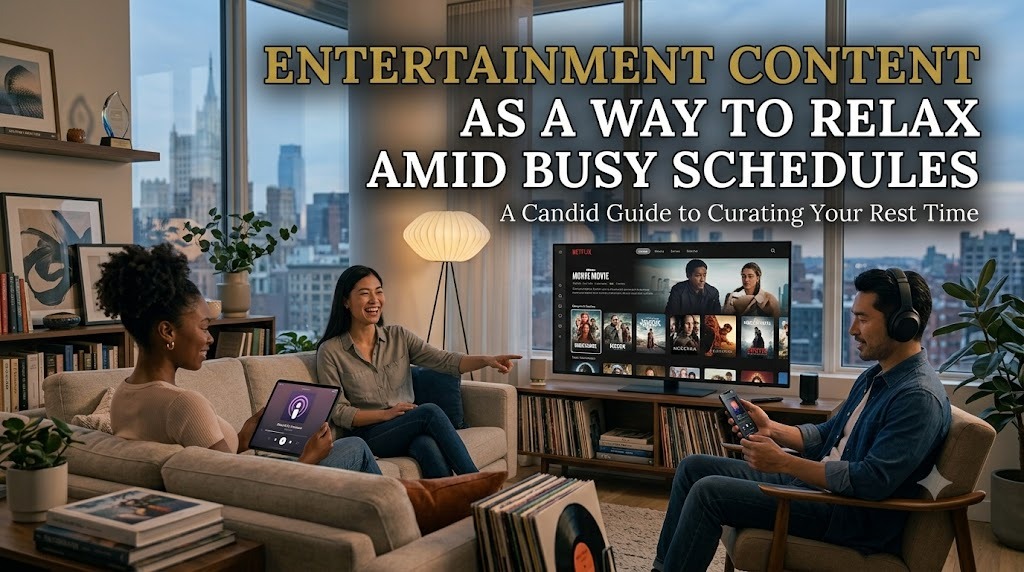
Modern life often requires people to manage work, school, family responsibilities, and social activities at the same time. A busy schedule can make it difficult to find enough time for rest and personal activities. Entertainment content can provide a simple way to take a short break from daily responsibilities. Movies, music, games, podcasts, and short videos are easily accessible through digital devices.
Using entertainment as a way to relax does not mean avoiding responsibilities. When consumed appropriately, it can become a small part of a balanced daily routine. The key is choosing suitable entertainment and managing the amount of time spent consuming it. With healthy habits, entertainment can provide enjoyment without interfering with important activities.
PROVIDING A SHORT BREAK FROM DAILY ACTIVITIES
Busy schedules can make people feel mentally tired after completing many tasks. Taking a short break through enjoyable entertainment can create an opportunity to step away from demanding activities. A brief entertainment break may help people feel refreshed before returning to their responsibilities.
For example, someone may listen to music during a break, watch a short comedy video after studying, or read an interesting story before resting. These activities can provide a change of focus without requiring complicated preparation. Simple forms of entertainment can fit into short periods of free time. However, breaks should remain controlled so they do not become longer than planned.
HELPING IMPROVE MOOD
Entertainment can influence emotions by providing humor, excitement, inspiration, or comfort. Watching a funny program or listening to favorite music may help create a more positive mood. Enjoyable content can provide emotional relief after a demanding day.
Different people may respond differently to entertainment. Some may prefer comedy, while others may enjoy music, games, films, or educational programs. Choosing entertainment that matches personal preferences can make relaxation more enjoyable. People should also remember that entertainment is only one part of maintaining emotional well-being.
REDUCING MENTAL FATIGUE
Continuous concentration on work or study can contribute to mental fatigue. Switching temporarily to an enjoyable activity can give the mind a different type of stimulation. Entertainment can provide a mental transition between demanding tasks and periods of rest.
However, not every form of entertainment is equally relaxing. Highly stimulating games, intense videos, or endless social media scrolling may sometimes leave people feeling more mentally tired. Relaxing content should be selected according to personal needs and circumstances. Quiet music, light comedy, or a familiar program may be more suitable when the goal is to unwind.
SUPPORTING QUALITY PERSONAL TIME
Entertainment can become part of personal time when people intentionally choose activities they enjoy. Personal time allows individuals to focus on their interests without constantly thinking about work or school. Having enjoyable activities can make daily routines feel more balanced.
The quality of personal time is often more important than its length. Someone may only have a short period available but can still enjoy it by choosing content carefully. Intentional entertainment can be more satisfying than consuming content without a clear purpose. Planning small periods of leisure can also prevent entertainment from interfering with other responsibilities.
MAKING REST MORE ACCESSIBLE
Digital entertainment is widely available through smartphones, computers, televisions, and other devices. This accessibility allows people to find suitable entertainment almost anywhere. Easy access makes entertainment a convenient option for short periods of relaxation.
Despite this convenience, accessibility can also encourage excessive consumption. Automatically recommended videos and continuous feeds can make it difficult to stop. Convenience should be balanced with self-control. Setting a specific amount of leisure time can help people enjoy digital entertainment without losing track of their schedules.
CHOOSING CONTENT THAT SUPPORTS RELAXATION
Not all entertainment content has the same effect. Some content may be calming, while other material can increase excitement or emotional stimulation. Understanding personal preferences can help people select content that actually supports relaxation.
For example, someone who feels mentally exhausted may benefit from light music or a familiar comedy rather than intense news or competitive games. Content should also be appropriate for the person's current situation. The best entertainment choice depends on the individual's mood, energy level, and available time.
AVOIDING EXCESSIVE SCREEN TIME
Entertainment can become counterproductive when it takes too much time. Spending hours watching videos or scrolling through social media may reduce time available for sleep, exercise, study, work, or relationships. Excessive screen time can turn a relaxing activity into another source of imbalance.
People can avoid this problem by creating simple boundaries. They can set time limits, take regular breaks, and avoid entertainment during important tasks. A clear stopping point makes it easier to maintain healthy entertainment habits. The goal is to enjoy digital content without allowing it to control the daily schedule.
BALANCING ENTERTAINMENT WITH OTHER ACTIVITIES
Entertainment should be combined with other forms of relaxation and healthy activity. Physical exercise, hobbies, social interaction, outdoor activities, and adequate sleep are also important for maintaining a balanced lifestyle. Digital entertainment should complement these activities rather than replace them.
A balanced routine allows people to enjoy entertainment while continuing to meet their responsibilities. Creating a daily schedule can help individuals determine when they can work, study, rest, and enjoy entertainment. Good time management makes leisure more enjoyable because it reduces unnecessary guilt or distraction.
USING ENTERTAINMENT INTENTIONALLY
Intentional entertainment means choosing content because it provides a specific benefit or enjoyment rather than consuming it automatically. Before opening a platform, people can decide what they want to watch or listen to and how much time they have. Having a clear purpose can prevent endless browsing.
People can also evaluate how they feel after consuming certain content. If a particular type of entertainment regularly causes stress, frustration, or lost time, it may be useful to reduce its use. Self-awareness helps people create healthier digital habits. Entertainment should ultimately support a person's routine instead of disrupting it.
CONCLUSION
Entertainment content can be an effective way to relax amid busy schedules when it is used wisely. Music, movies, games, podcasts, comedy, and other digital content can provide short breaks, improve mood, and create enjoyable personal time. The benefits depend largely on the type of content and how it is consumed.
A healthy approach requires balance and self-control. Choosing suitable content, setting time limits, and maintaining other healthy activities can help people enjoy entertainment without neglecting important responsibilities. When used intentionally, entertainment can become a simple and enjoyable part of a balanced daily routine.
About the Author
Gusti Ayu Tita P
Author — STEKOM University
An active author focused on academic issues, educational technology, and human resource development in the campus environment.















