
Environmentally Friendly Sea Transportation For The Future
Gusti Ayu Tita P
11 Agustus 2026
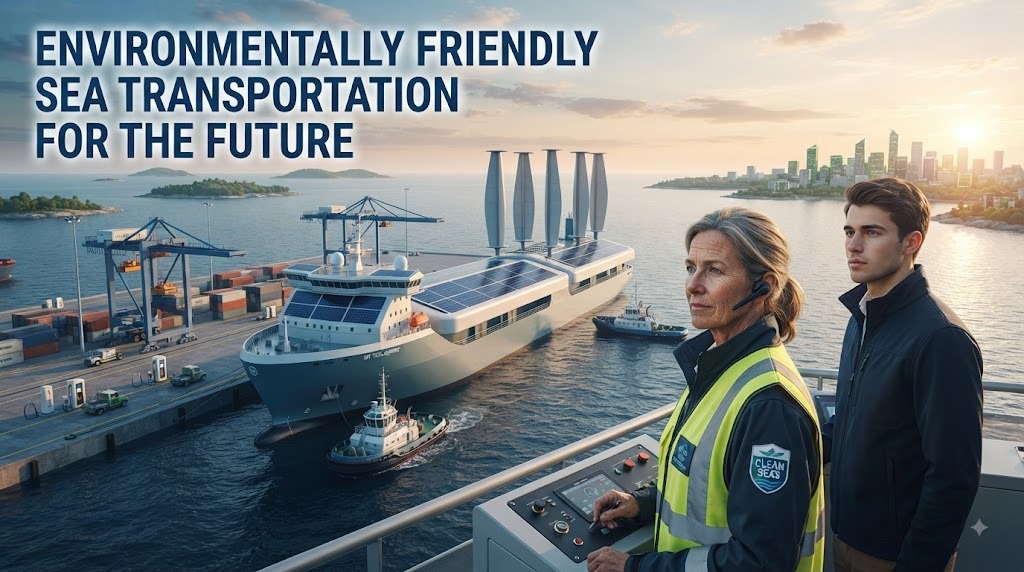
Sea transportation is an important part of global trade and regional connectivity. Ships can carry large quantities of goods and passengers over long distances, making maritime transport an efficient transportation option. However, shipping activities can produce greenhouse gas emissions, air pollution, wastewater, and other environmental impacts. Environmentally friendly sea transportation is therefore becoming increasingly important for the future of the maritime industry. The goal is to maintain the benefits of shipping while reducing its impact on oceans, coastal areas, and the atmosphere.
The transition toward greener maritime transportation requires changes in ships, fuels, ports, operations, and regulations. New technologies can help vessels consume less energy and produce fewer emissions. Renewable energy and alternative fuels may also play an increasing role in the maritime sector. At the same time, better operational planning can improve efficiency without requiring immediate changes to entire fleets. A combination of technology, sustainable practices, and responsible management can create a cleaner maritime transportation system.
THE IMPORTANCE OF GREEN SEA TRANSPORTATION
Green sea transportation is important because the maritime industry operates on a very large scale. Ships transport a significant share of international merchandise trade, which means improvements in shipping efficiency can have a broad environmental effect. Green shipping focuses on reducing emissions, energy consumption, pollution, and waste. It also encourages the responsible use of marine and coastal resources.
Environmental improvements can provide economic benefits as well. Lower fuel consumption can reduce operating costs for shipping companies. More efficient vessels may also require less energy to transport the same amount of cargo. Cleaner operations can help companies meet increasingly demanding environmental standards. Sustainable maritime practices can therefore support both environmental protection and long-term business efficiency.
REDUCING SHIP EMISSIONS
Ship emissions are one of the major environmental concerns in maritime transportation. Conventional marine fuels can produce carbon dioxide, sulfur oxides, nitrogen oxides, and particulate matter. Emission reduction requires improvements in vessel design, fuel quality, operational practices, and engine technology. Reducing emissions can improve air quality and help limit the maritime sector's contribution to climate change.
Shipping companies can reduce emissions by optimizing vessel speed and routes. Regular engine maintenance can also ensure that vessels operate more efficiently. Digital monitoring systems can identify excessive fuel consumption and inefficient operating patterns. These measures can reduce emissions without requiring immediate replacement of existing vessels. Over time, cleaner propulsion systems can further accelerate the transition.
USING CLEANER MARITIME FUELS
Fuel choice has a major influence on the environmental performance of a ship. The maritime industry is exploring alternatives such as methanol, biofuels, hydrogen, ammonia, and other lower-emission energy options. Each fuel has different advantages, limitations, infrastructure requirements, and safety considerations. The most appropriate option can depend on vessel type, route, availability, and technological development.
Cleaner fuels can reduce certain emissions compared with conventional marine fuels. However, their environmental benefits depend on how the fuels are produced and transported. For example, hydrogen and ammonia may provide greater climate benefits when produced using low-carbon energy. Fuel storage and handling systems may also need to be redesigned. A gradual transition supported by appropriate infrastructure will be important.
RENEWABLE ENERGY FOR SHIPPING
Renewable energy can contribute to cleaner maritime transportation. Solar panels can provide supplementary electricity for certain onboard systems, while wind-assisted technologies can reduce fuel consumption under suitable conditions. Renewable maritime energy does not necessarily replace the main propulsion system but can complement other technologies. These solutions are particularly useful when they can reduce energy demand without affecting operational safety.
Modern wind-assisted propulsion can include rotor sails, rigid sails, and other systems designed to use wind more efficiently. Solar energy can also support lighting, communication, monitoring, and other electrical systems. The effectiveness of renewable technologies depends on vessel design, route, weather, and operating conditions. Combining renewable energy with efficient engines can improve overall performance. Continued research may make these technologies more practical for a wider range of vessels.
ENERGY EFFICIENT SHIP DESIGN
Ship design plays a major role in determining fuel consumption and emissions. Modern vessels can be designed with hull shapes that reduce water resistance and propulsion systems that use energy more efficiently. Energy efficient ships can transport more cargo while consuming less fuel. Better design can therefore provide environmental and economic benefits throughout a vessel's operational life.
Lightweight materials and improved propeller designs can also contribute to efficiency. Advanced engines can convert fuel into useful propulsion more effectively. Designers can use computer modeling to evaluate vessel performance before construction. Regular upgrades can further improve the efficiency of existing ships. Combining efficient design with responsible operation can significantly reduce energy use.
DIGITAL TECHNOLOGY AND SMART SHIPPING
Digital technology can help shipping companies make transportation more efficient. Sensors can monitor fuel consumption, engine performance, weather conditions, and vessel speed. Smart shipping systems can analyze this information to improve routes and operational decisions. Better data can help crews and shore-based teams identify opportunities to reduce energy use.
Artificial intelligence and predictive analytics can also support route optimization and maintenance planning. Digital systems can predict equipment problems before they cause major failures. This can reduce unnecessary fuel consumption and operational disruptions. However, digital systems must be protected from cybersecurity threats. Technology is most effective when combined with skilled workers and appropriate operational procedures.
GREEN PORTS AND CLEANER OPERATIONS
Ports are an important part of environmentally friendly sea transportation. Ships may consume fuel while waiting, loading, unloading, or receiving services at port. Green ports can reduce environmental impacts through cleaner equipment, renewable electricity, efficient cargo handling, and better waste management. Port improvements can therefore complement cleaner ships.
Shore power systems can allow compatible vessels to use electricity from land while docked instead of running onboard engines for certain electrical needs. Ports can also use electric cargo-handling equipment and energy-efficient lighting. Proper wastewater and waste management can reduce pollution entering marine environments. Digital scheduling can also reduce unnecessary vessel waiting times. Cleaner port operations can strengthen the overall sustainability of maritime transportation.
REDUCING FUEL CONSUMPTION
Fuel efficiency is closely connected to environmental performance. Ships that use less fuel generally produce fewer emissions during operation. Fuel efficiency can be improved through optimized speed, route planning, hull maintenance, propeller maintenance, and efficient engine operation. Even relatively simple operational improvements can produce measurable benefits.
Slow steaming can reduce fuel consumption in suitable circumstances, although it may increase travel time. Weather routing can help vessels avoid conditions that increase resistance and fuel use. Regular hull cleaning can reduce resistance caused by marine growth. Digital monitoring can help identify inefficient operating patterns. A combination of these methods can reduce both costs and environmental impacts.
REDUCING MARINE POLLUTION
Environmental sustainability involves more than reducing greenhouse gas emissions. Ships can also generate wastewater, solid waste, oil residues, and other pollutants. Marine pollution prevention requires proper waste handling, equipment maintenance, and compliance with maritime environmental standards. Preventing pollutants from entering the ocean is essential for protecting marine ecosystems.
Modern ships can use improved wastewater treatment and waste management systems. Crew members must receive proper training on waste separation and disposal procedures. Ports should also provide adequate reception facilities for ship-generated waste. Regular inspections can help ensure environmental procedures are followed. Strong pollution prevention measures can protect marine resources and coastal communities.
THE ROLE OF MARITIME REGULATIONS
Regulations play an important role in encouraging cleaner maritime transportation. International and national rules can establish standards for emissions, fuel quality, waste management, and vessel efficiency. Maritime environmental regulations create a framework for shipping companies to reduce their environmental impact. They also help create consistent expectations across the industry.
Effective regulations should be supported by monitoring and enforcement. Shipping companies need clear information about environmental requirements and sufficient time to adapt. Incentives can also encourage investment in cleaner technologies. Cooperation between governments and the maritime industry can make environmental policies more practical. Strong but achievable regulations can accelerate the transition toward greener shipping.
DEVELOPING GREEN MARITIME SKILLS
Technology alone cannot create sustainable sea transportation. Maritime workers need knowledge about energy efficiency, alternative fuels, digital systems, environmental protection, and new safety procedures. Green maritime skills will become increasingly important as the industry changes. Training programs can help workers adapt to new technologies and operational practices.
Seafarers and port workers may need additional training when new fuels and propulsion systems are introduced. Alternative fuels can have different handling and safety requirements. Digital systems also require workers to understand data and cybersecurity. Continuous professional development can help maintain high operational standards. Investing in human resources is therefore an important part of maritime sustainability.
CHALLENGES OF GREEN SEA TRANSPORTATION
The transition to environmentally friendly sea transportation faces several challenges. Alternative fuels and new propulsion technologies can require significant investment. Green shipping challenges also include limited fuel availability, charging infrastructure, technological uncertainty, and workforce training. Smaller shipping companies may face greater financial difficulties when upgrading their fleets.
There is also no single solution suitable for every type of vessel. A technology that works well for a short-distance ferry may not be practical for a large ocean-going cargo ship. Governments and businesses need to consider technical, economic, safety, and environmental factors when selecting solutions. Research and development can help reduce uncertainty. A gradual and coordinated transition can make green shipping more achievable.
ECONOMIC BENEFITS OF SUSTAINABLE SHIPPING
Environmentally friendly transportation can provide long-term economic benefits. Lower fuel consumption can reduce operating expenses, while efficient vessels can improve the use of energy and resources. Sustainable shipping can also help companies prepare for stricter environmental standards and changing customer expectations. Cleaner operations may improve a company's reputation and competitiveness.
Investment in green maritime technology can also create new industries and employment opportunities. Demand may increase for alternative fuels, electric propulsion, energy-efficient equipment, digital systems, and environmental services. Ports can develop new services to support cleaner vessels. These developments can contribute to a broader green economy. Sustainable transportation can therefore support both environmental protection and economic development.
THE FUTURE OF ENVIRONMENTALLY FRIENDLY SHIPPING
The future of sea transportation is likely to involve a combination of technologies rather than one universal solution. Green maritime technology may include alternative fuels, electric propulsion, wind assistance, renewable energy, smart shipping, and energy-efficient vessel design. Different solutions will be selected based on vessel type, route, cargo, and available infrastructure. Continuous innovation will be important for reducing emissions further.
Collaboration will also determine how quickly the maritime sector can become more sustainable. Governments, shipping companies, ports, energy producers, technology developers, and educational institutions need to work together. Investment in research and infrastructure can accelerate the adoption of cleaner technologies. Environmental goals should be balanced with safety, reliability, and economic feasibility. With coordinated action, sea transportation can become cleaner while continuing to support global trade and connectivity.
CONCLUSION
Environmentally friendly sea transportation is essential for the future of the maritime industry. Cleaner fuels, efficient ship designs, renewable energy, smart technology, electric vessels, green ports, and improved operational practices can reduce emissions and pollution. These solutions can also lower fuel consumption and create economic opportunities.
However, achieving sustainable maritime transportation requires more than technological innovation. Infrastructure, regulations, skilled workers, investment, safety standards, and international cooperation must develop together. Different vessels and routes will require different environmental solutions. By combining technology with responsible management, the maritime sector can move toward a cleaner, safer, and more sustainable future.
About the Author
Gusti Ayu Tita P
Author — STEKOM University
An active author focused on academic issues, educational technology, and human resource development in the campus environment.















