Equal Rights and Justice for Every Citizen
Gusti Ayu Tita P
24 Juli 2026
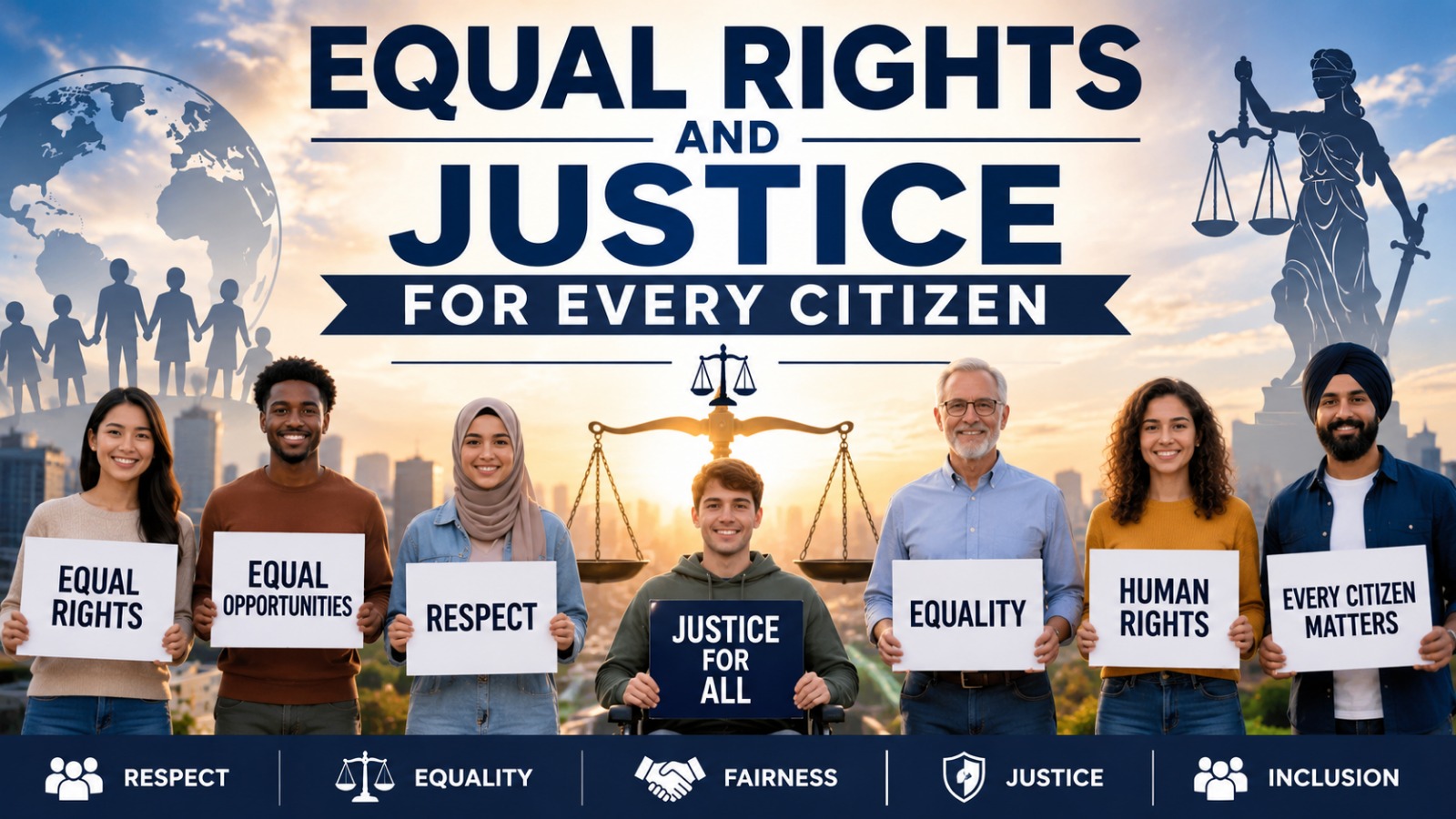
Equal rights and justice are important foundations of a peaceful and developed society. Every person deserves to be treated fairly regardless of their race, religion, gender, social status, or background. In many countries, people still face discrimination and unequal opportunities in education, healthcare, employment, and law enforcement. Because of this, governments and communities must work together to create a fair system for all citizens. Human rights protection is not only a legal responsibility but also a moral duty that supports social harmony and national progress.
THE IMPORTANCE OF EQUAL RIGHTS IN SOCIETY
Equal rights help people live with dignity, freedom, and security. When citizens receive the same opportunities, they can contribute positively to society and improve their quality of life. Fair treatment also reduces conflict and discrimination among communities. A society that values equality encourages respect, tolerance, and unity among different groups of people.
In addition, equal rights support economic and social development. People who have access to education, jobs, and healthcare are more likely to become productive members of society. Governments that protect civil rights often experience greater stability and public trust. This shows that equality is not only beneficial for individuals but also for the growth of a nation.
THE ROLE OF JUSTICE FOR EVERY CITIZEN
Justice for every citizen means that laws should apply equally to everyone without favoritism. Rich or poor, powerful or ordinary, all people should receive the same legal protection. A fair justice system helps reduce corruption, abuse of power, and unfair treatment. Courts and legal institutions must remain independent to ensure that decisions are based on facts and truth.
Moreover, justice creates confidence within society. Citizens feel safer when they know their rights are protected by law. Governments should strengthen legal systems and improve access to justice for marginalized communities. Through transparency and accountability, public institutions can build stronger relationships with the people they serve.
CHALLENGES IN ACHIEVING EQUALITY AND JUSTICE
Although many countries promote equality, challenges still exist in daily life. Discrimination based on gender, ethnicity, disability, or religion continues to affect millions of people around the world. Some individuals also experience unequal treatment in workplaces, schools, and public services. These issues prevent societies from achieving true fairness and social balance.
Another major challenge is the lack of awareness and education about human rights. In some communities, people do not fully understand their rights or how to protect them. Corruption, poverty, and weak law enforcement can also limit access to justice. Therefore, governments and organizations must improve education and strengthen legal protection for all citizens.
HOW EDUCATION CAN PROMOTE FAIRNESS?
Education plays a vital role in building awareness about equality and justice. Schools and universities should teach students about respect, diversity, and social justice from an early age. When people understand the value of fairness, they are more likely to respect the rights of others. Education also helps reduce prejudice and negative stereotypes within society.
Besides formal education, digital platforms and social campaigns can spread positive messages about equality. Social media can become a powerful tool for promoting equal opportunities and encouraging public discussions. Communities that actively support education about justice often become more peaceful and united. Knowledge empowers people to defend their rights responsibly.
BUILDING A BETTER FUTURE THROUGH EQUALITY
Creating a fair society requires cooperation from governments, communities, and individuals. Citizens should respect one another and stand against discrimination in all forms. Governments must continue improving laws and policies that support equal rights and justice. Businesses and organizations should also provide fair opportunities for everyone without bias.
In the future, equality and justice will remain essential for global peace and development. Societies that protect human dignity are more likely to achieve stability and prosperity. By supporting fairness, respecting diversity, and defending human rights, every citizen can help create a better world for future generations.
CONCLUSION
Equal rights and justice are essential for creating a fair, peaceful, and prosperous society. When every citizen is treated equally and has access to the same opportunities, communities become more united, productive, and respectful of one another. Protecting human rights also strengthens trust in public institutions and supports long-term social and economic development.
Although challenges such as discrimination, inequality, and weak law enforcement still exist, they can be addressed through stronger legal systems, quality education, and active participation from governments, organizations, and individuals. By promoting fairness, respecting diversity, and ensuring justice for everyone, societies can build a brighter future where every citizen has the opportunity to live with dignity, equality, and hope.
About the Author
Gusti Ayu Tita P
Author — STEKOM University
An active author focused on academic issues, educational technology, and human resource development in the campus environment.