
Essential Etiquette to Follow When Visiting a Train Station
Gusti Ayu Tita P
10 Agustus 2026
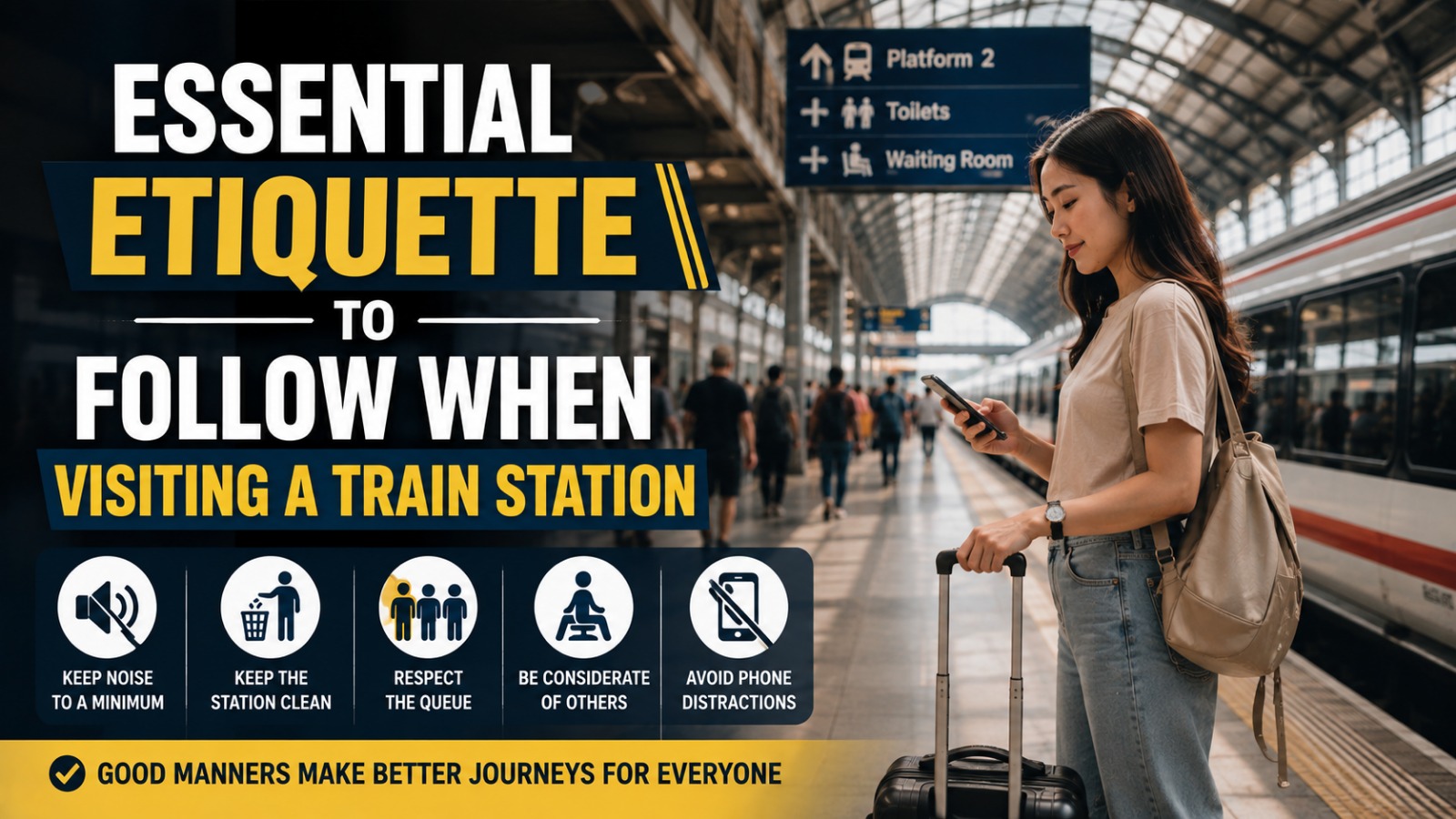
Train stations can become very busy, especially during weekends, holidays, and peak commuting hours. Good train station etiquette helps create a safe, organized, and comfortable environment for everyone. Passengers share waiting areas, platforms, entrances, exits, and other public facilities, so responsible behavior is important. Simple actions such as standing in the correct line and keeping noise under control can make a significant difference. By following basic etiquette, passengers can contribute to a better travel experience for themselves and others.
FOLLOW SIGNS AND STATION INSTRUCTIONS
One of the most important rules at a train station is to follow official signs and instructions. Signs provide information about platforms, entrances, exits, ticket areas, restrooms, and restricted zones. Passengers should read these signs carefully instead of entering areas that are not intended for public access. Following station instructions also helps prevent unnecessary confusion and delays. When instructions are unclear, passengers should ask authorized staff for assistance.
Passengers should also pay attention to announcements and digital information displays. Platform numbers, departure times, and other travel information can sometimes change. Ignoring updated information may cause passengers to miss their trains or wait in the wrong location. Staying informed is therefore part of responsible station behavior. It also helps other passengers move through the station more efficiently.
QUEUE PROPERLY AND WAIT YOUR TURN
Queuing is an essential part of maintaining order at a busy train station. Passengers should wait in line when purchasing tickets, entering gates, boarding trains, or using other services. Avoid pushing ahead of people who arrived earlier unless staff specifically provide different instructions. Proper queuing gives everyone a fair opportunity to access the service. It also reduces unnecessary conflict between passengers.
When boarding a train, passengers should allow people inside the train to exit first. Standing directly in front of the doors can block passengers who are trying to leave. Once the doorway is clear, passengers can board in an organized manner. Patience during boarding is especially important when stations are crowded. A few extra seconds of consideration can make the process safer for everyone.
KEEP NOISE UNDER CONTROL
Train stations are public spaces shared by people with different needs and schedules. Passengers should avoid shouting, playing loud music, or having unnecessarily loud conversations. Using headphones at a reasonable volume is a better option when listening to music or watching videos. Keeping noise under control is particularly important in waiting areas where people may want to rest. Quiet behavior creates a more comfortable environment for passengers.
Phone conversations should also be kept at an appropriate volume. Passengers should be aware that loud conversations can disturb people nearby. If a private or sensitive conversation is necessary, moving to a quieter area may be more appropriate. Respect for other passengers should guide behavior in shared spaces. Small adjustments can make the station experience more pleasant for everyone.
KEEP WALKWAYS CLEAR
Busy stations require passengers to move efficiently through corridors, entrances, stairs, and other pathways. Travelers should avoid stopping suddenly in the middle of busy walkways to check phones, organize luggage, or have conversations. If it is necessary to stop, move to the side where other passengers can pass safely. This is especially important during peak travel periods. Keeping pathways clear helps reduce congestion and accidental collisions.
Passengers carrying large suitcases should also be careful about where they place their luggage. Bags should not block doors, escalators, stairs, or designated walking routes. When standing on an escalator, passengers should follow local station guidance and remain aware of other travelers. Good spatial awareness makes movement easier for everyone. It is particularly helpful for passengers carrying children or multiple bags.
RESPECT PRIORITY AND ACCESSIBLE FACILITIES
Modern train stations often provide facilities for elderly passengers, pregnant travelers, passengers with disabilities, and people who need additional assistance. These may include priority seating, accessible toilets, elevators, ramps, and designated pathways. Passengers who do not need these facilities should avoid occupying them unnecessarily. Leaving priority spaces available is a simple way to support inclusive transportation.
Passengers should also avoid blocking tactile paths or accessibility ramps with luggage or personal belongings. These features are designed to help people navigate the station safely. If someone appears to need assistance, offering help can be useful, but passengers should respect their personal choice. Accessibility should be treated as a shared responsibility. A considerate station environment benefits passengers with different mobility needs.
HANDLE LUGGAGE RESPONSIBLY
Passengers should keep their luggage under control while moving around the station. Large bags should not be left unattended or placed where they could become obstacles. When waiting, keep luggage close and within sight. This reduces the risk of accidental loss and prevents other passengers from tripping over bags. Travelers should also follow station rules regarding the size and type of luggage permitted.
When using escalators, stairs, or crowded platforms, passengers should pay particular attention to their bags. Suitcases should be positioned securely so they do not hit or obstruct other people. If luggage becomes difficult to manage, passengers can ask station staff for assistance when available. Responsible luggage handling improves both safety and convenience. It also helps keep shared spaces organized.
MAINTAIN CLEANLINESS
Keeping the station clean is another important part of good etiquette. Passengers should dispose of food packaging, bottles, tissues, and other waste in appropriate bins. Food and drinks should be handled carefully to avoid spills in waiting areas or on platforms. Clean public spaces are more comfortable and safer for everyone. Passengers should also follow any station-specific rules regarding food and beverages.
Travelers should avoid damaging public property such as seats, information displays, gates, and other facilities. Reporting damaged equipment to station staff can help ensure that problems are addressed quickly. Public facilities belong to everyone, so they should be used responsibly. Good cleanliness and care can also reduce maintenance problems and improve the overall passenger experience.
RESPECT OTHER PASSENGERS AND STAFF
Every passenger may have different travel needs, so respectful communication is essential. Avoid arguments, aggressive behavior, or unnecessary confrontations in public areas. If a problem occurs, passengers should remain calm and seek assistance from station staff or security personnel. Staff are responsible for helping manage station operations and passenger concerns. Treating them respectfully can make problem-solving easier.
Passengers should also be considerate toward families, elderly travelers, and people who may need additional time to move through the station. Offering space or assistance when appropriate can make crowded environments easier to navigate. At the same time, personal boundaries should always be respected. Courtesy and patience are simple behaviors that can improve the atmosphere of a busy station.
FOLLOW SAFETY RULES ON THE PLATFORM
Platform safety should always be taken seriously. Passengers should remain behind the designated safety line and avoid entering restricted areas. Never attempt to cross railway tracks or approach moving trains outside designated boarding areas. Children should be supervised closely, particularly near platform edges. Following these rules can help prevent serious accidents.
Passengers should also avoid distractions when trains are arriving. Using phones while walking near the platform edge can reduce awareness of the surrounding environment. Keep bags and personal belongings secure while waiting. If staff provide specific instructions during boarding or emergencies, follow them immediately. Safety should always come before convenience.
CONCLUSION
Following proper train station etiquette helps create a safe, organized, and comfortable environment for all passengers. Simple habits such as queuing properly, keeping walkways clear, controlling noise, respecting accessible facilities, and following safety rules can have a positive impact. Passengers should also take care of their belongings and treat station staff and other travelers with respect. Good etiquette is especially important when stations become crowded or busy. By behaving responsibly, every passenger can contribute to a smoother and more enjoyable railway travel experience.
About the Author
Gusti Ayu Tita P
Author — STEKOM University
An active author focused on academic issues, educational technology, and human resource development in the campus environment.















