Essential Facilities Every Passenger Should Know at a Train Station
Gusti Ayu Tita P
10 Agustus 2026
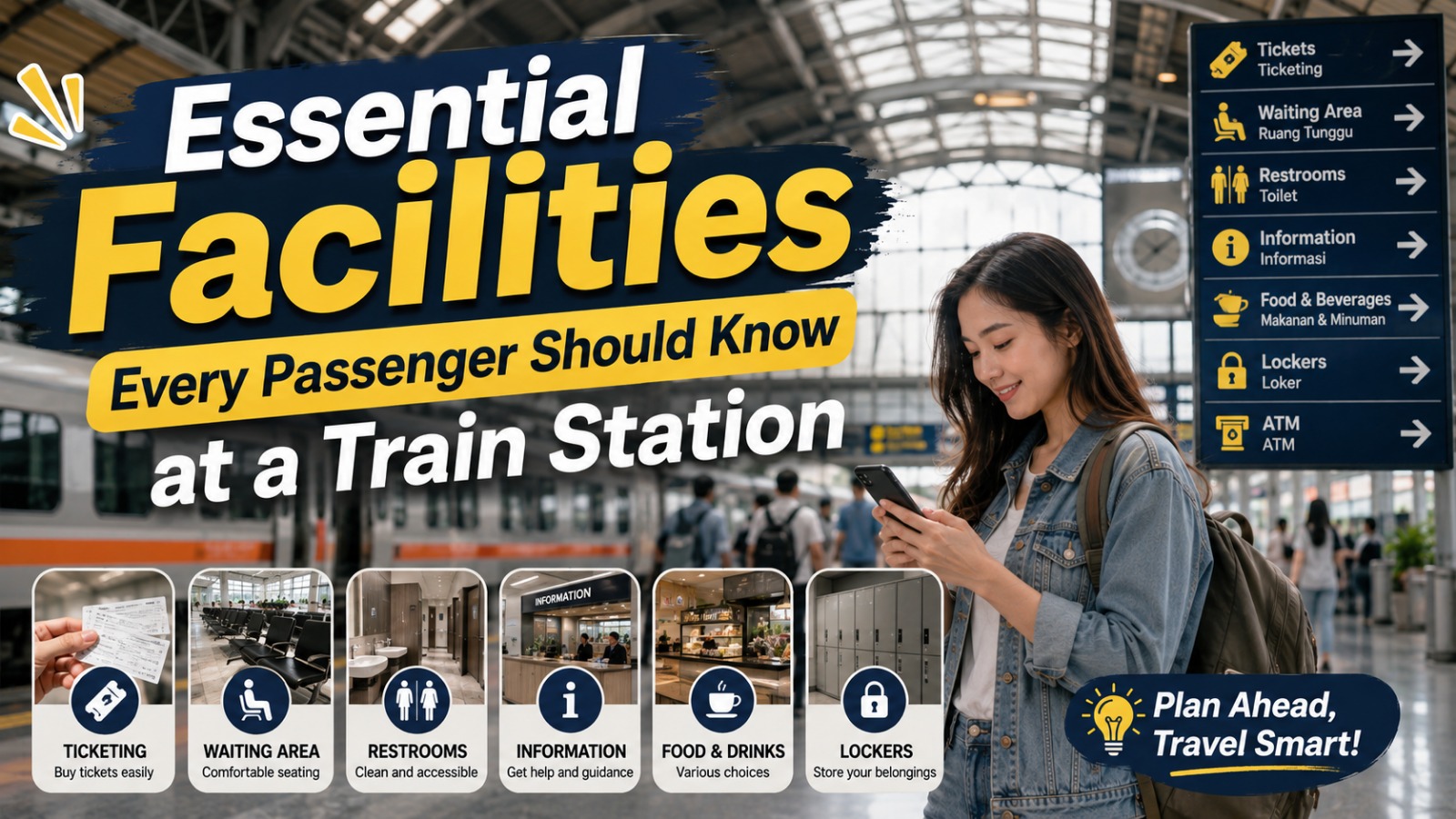
A train station is more than a place where passengers wait for their trains. Modern stations provide various facilities designed to support safety, comfort, accessibility, and efficient travel. Knowing where these facilities are located can help passengers save time and avoid confusion. Some facilities are available at almost every station, while larger stations may provide additional services. Understanding their functions is especially useful for first-time passengers and travelers visiting unfamiliar stations.
TICKET COUNTERS AND TICKETING MACHINES
Ticket counters are important facilities where passengers can purchase tickets, ask questions, or receive assistance with their travel arrangements. Staff at the counter can provide information about train schedules, destinations, and ticket requirements. Some stations also provide self-service ticketing machines that allow passengers to complete transactions independently. Digital ticketing systems can make the purchasing process faster and more convenient. Passengers should always check their ticket details before leaving the ticketing area.
Many railway operators also provide online ticketing services, allowing passengers to purchase tickets before arriving at the station. Digital tickets may be stored on a mobile phone or accessed through an official application. This can reduce waiting time at ticket counters, particularly during busy travel periods. However, passengers should ensure their phone has enough battery and that the ticket can be displayed when needed. Keeping a backup of important booking information can also be helpful.
WAITING AREAS AND SEATING
Waiting areas provide passengers with a designated place to stay before their train arrives. These areas usually include chairs or benches where travelers can sit comfortably. Larger stations may have separate waiting areas for different services or passenger groups. Staying in an official waiting area can also help passengers remain close to important information displays and announcements. Passengers should keep their belongings close while using these facilities.
Some modern stations provide additional comfort features in waiting areas. These may include air conditioning, charging points, Wi-Fi, food outlets, and information screens. During long waiting periods, passengers can use these facilities to rest or prepare for their journey. However, they should continue checking train information regularly. Comfort should not reduce awareness of boarding announcements or platform changes.
INFORMATION DESKS AND DIGITAL DISPLAYS
Information desks are useful for passengers who need assistance with station services or train journeys. Staff can provide directions, explain station facilities, and help passengers understand travel information. At larger stations, digital information displays provide real-time updates about departures, arrivals, platforms, and delays. These systems reduce confusion and make it easier for passengers to follow their journey.
Passengers should pay attention to both visual displays and station announcements. Train information can sometimes change because of operational conditions, weather, or other circumstances. If passengers are unsure about an announcement, they can ask authorized station staff for clarification. It is better to confirm information than to rely on assumptions. Official station information should always be treated as the primary source.
RESTROOMS AND HYGIENE FACILITIES
Clean and accessible restrooms are essential facilities at train stations. They are particularly important for passengers traveling long distances or waiting for extended periods. Larger stations may also provide facilities for washing hands, changing rooms, or other hygiene services. Passengers should follow cleanliness rules to ensure these facilities remain comfortable for everyone. Knowing the location of restrooms can also help travelers plan their waiting time more effectively.
Some stations provide special restroom facilities for passengers with disabilities. These facilities are designed with additional space and accessibility features. Parents traveling with young children may also benefit from family-friendly facilities where available. Accessible hygiene facilities contribute to a more inclusive passenger experience. Travelers should follow station guidelines when using shared facilities.
ESCALATORS, ELEVATORS, AND STAIRS
Stations often use stairs, escalators, and elevators to connect platforms with entrances, exits, and other areas. Escalators can help passengers move quickly between different levels, while elevators are particularly useful for people carrying heavy luggage. Elevators are also important for passengers with disabilities, elderly travelers, and people who have difficulty using stairs. Passengers should follow signs to find the appropriate route.
When using stairs or escalators, travelers should remain aware of their luggage and surroundings. Large bags should not block other passengers from moving safely. Passengers should also avoid standing in restricted areas or blocking elevator doors. During crowded periods, patience is especially important. Proper use of these facilities can help maintain safe and efficient passenger movement.
ACCESSIBILITY FACILITIES
Modern train stations increasingly provide facilities designed to support passengers with disabilities and reduced mobility. These may include ramps, elevators, accessible toilets, tactile paths, priority seating, and designated boarding assistance. Such facilities allow more people to use railway transportation independently. Accessibility is an important part of creating an inclusive public transportation system.
Passengers who require special assistance should check available services before traveling when possible. Some railway operators may provide assistance for boarding, luggage handling, or navigating the station. Clear communication with station staff can make the journey easier. Other passengers should also respect priority facilities and avoid using spaces intended for people who need them. Accessible transportation benefits the entire community.
SECURITY AND EMERGENCY FACILITIES
Security facilities help protect passengers and railway infrastructure. Stations may have security personnel, surveillance cameras, emergency telephones, and controlled access points. These systems help staff respond to suspicious activity, accidents, or other emergencies. Passengers should report unusual situations to authorized personnel instead of attempting to handle dangerous situations themselves. Keeping emergency contact information available can also be useful.
Emergency exits and evacuation routes are another important part of station safety. Passengers should pay attention to emergency signs and avoid blocking evacuation paths. In an emergency, travelers should remain calm and follow instructions from station personnel. Do not use elevators during an evacuation unless specifically instructed to do so. Understanding basic emergency facilities can help passengers respond safely to unexpected situations.
FOOD, RETAIL, AND OTHER SUPPORT SERVICES
Large train stations often include restaurants, cafés, convenience stores, pharmacies, ATMs, and other retail services. These facilities can be useful for passengers who need food, drinks, cash, or basic travel necessities. Some stations also provide charging stations and Wi-Fi for passengers. The availability of these services can make long waiting periods more comfortable. However, passengers should allow enough time to return to their platform before boarding.
Travelers should also consider station operating hours when using support services. Not every facility is available throughout the day, particularly at smaller stations. Checking the location of essential services before traveling can prevent inconvenience. Passengers should avoid leaving their luggage unattended while visiting shops or restaurants. Convenience should always be balanced with personal safety.
CONCLUSION
Train stations provide many facilities that help passengers travel more safely, comfortably, and efficiently. Ticketing services, waiting areas, information systems, restrooms, accessibility facilities, security services, and transportation connections all support different parts of the passenger journey. Knowing where these facilities are located can save time and reduce stress, especially in unfamiliar stations. Passengers should also use station facilities responsibly and follow instructions from railway staff. With proper knowledge and preparation, travelers can make better use of everything a modern train station has to offer.
About the Author
Gusti Ayu Tita P
Author — STEKOM University
An active author focused on academic issues, educational technology, and human resource development in the campus environment.