
Essential LMS Security Practices Every Organization Should Follow
Gusti Ayu Tita P
30 Juli 2026
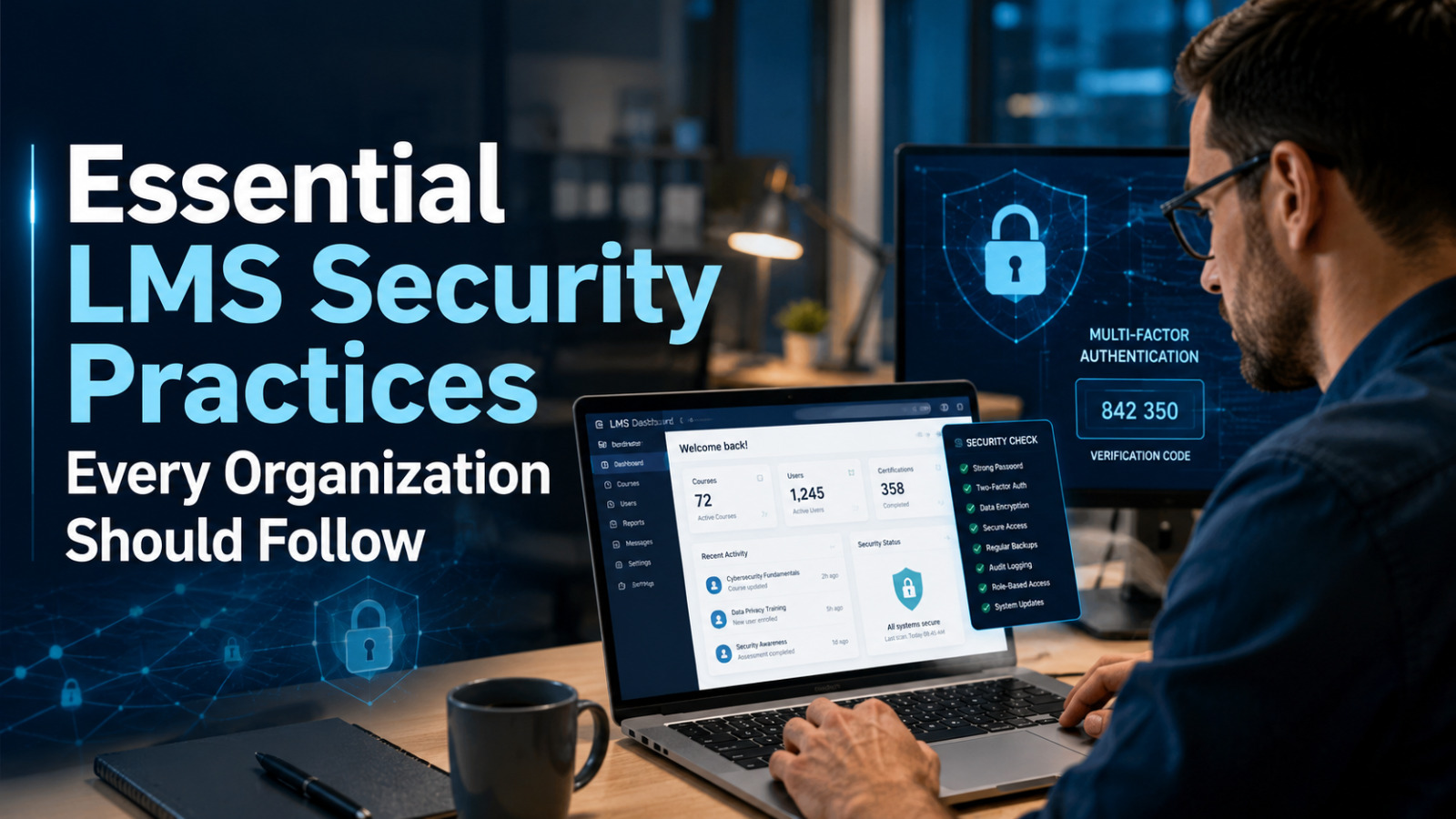
A Learning Management System (LMS) is one of the most valuable digital tools for employee training, online education, and professional development. Because an LMS stores sensitive information such as employee records, learning progress, assessments, and personal data, it has become a common target for cybercriminals. Organizations that fail to protect their LMS risk data breaches, financial losses, and damage to their reputation.
Implementing strong LMS security practices is no longer optional. Whether your organization uses an LMS for internal employee training or customer education, protecting the platform should be a top priority. This article explains the most essential security practices every organization should follow to maintain a secure, reliable, and trustworthy learning environment.
USE STRONG USER AUTHENTICATION
One of the simplest yet most effective security measures is implementing strong authentication. Every user should create a unique password that combines uppercase letters, lowercase letters, numbers, and symbols. Weak passwords make it much easier for attackers to gain unauthorized access to the system.
Organizations should also enable Multi-Factor Authentication (MFA) whenever possible. MFA requires users to verify their identity through an additional method, such as a mobile app or verification code. Even if a password is stolen, MFA significantly reduces the risk of unauthorized access and provides an extra layer of protection.
KEEP THE LMS UPDATED
Software updates are essential for maintaining security. LMS providers regularly release updates to fix vulnerabilities, improve performance, and patch newly discovered security flaws. Delaying these updates leaves the system exposed to known threats.
Administrators should establish a regular maintenance schedule to ensure all LMS components, plugins, and integrations remain current. Testing updates before deployment also helps prevent compatibility issues while keeping the learning platform secure and stable.
APPLY ROLE-BASED ACCESS CONTROL
Not every user should have the same level of access. Role-Based Access Control (RBAC) allows administrators to assign permissions according to each user's responsibilities. This minimizes the possibility of accidental or intentional misuse of sensitive information.
For example, instructors may only need access to course management, while HR managers require employee training reports. By limiting privileges to only what is necessary, organizations reduce the overall attack surface and improve data security.
PROTECT SENSITIVE DATA WITH ENCRYPTION
Sensitive information should always be protected using data encryption. Encryption secures data while it is stored and while it is transmitted across networks, making it extremely difficult for attackers to read intercepted information.
Organizations should ensure their LMS uses HTTPS with SSL/TLS certificates for secure communication. In addition, sensitive databases should be encrypted to protect personal information, assessment records, and confidential training materials from unauthorized access.
PERFORM REGULAR DATA BACKUPS
Unexpected incidents such as cyberattacks, hardware failures, or accidental deletions can result in data loss. Regular backups ensure organizations can quickly restore important learning content and user information if an incident occurs.
Backup files should be stored in secure locations, preferably using multiple storage options, including encrypted cloud storage. Routine testing of backup restoration is equally important to verify that recovery procedures work correctly when needed.
MONITOR SYSTEM ACTIVITY
Continuous monitoring helps organizations detect suspicious behavior before it becomes a serious security issue. Administrators should regularly review login attempts, user activities, file uploads, and system logs for unusual patterns.
Automated security monitoring tools can provide real-time alerts whenever suspicious activities occur. Early detection allows security teams to respond quickly, reducing the potential impact of cyber threats and minimizing downtime.
EDUCATE USERS ABOUT CYBERSECURITY
Technology alone cannot fully protect an LMS. Users play a major role in maintaining platform security, making cybersecurity awareness training essential for every organization.
Employees, instructors, and learners should understand how to identify phishing emails, avoid suspicious links, create secure passwords, and report unusual system behavior. A well-informed user community significantly reduces the likelihood of successful cyberattacks caused by human error.
CONDUCT REGULAR SECURITY AUDITS
Routine security audits help identify vulnerabilities before attackers can exploit them. Organizations should periodically review user permissions, security configurations, software versions, and compliance with internal security policies.
Penetration testing and vulnerability assessments performed by qualified security professionals provide valuable insights into potential weaknesses. Continuous improvement ensures the LMS remains resilient against evolving cybersecurity threats.
CONCLUSION
A secure Learning Management System protects both organizational data and user trust. By implementing strong authentication, regular software updates, role-based access control, data encryption, routine backups, system monitoring, user cybersecurity training, and security audits, organizations can greatly reduce the risk of cyber incidents.
Cybersecurity is an ongoing process rather than a one-time task. As technology evolves, organizations should continuously review and improve their LMS security strategy to ensure a safe, reliable, and productive digital learning environment for everyone.
About the Author
Gusti Ayu Tita P
Author — STEKOM University
An active author focused on academic issues, educational technology, and human resource development in the campus environment.