Essential Skills Every Civil Servant Must Have in 2026
Gusti Ayu Tita P
21 Juli 2026
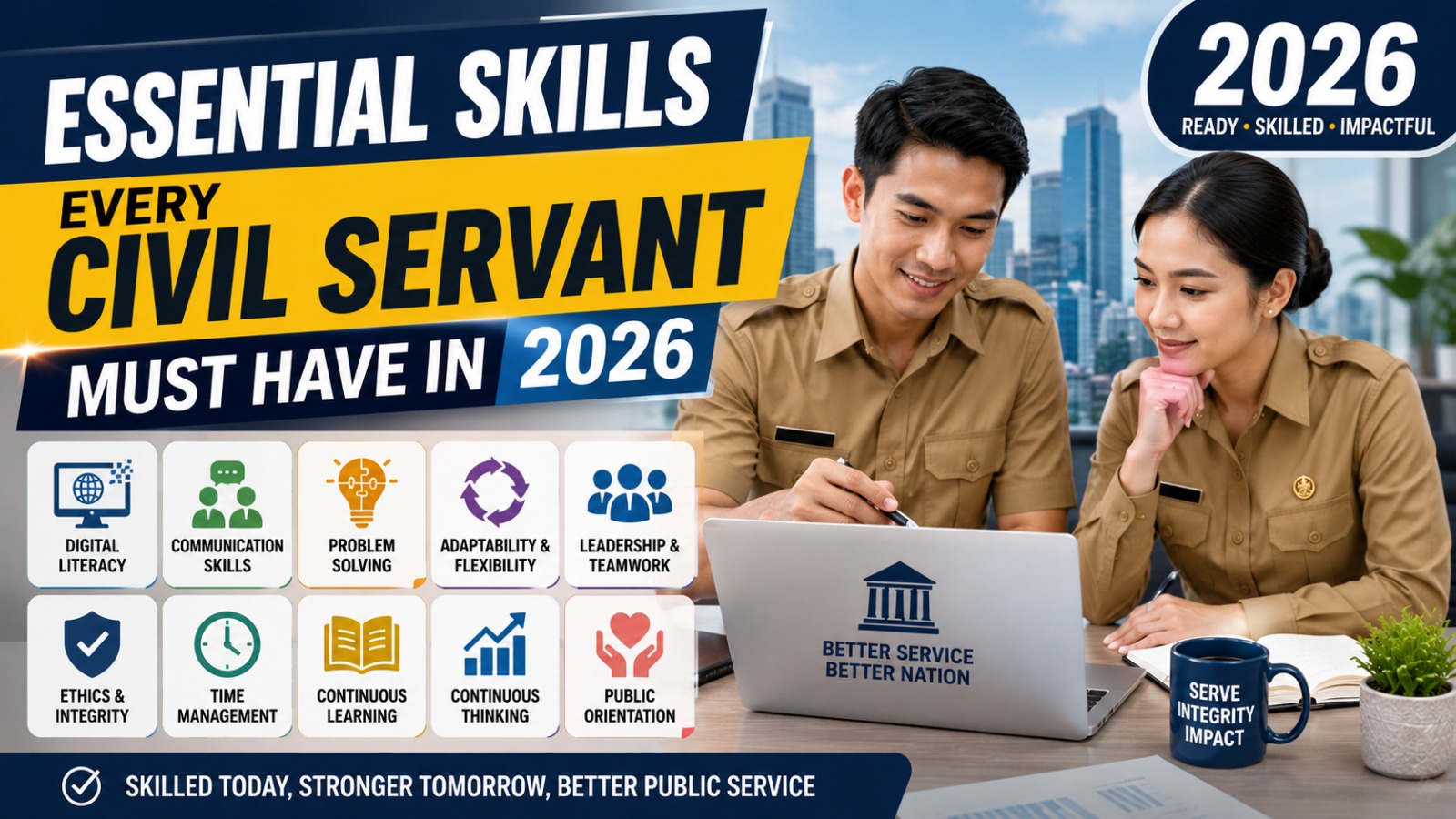
Public service continues to evolve as digital transformation, artificial intelligence, and citizen-centered governance reshape how governments operate. In 2026, civil servants are expected to do much more than complete administrative tasks. They must adapt to new technologies, communicate effectively, and make ethical decisions while delivering high-quality public services.
Developing the right skills is essential for building a professional, efficient, and trustworthy public sector. Whether you are preparing for a civil service career or already working in government, mastering these competencies will help you stay relevant and contribute to better governance. Below are the essential skills every civil servant must have in 2026.
DIGITAL LITERACY AND TECHNOLOGY ADAPTATION
Digital literacy has become one of the most important skills for civil servants. Government institutions increasingly rely on digital platforms, cloud-based systems, and online public services to improve efficiency and transparency. Civil servants should understand how to use office software, digital collaboration tools, electronic document management systems, and basic cybersecurity practices. Being comfortable with technology helps reduce errors and speeds up administrative processes.
Technology continues to change rapidly, making continuous learning essential. Civil servants should also understand the basics of artificial intelligence, data management, and digital communication tools. While they do not need to become IT experts, having a solid understanding of these technologies allows them to work more effectively and support digital government initiatives. Staying updated with new technologies ensures they remain productive in a modern workplace.
EFFECTIVE COMMUNICATION AND PUBLIC SERVICE
Excellent communication skills are essential because civil servants interact with citizens, colleagues, and stakeholders every day. They should be able to explain government policies clearly, answer public questions professionally, and provide accurate information. Strong verbal and written communication reduces misunderstandings and builds public confidence in government services.
In addition, active listening is equally important. Understanding citizens' concerns enables civil servants to provide better solutions and improve service quality. Professional communication also includes maintaining courtesy, respecting diversity, and adapting communication styles to different audiences. These abilities strengthen relationships between government institutions and the communities they serve.
CRITICAL THINKING AND PROBLEM SOLVING
Government employees often face complex situations that require critical thinking and sound judgment. Instead of reacting quickly without proper analysis, civil servants should evaluate facts, identify possible solutions, and consider long-term impacts before making decisions. This approach improves both efficiency and fairness in public administration.
Problem-solving skills also help civil servants manage unexpected challenges, including policy implementation issues, administrative delays, or public complaints. A structured approach to solving problems encourages better teamwork and more effective decision-making. Organizations benefit when employees can identify issues early and recommend practical solutions supported by evidence.
ETHICS, INTEGRITY, AND PROFESSIONALISM
Integrity remains the foundation of every successful civil servant. Government employees must perform their duties honestly, fairly, and transparently while following laws and institutional regulations. Ethical behavior strengthens public trust and helps prevent corruption, conflicts of interest, and misuse of authority.
Professionalism also involves accountability, discipline, and responsibility. Civil servants should respect confidentiality, meet deadlines, and consistently provide high-quality services. By maintaining ethical standards in every task, they become reliable representatives of the government and contribute to building a stronger public institution.
TEAMWORK AND LEADERSHIP
Modern government projects often require collaboration between different departments and agencies. Therefore, teamwork is an essential skill that allows civil servants to share ideas, coordinate responsibilities, and achieve common goals efficiently. Respecting different perspectives creates a more innovative and productive work environment.
Leadership is not limited to managerial positions. Every civil servant should demonstrate initiative, responsibility, and the ability to motivate others when necessary. Effective leadership includes making informed decisions, resolving conflicts constructively, and encouraging collaboration. These qualities help organizations adapt to change while maintaining high service standards.
ADAPTABILITY AND CONTINUOUS LEARNING
Government regulations, technologies, and public expectations continue to evolve. Civil servants must therefore develop adaptability to respond quickly to new policies, digital innovations, and changing work environments. Being flexible allows employees to remain effective despite uncertainty and organizational changes.
At the same time, continuous learning ensures long-term career development. Participating in training programs, attending professional workshops, and improving technical and soft skills help civil servants remain competitive. Lifelong learning also encourages innovation and enables government institutions to provide better services for society.
CONCLUSION
The demands placed on civil servants in 2026 extend beyond traditional administrative responsibilities. Success now depends on mastering digital literacy, effective communication, critical thinking, integrity, teamwork, and adaptability. These skills enable government employees to deliver efficient, transparent, and citizen-focused public services.
By investing in both technical knowledge and personal development, civil servants can strengthen public trust and support national progress. Developing these essential competencies today will prepare government professionals for the challenges and opportunities of the future.
About the Author
Gusti Ayu Tita P
Author — STEKOM University
An active author focused on academic issues, educational technology, and human resource development in the campus environment.