
Essential Skills For Working In The Transportation Industry During Homecoming Traffic
Gusti Ayu Tita P
10 Agustus 2026
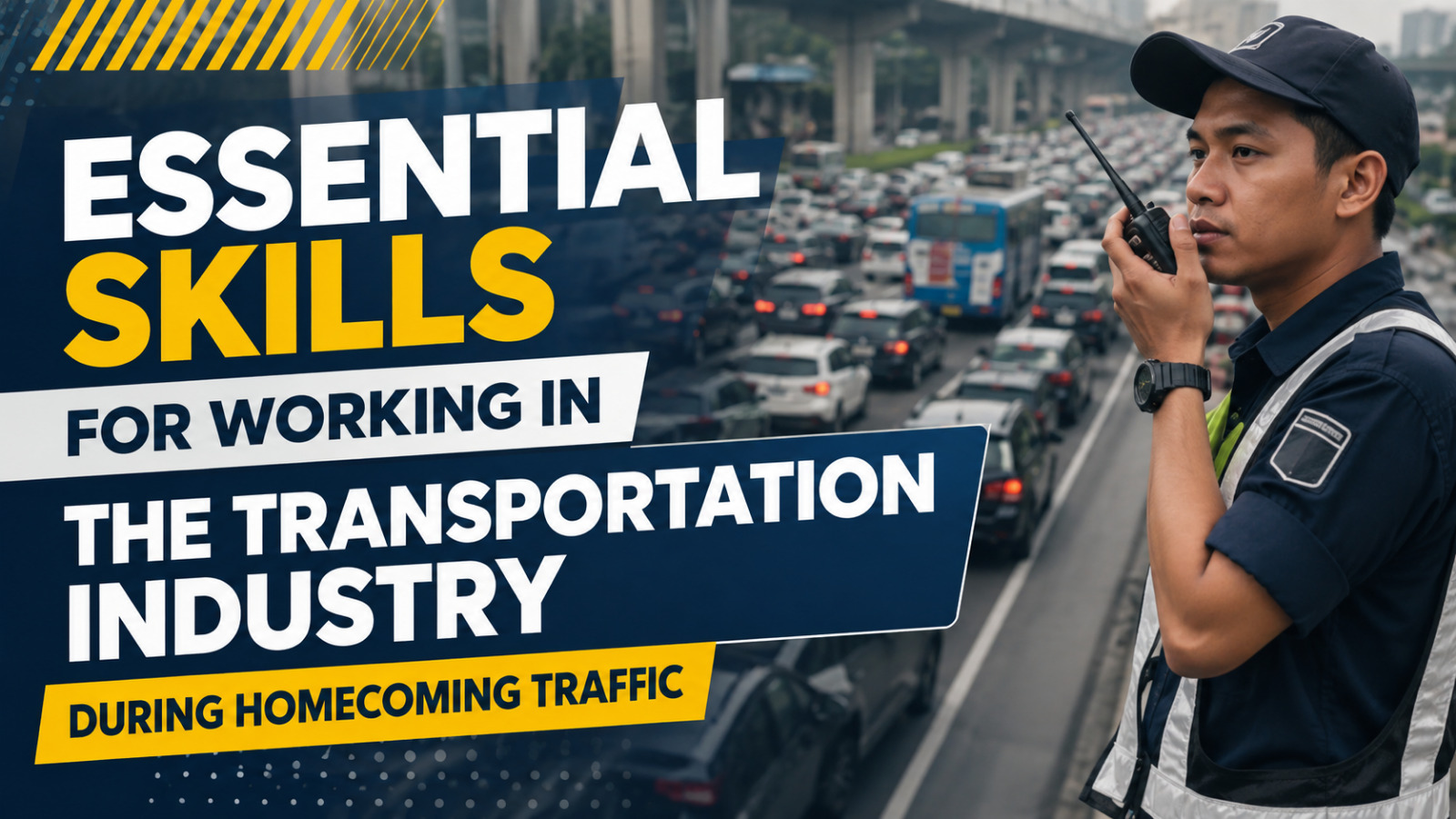
Working in the Transportation Industry requires more than technical knowledge. Transportation employees often work in environments where schedules, traffic conditions, passenger demands, and operational priorities can change quickly. During the homecoming season, these challenges become more intense because the number of travelers increases significantly. Workers need to remain professional, focused, and prepared to respond to unexpected situations.
Different transportation jobs require different technical abilities, but several skills are useful across many positions. Communication, safety awareness, teamwork, problem solving, time management, and adaptability are especially important. Employees who develop these abilities can perform their responsibilities more effectively. These skills can also improve long-term career opportunities in transportation.
COMMUNICATION SKILLS
Communication Skills are essential for almost every transportation position. Employees may need to communicate with passengers, drivers, supervisors, technicians, security personnel, and other transportation workers. Clear communication helps ensure that instructions, schedules, and operational changes are understood correctly.
During homecoming traffic, communication becomes even more important. Delays, route changes, vehicle problems, and crowded facilities can create confusion among travelers. Employees need to provide accurate information in a calm and understandable way. Good communication can improve passenger confidence and support smoother operations.
SAFETY AWARENESS
Safety Awareness is one of the most important skills in transportation. Employees work around vehicles, passengers, roads, equipment, and other potential hazards. They need to understand safety procedures and follow established rules consistently.
During the homecoming period, transportation systems may operate under increased pressure. Workers should never ignore safety procedures simply to save time or handle more passengers. They need to recognize potential risks and report problems appropriately. A strong safety culture protects employees, passengers, and other road users.
PROBLEM-SOLVING SKILLS
Transportation operations can experience unexpected problems at any time. Vehicles may break down, passengers may miss schedules, traffic may become congested, or weather may affect transportation services. Employees need to identify problems quickly and determine practical solutions.
Strong Problem Solving requires logical thinking and good judgment. Workers should consider safety, passenger needs, operational efficiency, and available resources when making decisions. They should also know when a problem requires assistance from a supervisor or specialized team. Effective problem-solving can reduce delays and improve the quality of transportation services.
TEAMWORK SKILLS
Transportation systems depend on cooperation between many different employees. Drivers, dispatchers, mechanics, customer service workers, security teams, administrators, and managers all have different responsibilities. Their work must be coordinated to provide reliable transportation services.
Teamwork Skills become particularly important during periods of heavy homecoming traffic. Employees may need to support one another when passenger numbers increase or unexpected incidents occur. Good teamwork requires respect, clear communication, and a willingness to help colleagues. A strong team can respond to operational challenges more effectively.
TIME MANAGEMENT
Time management is another important skill for transportation workers. Many transportation services operate according to schedules that affect thousands of passengers. Delays in one part of an operation can create additional problems elsewhere.
Employees need to prioritize tasks and complete important responsibilities on time. They should also understand that some situations require immediate attention while others can be handled later. Good Time Management helps transportation organizations maintain efficient operations. It is especially valuable during the busy homecoming period.
ADAPTABILITY
Transportation conditions can change rapidly. A route may become congested, a vehicle may require maintenance, or passenger demand may suddenly increase. Employees need to adapt to changing circumstances without losing focus on safety and service quality.
Adaptability Skills help workers respond positively to unexpected changes. Employees who are willing to learn new procedures and technologies can adjust more easily to modern transportation systems. Flexibility is also valuable when work schedules become more demanding during homecoming. Adaptable workers are often better prepared for long-term changes in the industry.
CUSTOMER SERVICE SKILLS
Many transportation workers interact directly with passengers. Customer service skills help employees respond to questions, complaints, requests, and concerns professionally. Travelers may become tired or frustrated during long journeys, especially when delays occur.
Workers should remain patient and respectful when communicating with passengers. They should provide accurate information instead of making promises they cannot guarantee. Good Customer Service can improve the passenger experience even when transportation conditions are difficult. It also contributes to a positive reputation for the transportation organization.
DIGITAL AND TECHNOLOGY SKILLS
Modern transportation increasingly depends on digital systems. Employees may use ticketing platforms, GPS systems, communication applications, fleet management tools, traffic monitoring systems, and data platforms. Basic digital knowledge can therefore improve workplace performance.
Workers should be willing to learn new technologies as transportation systems develop. They do not always need advanced technical expertise, but they should understand how the tools used in their roles function. Digital skills can improve efficiency and reduce errors. Technology knowledge is becoming an increasingly valuable part of modern Transportation Skills.
DECISION-MAKING SKILLS
Transportation employees sometimes need to make decisions under pressure. They may need to determine how to respond to a passenger problem, vehicle issue, traffic disruption, or operational delay. Good decisions should be based on available information and established procedures.
Employees should avoid making rushed decisions simply because they feel pressured. Safety and operational priorities should guide their choices. When necessary, workers should consult supervisors or other responsible personnel. Strong Decision Making can help transportation teams respond more effectively to difficult situations.
PHYSICAL AND MENTAL READINESS
Some transportation jobs require employees to remain active for long periods. Workers may need to stand, walk, assist passengers, inspect vehicles, or work in busy environments. Physical readiness can therefore be important for maintaining performance.
Mental readiness is equally important. Homecoming traffic can create stressful situations, particularly when passenger numbers are high. Workers need to remain focused and manage pressure professionally. Adequate rest and responsible work practices can help employees maintain performance throughout demanding periods.
CONTINUOUS LEARNING
The transportation industry continues to develop through new technology, regulations, transportation systems, and customer expectations. Employees should therefore continue learning throughout their careers. Training programs and professional development activities can help workers improve their abilities.
Learning does not always require formal education. Employees can learn through practical experience, mentoring, workshops, online resources, and feedback from supervisors. A willingness to improve can increase long-term career opportunities. Continuous Learning is especially valuable in an industry that changes rapidly.
CONCLUSION
Working in the Transportation Industry during homecoming traffic requires a combination of technical and interpersonal abilities. Communication Skills, Safety Awareness, Problem Solving, teamwork, time management, adaptability, and customer service are among the most valuable skills for transportation workers.
Technology and continuous learning are also becoming increasingly important. Employees who remain willing to learn and adapt can handle changing transportation demands more effectively. By developing strong Transportation Skills and maintaining a responsible attitude toward safety and teamwork, workers can improve their performance and build stronger careers in the transportation industry.
About the Author
Gusti Ayu Tita P
Author — STEKOM University
An active author focused on academic issues, educational technology, and human resource development in the campus environment.















