Essential Vehicle Checks Before Starting the Journey Home
Gusti Ayu Tita P
10 Agustus 2026
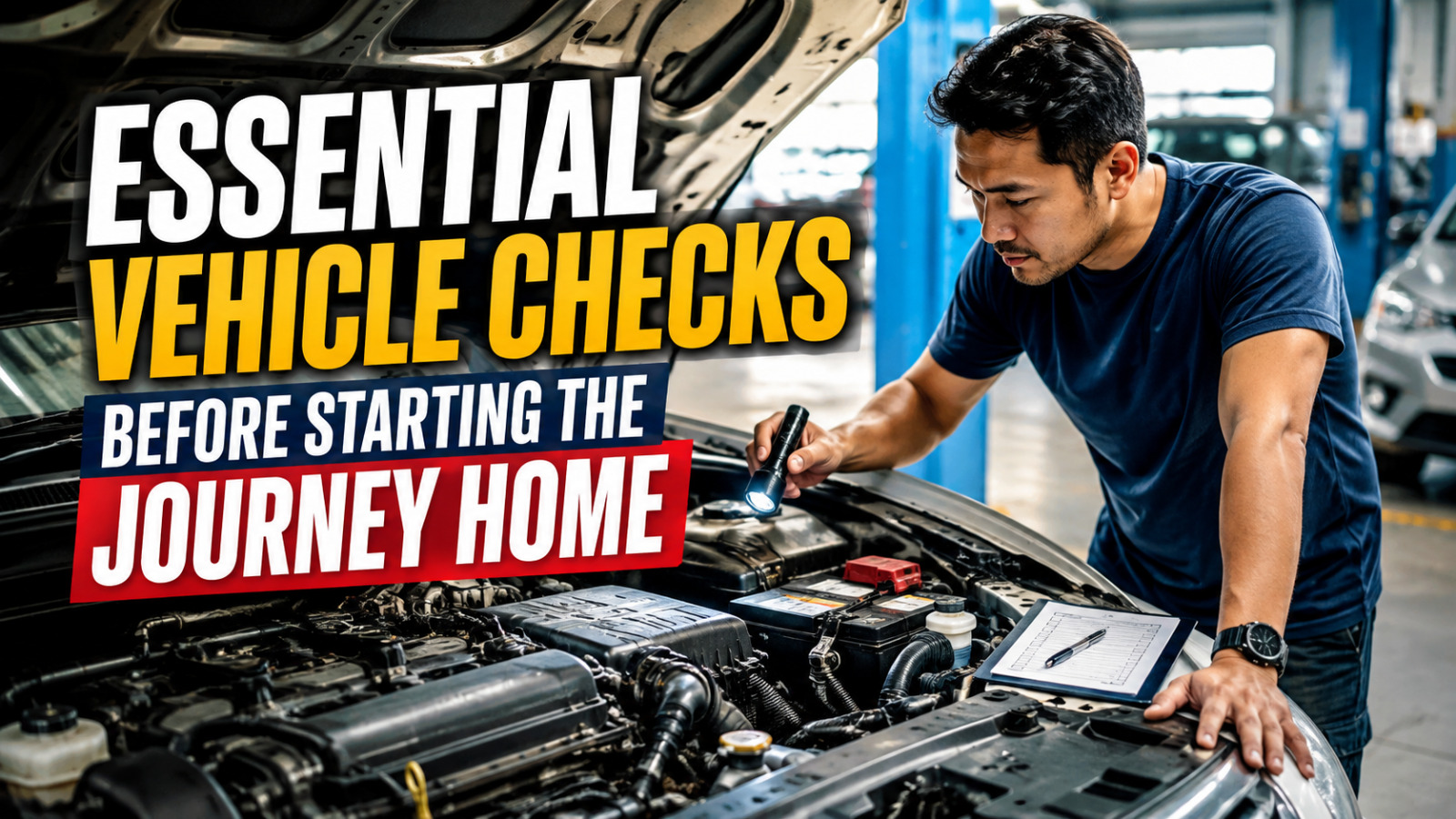
Returning home after a holiday can be exciting, but it also requires careful preparation. Long-distance travel may put extra pressure on a vehicle, especially when roads are busy and travel times become longer. Before leaving, travelers should make sure their vehicles are in safe and reliable condition to reduce the risk of breakdowns and delays.
Simple vehicle checks can make a major difference during a long journey. Checking the tires, brakes, engine fluids, lights, and other important components can help drivers travel with greater confidence. Proper preparation is especially important when facing heavy return traffic and unpredictable road conditions.
CHECK THE TIRES AND TIRE PRESSURE
Tires are among the most important parts to inspect before starting a long journey. Drivers should check whether the tires have sufficient tread depth and look for cuts, cracks, bulges, or unusual wear. Tires that are damaged or excessively worn can reduce vehicle stability and increase the risk of problems on the road.
The tire pressure should also be adjusted according to the vehicle manufacturer's recommendations. Incorrect tire pressure can affect handling, braking, fuel efficiency, and tire durability. Do not forget to inspect the spare tire as well because it may become essential if a flat tire occurs during the trip.
INSPECT THE BRAKES AND BRAKING SYSTEM
A reliable braking system is essential for every long-distance journey, particularly when traveling through crowded roads. Drivers should pay attention to warning signs such as unusual noises, vibrations, or reduced braking performance. These symptoms may indicate that the brake pads, discs, or other components need inspection.
If the vehicle has recently shown braking problems, it is better to have it checked by a qualified mechanic before departure. A properly functioning braking system gives drivers better control when traffic suddenly slows down. This is particularly important during holiday return periods when sudden stops can happen frequently.
CHECK ENGINE OIL AND OTHER FLUIDS
Engine oil plays an important role in keeping the engine properly lubricated during long trips. Before departure, drivers should check the engine oil level and condition and follow the vehicle manufacturer's recommended maintenance schedule. If the oil level is too low or the oil requires replacement, it should be addressed before starting the journey.
Other fluids should also be inspected, including coolant, brake fluid, windshield washer fluid, and transmission fluid when applicable. Adequate coolant is especially important because the engine may operate for extended periods during traffic congestion. Keeping these fluids at the recommended levels can help support proper vehicle performance throughout the journey.
TEST THE BATTERY AND ELECTRICAL SYSTEM
A weak battery can cause unexpected problems, particularly when a vehicle has been used frequently during a holiday trip. Drivers should check for signs such as difficulty starting the engine, dim lights, or electrical issues. If the battery is already old or showing signs of weakness, having it tested before departure is a sensible precaution.
The vehicle's electrical components should also be checked. Headlights, brake lights, turn signals, hazard lights, and interior lights should work properly. Good lighting is important for visibility and communication with other drivers, especially when traveling at night or in poor weather.
INSPECT THE WIPERS AND WINDSHIELD
Clear visibility is essential for safe driving, so the windshield should be clean and free from significant damage. Drivers should inspect the windshield for cracks or chips that could affect visibility or become worse during the journey. A clean windshield also helps reduce glare and improve visibility in different lighting conditions.
Windshield wipers should be checked to make sure they can remove water effectively. Worn or damaged wiper blades may leave streaks on the glass and make it difficult to see during rain. Replacing poor-quality wipers before departure can be a simple but useful preparation step.
MAKE SURE THE SAFETY EQUIPMENT IS READY
Every vehicle should carry basic safety equipment for unexpected situations. Drivers can prepare items such as a spare tire, jack, warning triangle, flashlight, first aid kit, and basic tools. These items can be useful if the vehicle experiences a minor problem far from a repair facility.
It is also helpful to keep emergency contact information and important vehicle documents easily accessible. Drivers should know how to contact roadside assistance or other relevant services if a serious problem occurs. Being prepared can reduce stress and help travelers respond more calmly to unexpected situations.
CHECK THE FUEL AND PLAN THE JOURNEY
Drivers should avoid starting a long journey with an unnecessarily low fuel level. Filling the fuel tank or charging an electric vehicle sufficiently before departure can provide greater flexibility when traffic becomes heavy. During holiday return periods, fuel stations and charging points may become busier, so planning stops in advance can be helpful.
Travelers should also check the planned route before leaving. Traffic conditions, road closures, weather, and construction can affect travel time. Having an alternative route can make the journey more flexible if the main road becomes heavily congested.
AVOID OVERLOADING THE VEHICLE
Holiday travelers often carry luggage, gifts, and other belongings, but excessive weight can affect vehicle performance. Overloading may influence braking, handling, tire performance, and fuel consumption. Drivers should follow the vehicle manufacturer's recommended load limits.
Luggage should also be placed securely so that it does not move around inside the vehicle. Heavy items should be positioned carefully, while visibility through the rear window should not be unnecessarily blocked. Properly arranging luggage helps maintain stability and provides a safer environment for everyone inside the vehicle.
PLAN REST BREAKS BEFORE DEPARTURE
Vehicle preparation is important, but driver preparation is equally necessary. Long-distance driving can cause fatigue and reduced concentration, especially when traffic makes the journey longer than expected. Drivers should plan regular rest breaks instead of attempting to complete the entire journey without stopping.
If possible, travelers can share driving responsibilities with another qualified driver. Anyone who feels sleepy, unfocused, or physically tired should stop in a safe location and rest. A well-maintained vehicle cannot guarantee safety if the driver is too tired to react properly.
CONCLUSION
Preparing a vehicle before a holiday return journey is an important part of responsible travel. Checking tires, brakes, fluids, battery, lights, wipers, fuel, and safety equipment can help reduce the possibility of unexpected problems. Drivers should also avoid overloading the vehicle and plan enough rest during the trip.
A few minutes of preparation before departure can prevent major inconvenience later. By combining proper vehicle maintenance with careful route planning and responsible driving, travelers can make their journey home safer, smoother, and more comfortable.
About the Author
Gusti Ayu Tita P
Author — STEKOM University
An active author focused on academic issues, educational technology, and human resource development in the campus environment.