
Examples of Patriotism That Students Can Practice at School
Gusti Ayu Tita P
4 Agustus 2026
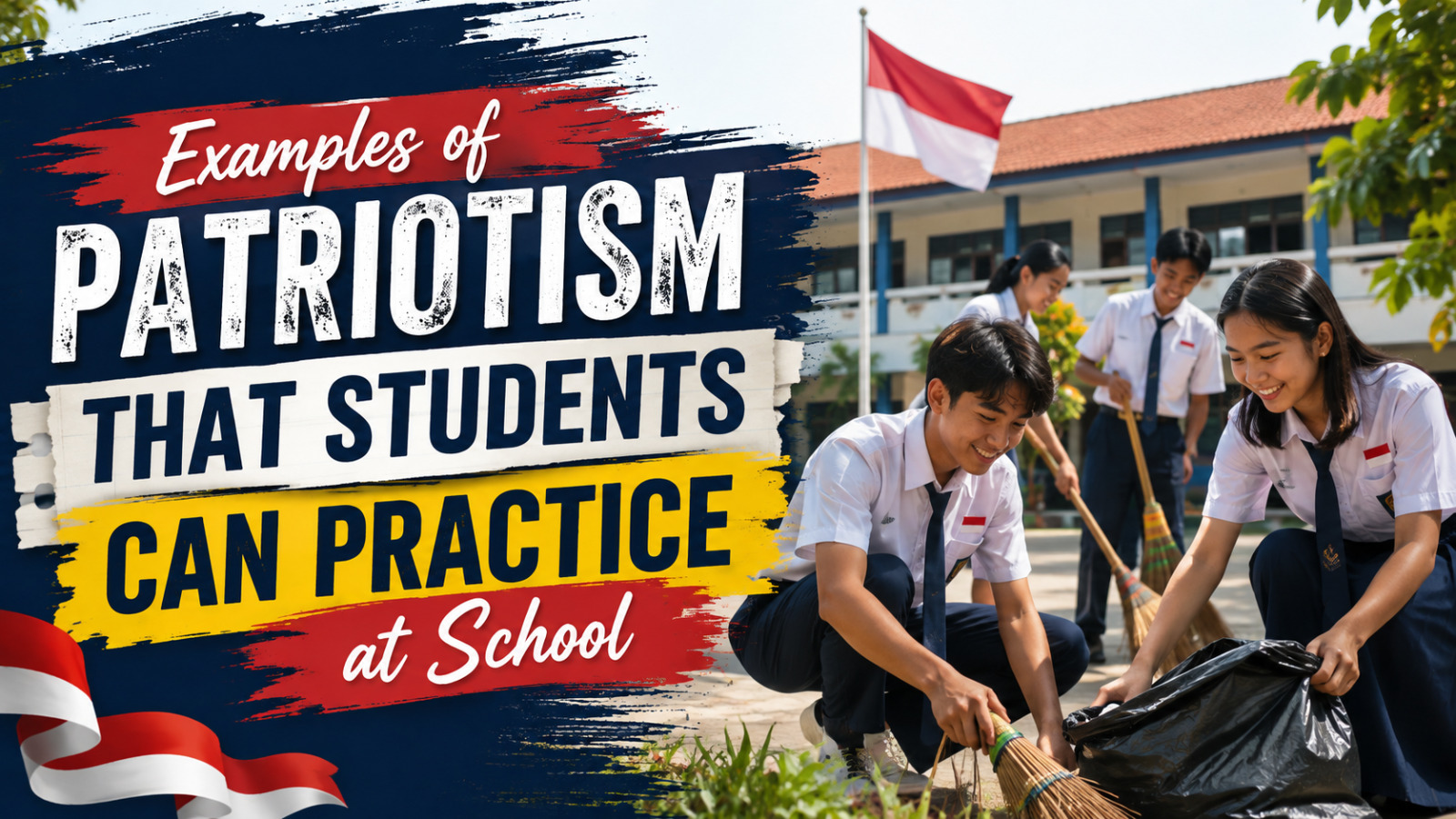
Patriotism is not only expressed through grand national celebrations or ceremonies but also through simple actions performed every day. For students, school is one of the best places to learn and practice patriotic values. Respecting teachers, following school rules, helping classmates, and taking care of school facilities are all examples of patriotism in daily life. These positive behaviors help students develop responsibility, discipline, and respect for others while strengthening their sense of belonging to their country. By practicing patriotism consistently, students can become responsible citizens who contribute to the future of their nation.
RESPECTING SCHOOL RULES AND DISCIPLINE
One of the simplest examples of patriotism at school is respecting school rules and maintaining discipline. Students demonstrate responsibility by arriving on time, wearing the proper uniform, completing assignments, and following classroom regulations. These habits help create a safe, organized, and productive learning environment for everyone.
Discipline also teaches students to value responsibility and accountability, which are essential qualities of good citizens. By respecting school policies, students learn that following rules is an important part of contributing to society. Small acts of discipline today can shape responsible behavior in the future.
SHOWING RESPECT TO TEACHERS AND CLASSMATES
Respect is a fundamental value of patriotism that students should practice every day. Treating teachers politely, listening carefully during lessons, and appreciating their guidance demonstrate gratitude for the education they provide. Students should also respect classmates regardless of differences in culture, religion, language, or background.
Creating an atmosphere of mutual respect helps build unity within the school community. Students who value diversity learn to cooperate, communicate effectively, and resolve disagreements peacefully. These attitudes contribute to stronger relationships and prepare them to become responsible members of society.
PARTICIPATING IN SCHOOL AND COMMUNITY ACTIVITIES
Joining school programs is another meaningful way to practice patriotism. Students can participate in flag ceremonies, cultural celebrations, environmental campaigns, sports competitions, student organizations, and community service activities. These experiences teach teamwork, leadership, and responsibility while strengthening their connection to the school and the nation.
Participation also encourages students to contribute their ideas and talents for the benefit of others. Through these activities, they learn that every individual has an important role in achieving shared goals. Active involvement helps develop confidence and civic responsibility.
PROTECTING SCHOOL FACILITIES AND THE ENVIRONMENT
Taking care of school property is a practical example of patriotism because it reflects responsibility toward shared resources. Students should keep classrooms clean, avoid damaging school equipment, and use facilities responsibly. They can also participate in recycling programs, tree-planting activities, and school clean-up campaigns.
Protecting the environment demonstrates respect for future generations as well as for the community. These simple actions encourage environmental awareness and show that patriotism includes caring for public spaces. A clean and well-maintained school creates a positive atmosphere for learning.
USING DIGITAL TECHNOLOGY RESPONSIBLY AT SCHOOL
Technology plays an important role in modern education, making digital responsibility an essential part of patriotism. Students should use the internet to access reliable educational resources, complete assignments honestly, and communicate respectfully online. They should avoid spreading misinformation, cyberbullying, or inappropriate content that may harm others.
Responsible digital behavior helps create a safe online learning environment while promoting positive values. Students who use technology wisely become more informed, ethical, and productive learners. Combining digital literacy with patriotic values prepares them for future academic and professional success.
CONCLUSION
Patriotism can be practiced by students through simple yet meaningful actions at school. Respecting school rules, honoring teachers and classmates, participating in school activities, protecting school facilities, and using digital technology responsibly all reflect genuine patriotic values. These daily habits help students develop discipline, responsibility, respect, and teamwork while strengthening national unity. By practicing patriotism consistently, students become active contributors to a better school environment and a stronger future for their country.
About the Author
Gusti Ayu Tita P
Author — STEKOM University
An active author focused on academic issues, educational technology, and human resource development in the campus environment.















