
Exploring Ancient Ideas About the World Beyond Life
Gusti Ayu Tita P
9 September 2026
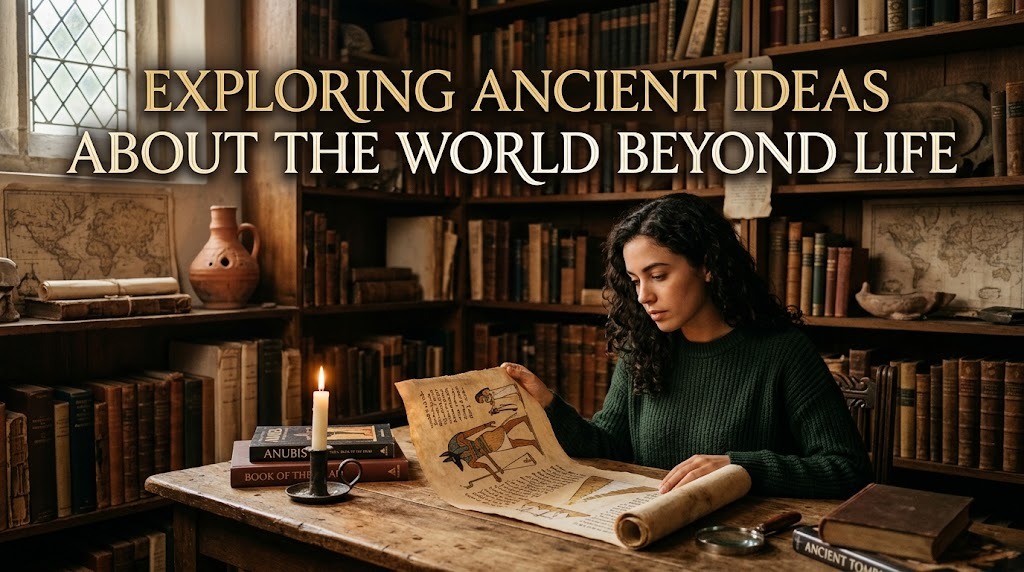
Death has been one of the greatest mysteries throughout human history. Long before modern science developed, ancient societies created different explanations about what happens after death and whether a person continues to exist in another realm. These beliefs were often connected to religion, mythology, cultural traditions, and ideas about morality. Although each civilization had its own interpretation, many ancient cultures shared the belief that death was not necessarily the end of existence.
Ancient ideas about the afterlife can be found in texts, burial practices, monuments, myths, and religious traditions. From the Egyptian belief in an organized journey after death to Greek stories about the underworld, these perspectives reveal how people tried to understand something beyond direct human experience. Studying these beliefs can provide valuable insight into ancient cultures, their values, and their understanding of human existence.
ANCIENT EGYPTIAN BELIEFS ABOUT THE AFTERLIFE
Ancient Egyptians had a detailed understanding of life after death. They generally believed that a person's existence could continue after physical death if certain religious and burial practices were properly followed. The body was considered important, which contributed to the development of mummification and elaborate tombs. Egyptians also believed that the deceased would face a journey through the afterlife, where their moral conduct would become significant.
One of the best-known Egyptian concepts is the judgment of the dead associated with Osiris, a major deity connected with death and regeneration. In ancient Egyptian funerary beliefs, the heart of the deceased was symbolically weighed against the feather of Ma'at, representing truth and order. A balanced result indicated that the person was worthy of entering a blessed existence. These beliefs show how closely the Egyptian concept of the afterlife was connected with morality, justice, and proper conduct.
GREEK IDEAS ABOUT THE WORLD BEYOND DEATH
Ancient Greek culture developed several ideas about what could happen after death. The underworld, commonly associated with Hades, was imagined as a realm where the dead continued their existence in different ways. Greek mythology included figures such as Charon, who was traditionally described as a ferryman transporting souls across a river connected with the underworld. These stories reflected the belief that death involved a transition rather than simply disappearing from existence.
Greek thinkers also explored the afterlife from a philosophical perspective. Plato, for example, discussed the immortality of the soul and the possibility that the soul could exist beyond the physical body. Not every Greek philosopher agreed on what happened after death, and some held more skeptical views. This diversity demonstrates that ancient Greek thought combined mythology and philosophy when examining questions about death and human existence.
MESOPOTAMIAN VIEWS OF LIFE AFTER DEATH
Ancient Mesopotamian civilizations also developed distinctive beliefs about the world after death. Texts from societies such as the Sumerians, Babylonians, and Assyrians describe an underworld where the dead were believed to continue their existence. The afterlife was often portrayed as a dark and restricted realm rather than a place of reward comparable to some later religious concepts. This perception reflected the uncertainties and challenges surrounding death in ancient Mesopotamian society.
The Epic of Gilgamesh is particularly important for understanding ancient Mesopotamian reflections on mortality. The story explores the fear of death and the human desire to achieve lasting significance. Gilgamesh's search for immortality ultimately highlights the limits of human life. Rather than presenting death as a simple problem with an easy solution, the story encourages reflection on mortality, friendship, and human legacy.
ANCIENT INDIAN PERSPECTIVES ON DEATH AND REBIRTH
Ancient Indian traditions developed influential concepts involving rebirth, karma, and liberation. In several Hindu traditions, the individual is associated with an enduring spiritual self often described as the Atman, while the cycle of repeated birth and death is known as samsara. Karma plays an important role in explaining how actions can influence future experiences and circumstances. The ultimate spiritual goal in many Hindu philosophical traditions is moksha, or liberation from the cycle of samsara.
These ideas created a different perspective from the belief that a person simply moves permanently from earthly life into one afterlife destination. Instead, existence can be understood as a continuing cycle until spiritual liberation is achieved. Ancient Indian philosophical texts, including the Upanishads, contain discussions about the self, consciousness, death, and ultimate reality. These teachings have had a lasting influence on how many people understand the relationship between human life and spiritual existence.
ANCIENT IDEAS ABOUT THE AFTERLIFE IN OTHER CULTURES
Ideas about the world beyond life were not limited to Egypt, Greece, Mesopotamia, or India. Ancient cultures across different regions developed their own explanations about death and the spiritual world. Norse traditions, for example, included several destinations for the dead, while ancient Celtic traditions contained beliefs about otherworldly realms. These traditions were shaped by local mythology, social values, religious practices, and the environment in which people lived.
Burial customs also provide important evidence of ancient attitudes toward death. Objects placed in graves could indicate that people believed the deceased might need possessions, protection, or symbolic resources beyond death. Tombs, monuments, and funerary rituals therefore served more than practical purposes because they could express beliefs about spiritual continuity. Although archaeological evidence cannot always reveal exactly what ancient people believed, it can help researchers understand how strongly death and the afterlife influenced ancient communities.
WHAT ANCIENT AFTERLIFE BELIEFS CAN TEACH US
Exploring ancient ideas about the afterlife can teach us that humans have long searched for answers to questions about mortality and existence. Different societies developed different explanations, but many of them attempted to address similar concerns. People wanted to understand what happens when the body dies, whether consciousness continues, and how human actions relate to what may come afterward. These questions remain relevant even though modern societies have very different scientific and religious perspectives.
Ancient afterlife beliefs also show how cultural values can influence ideas about death. Concepts of justice, morality, family, courage, responsibility, and spiritual purpose often appeared in stories and rituals surrounding the dead. Studying these traditions does not require accepting their supernatural explanations as factual. Instead, they can be viewed as historical and cultural evidence of how earlier societies understood the meaning of human life.
CONCLUSION
Ancient ideas about the world beyond life reveal the deep human desire to understand death and what may exist beyond it. Egyptians emphasized judgment and preparation, Greek traditions combined mythology with philosophy, Mesopotamian cultures explored mortality and the underworld, while ancient Indian traditions developed ideas of rebirth and spiritual liberation. Other civilizations also created unique traditions that reflected their own values and experiences.
Although these beliefs differ greatly, they share an important theme: death has always encouraged humans to ask profound questions about existence. Learning about these ancient perspectives can help us better understand history, culture, religion, and the enduring human search for meaning.
About the Author
Gusti Ayu Tita P
Author — STEKOM University
An active author focused on academic issues, educational technology, and human resource development in the campus environment.















