
Exploring Careers in Historic Tomb Preservation and Heritage Conservation
Gusti Ayu Tita P
4 September 2026
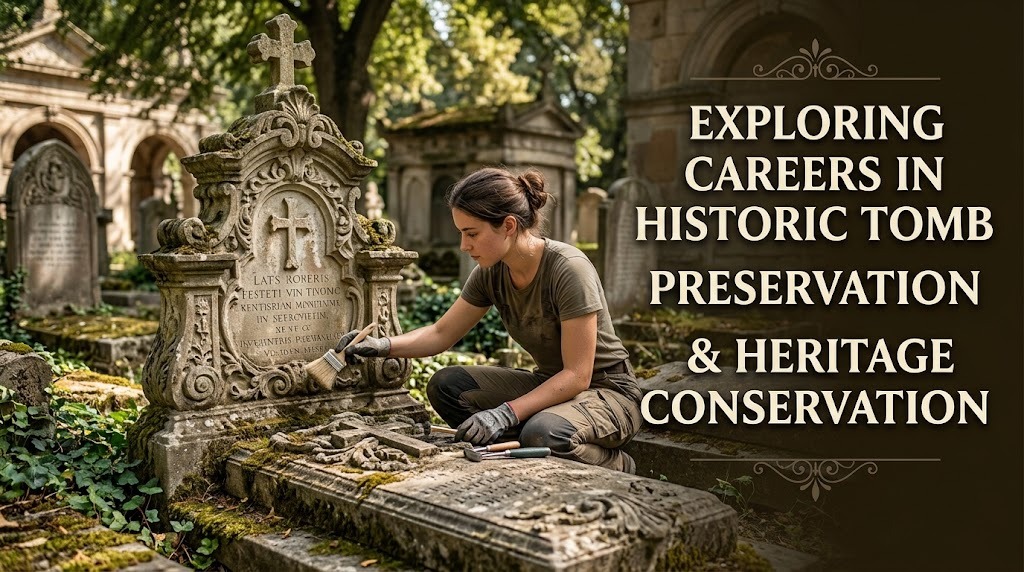
Historic tomb preservation is an important field that combines history, archaeology, conservation, architecture, research, education, and community work. As awareness of cultural heritage grows, professionals are needed to protect historic burial sites from deterioration, neglect, development, and other threats. A career in this field can provide opportunities to work with valuable evidence from the past. It can also allow professionals to contribute directly to the protection of cultural heritage for future generations.
UNDERSTANDING HISTORIC TOMB PRESERVATION
Historic tomb preservation focuses on protecting burial sites that have historical, cultural, archaeological, or architectural value. Preservation work can include documenting structures, monitoring their condition, conducting research, supporting conservation projects, and educating visitors. Professionals must understand both the physical characteristics of a site and the cultural meaning attached to it.
The work requires careful decision-making because historic structures can be fragile. Conservation principles generally emphasize protecting significant original materials and avoiding unnecessary changes. Professionals may work with specialists from different disciplines to determine appropriate methods for maintaining a site's authenticity and condition.
CAREER PATHS IN HERITAGE CONSERVATION
There are several career paths related to historic tomb preservation. Archaeologists, historians, conservators, architects, museum professionals, heritage managers, researchers, and educators can all contribute to heritage projects. Each profession has different responsibilities but may work toward the shared goal of understanding and protecting historical resources.
Some professionals focus on fieldwork and documentation, while others work in laboratories, museums, universities, government institutions, or heritage organizations. Heritage management can involve planning conservation programs, managing visitors, developing educational activities, and coordinating with local communities. This variety allows people with different academic and professional interests to find suitable roles.
IMPORTANT SKILLS FOR THIS CAREER
A career in historic tomb preservation requires strong research and observation skills. Professionals need to examine details carefully, record information accurately, analyze historical evidence, and communicate their findings clearly. Knowledge of documentation methods and basic digital tools can also be highly useful.
Communication and teamwork are equally important. Heritage projects often involve researchers, government agencies, local communities, educators, and conservation specialists. Professionals should be able to explain technical information in ways that different audiences can understand while respecting cultural perspectives and local knowledge.
THE ROLE OF TECHNOLOGY IN HERITAGE WORK
Technology has created new opportunities for professionals working with historic tombs. Digital photography, geographic information systems, 3D scanning, mapping, and digital databases can help document sites in greater detail. These tools can support research, conservation planning, monitoring, and public education.
Digital technology can also create new ways to share heritage information. Virtual tours, online exhibitions, digital archives, and 3D models can allow people to explore historic tombs without physically visiting them. Professionals who understand both heritage conservation and digital technology can therefore contribute to modern approaches to cultural preservation.
EDUCATION AND EXPERIENCE FOR HERITAGE CAREERS
Educational backgrounds for heritage careers vary depending on the position. Relevant fields may include archaeology, history, anthropology, architecture, conservation, museum studies, cultural heritage, and related disciplines. Specialized training may also be required for particular conservation or archaeological activities.
Practical experience can strengthen professional skills. Students can gain experience through research projects, internships, museum activities, field studies, documentation projects, or community heritage programs. Building a portfolio of relevant work can demonstrate research ability, technical skills, documentation experience, and commitment to heritage preservation.
FUTURE OPPORTUNITIES IN HISTORIC PRESERVATION
The need to protect cultural heritage creates opportunities across several sectors. Professionals may work with museums, universities, government institutions, research organizations, cultural foundations, tourism programs, and conservation projects. Some may also work as independent researchers, consultants, educators, or heritage communicators.
Future developments in technology and sustainable tourism may create additional roles. Digital heritage projects, virtual exhibitions, heritage education, conservation planning, and community-based tourism can all support new career opportunities. People interested in this field can prepare by combining historical knowledge, technical abilities, communication skills, and ethical awareness.
CONCLUSION
A career in historic tomb preservation offers an opportunity to combine professional skills with the protection of valuable cultural resources. Archaeology, history, conservation, architecture, heritage management, education, and digital technology all have important roles in this field. Building relevant knowledge, gaining practical experience, and developing strong research and communication skills can help individuals prepare for these careers. As historic sites continue to require responsible protection, skilled professionals will remain important for preserving cultural heritage for future generations.
About the Author
Gusti Ayu Tita P
Author — STEKOM University
An active author focused on academic issues, educational technology, and human resource development in the campus environment.















