
Exploring Human Beliefs About Life Beyond Death
Gusti Ayu Tita P
9 September 2026
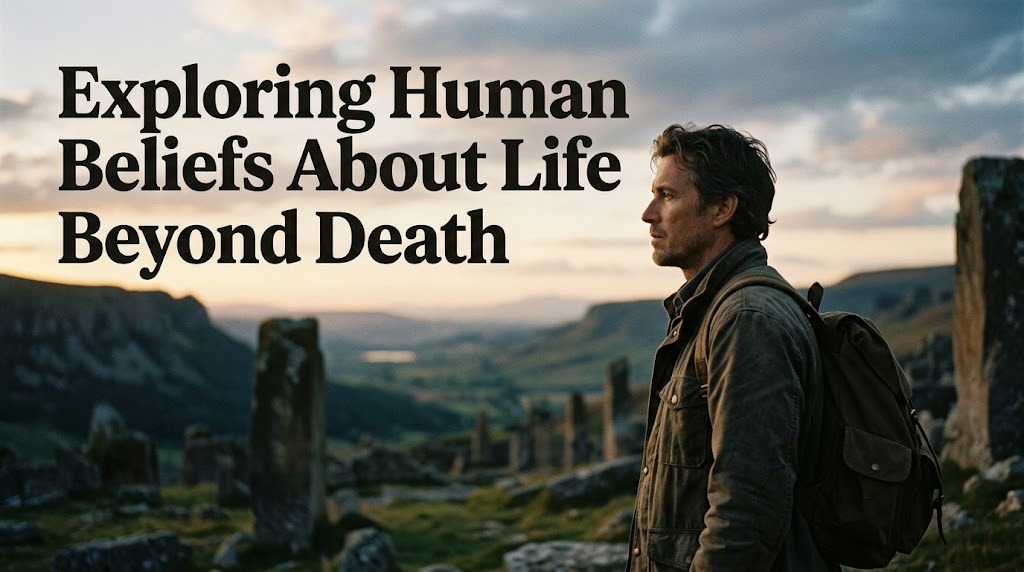
Death is one of the greatest mysteries in human life. Although every culture recognizes death as part of the human experience, people have developed different beliefs about what may happen after death. Some traditions describe an afterlife as a spiritual realm, while others focus on rebirth, judgment, ancestral existence, or the continuation of the soul.
Exploring human beliefs about life beyond death can help us understand how people give meaning to life, cope with loss, and develop moral values. These beliefs are influenced by religion, culture, philosophy, history, and personal experience, making the concept of life after death diverse across societies.
THE MEANING OF LIFE BEYOND DEATH
The idea of life beyond death generally refers to the possibility that human existence does not completely end when the physical body dies. Different belief systems explain this idea in different ways. Some traditions teach that a person's soul or spirit continues to exist in another realm. Others describe death as part of a cycle in which life begins again through rebirth or reincarnation.
There is no single universal explanation for what happens after death. Religious teachings may provide specific descriptions, while philosophical perspectives can approach the question through ideas about consciousness, identity, and existence. Because the afterlife cannot be scientifically confirmed as a universal experience, beliefs about it remain closely connected to faith and worldview.
RELIGIOUS PERSPECTIVES ON LIFE AFTER DEATH
Major religions have developed their own teachings about what happens after death. In Christianity, Islam, and Judaism, beliefs commonly include ideas about judgment, resurrection, and an eternal existence, although each tradition has its own detailed theology. Hindu traditions often include reincarnation and karma, in which actions influence future existence and spiritual progress. Buddhist traditions also discuss rebirth, although the understanding of self and consciousness differs significantly from many concepts of an eternal soul.
These perspectives show that the afterlife is not understood in only one way. Some traditions emphasize a final destination, while others describe a continuing spiritual process. Moral behavior is often connected to these beliefs because people may understand their actions in this life as having consequences beyond death. Such teachings can encourage individuals to reflect on responsibility, compassion, justice, and the purpose of human existence.
CULTURAL BELIEFS ABOUT THE AFTERLIFE
Human cultures have created many traditions surrounding death and the possibility of existence after it. Ancient civilizations often developed rituals to honor the dead and prepare them for what was believed to be another stage of existence. Some societies viewed deceased family members as ancestors who could remain connected to the living community. Burial practices, ceremonies, monuments, and memorial traditions can therefore reveal how a culture understands death.
Cultural beliefs can also influence how people respond to grief. Funeral traditions may provide a structured way for families and communities to express respect, remembrance, and acceptance. Even when people have different religious beliefs, cultural practices can help preserve memories of those who have died. These traditions demonstrate that beliefs about death are not only spiritual ideas but can also become important parts of social identity and community life.
HOW BELIEFS ABOUT DEATH SHAPE HUMAN LIFE
Beliefs about what happens after death can influence how people live in the present. For some individuals, the expectation of an afterlife encourages them to practice kindness, honesty, generosity, and responsibility. The belief that actions have consequences beyond physical life can become a source of motivation to follow moral principles. It may also provide comfort when people face difficult experiences or the loss of someone they love.
At the same time, people do not always interpret afterlife beliefs in exactly the same way. Some may focus on religious teachings, while others approach the subject through personal reflection or philosophical questions. The concept of death can encourage people to think about their purpose, relationships, priorities, and legacy. In this sense, beliefs about life beyond death can shape everyday decisions even when the afterlife itself remains a matter of faith.
WHY HUMANS CONTINUE TO WONDER ABOUT DEATH
Human curiosity about death may come from the fact that death raises fundamental questions about existence. People naturally want to understand where life comes from, what consciousness means, and whether existence continues after the body stops functioning. Throughout history, these questions have inspired religious teachings, philosophical discussions, literature, art, and cultural traditions.
Personal experiences can also strengthen people's interest in the subject. Losing family members, thinking about mortality, or experiencing major changes in life can lead individuals to reflect more deeply on death and what may follow. However, there is no universally proven answer that establishes one explanation of the afterlife as fact. Therefore, exploring different beliefs is most useful when approached with respect, openness, and awareness of cultural differences.
CONCLUSION
Exploring human beliefs about life beyond death reveals how deeply people have thought about mortality throughout history. Religious traditions, cultural practices, and philosophical ideas offer different explanations, including afterlife, reincarnation, resurrection, ancestral existence, and spiritual continuation. Although these perspectives vary, many of them help people find meaning, develop moral values, and cope with the reality of death.
Understanding these different beliefs does not require everyone to share the same worldview. Instead, learning about them can encourage greater cultural understanding and thoughtful reflection on human existence. The question of what happens beyond death remains one of humanity's most enduring mysteries, and its importance continues to influence how people understand both death and life.
About the Author
Gusti Ayu Tita P
Author — STEKOM University
An active author focused on academic issues, educational technology, and human resource development in the campus environment.















