
Exploring Mining Potential Amid Rapid Technological Changes
Gusti Ayu Tita P
20 Agustus 2026
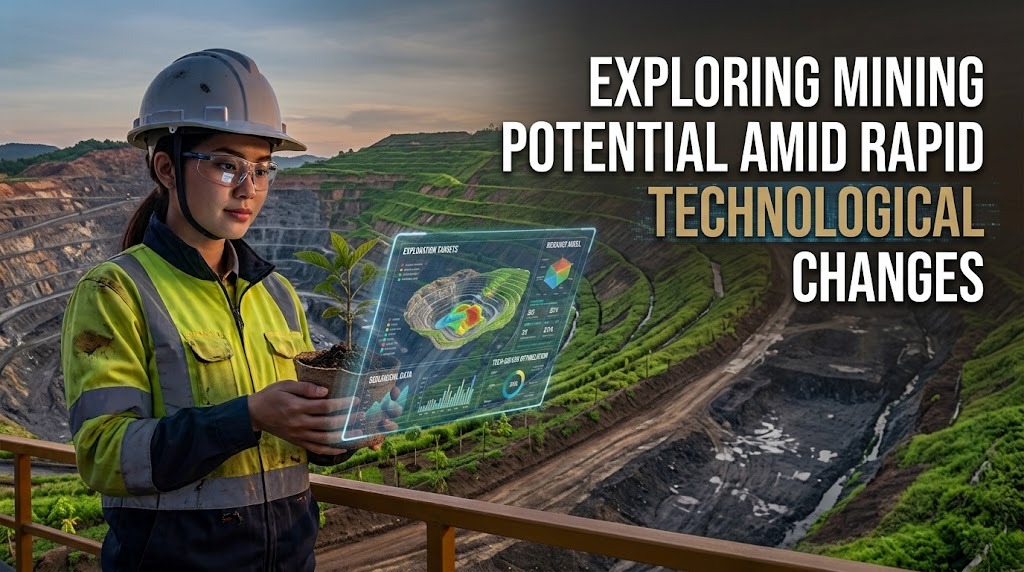
The mining industry remains an important part of the global economy because it supplies raw materials for energy, construction, manufacturing, transportation, and modern technology. As technology develops rapidly, mining companies are changing the way they explore, extract, process, and manage mineral resources. Digital systems, automation, artificial intelligence, and advanced sensors are becoming increasingly important in modern mining operations.
These changes create new opportunities while also bringing new challenges. Technology can help companies improve productivity, reduce operational risks, and use resources more efficiently. At the same time, mining companies need skilled workers, strong environmental management, and responsible planning to ensure that technological progress supports sustainable mining.
TECHNOLOGY IS TRANSFORMING MODERN MINING
Technology has changed many stages of the mining process, beginning with exploration. Modern geological surveys can use satellite data, remote sensing, geographic information systems, and advanced analytical tools to identify areas that may contain valuable minerals. These technologies can help companies collect and analyze information more efficiently before conducting detailed exploration.
Automation is also changing daily mining activities. Some modern mining sites use automated or remotely operated equipment to perform specific tasks, particularly in areas where working conditions may be hazardous. Digital monitoring systems can also provide information about equipment performance, production levels, and site conditions, allowing companies to make faster and more informed decisions.
EXPLORING THE POTENTIAL OF MINERAL RESOURCES
Technological development has created new possibilities for discovering and evaluating mineral resources. Geological data can be combined with satellite imagery, drilling information, and computer-based models to create a more detailed understanding of underground conditions. This approach can help mining companies identify promising areas and plan exploration activities more effectively.
Minerals such as nickel, copper, lithium, and other strategic materials are receiving increasing attention because they are important for modern industries and energy technologies. However, mineral potential does not automatically mean that every deposit should be developed. Economic feasibility, environmental conditions, infrastructure, regulations, and community interests must all be considered before mining begins.
ARTIFICIAL INTELLIGENCE AND DATA IN MINING
Artificial intelligence is becoming an important tool for processing large amounts of mining data. AI systems can help identify patterns in geological information, support equipment monitoring, and improve operational planning. When combined with reliable field data, these tools can help companies make decisions more efficiently.
Predictive maintenance is another potential application. Sensors installed on equipment can collect information about operating conditions, while analytical systems can help identify signs of possible equipment problems. Early detection can reduce unexpected downtime and help companies plan maintenance more effectively, although human expertise remains essential when interpreting data and making operational decisions.
AUTOMATION CAN IMPROVE SAFETY AND EFFICIENCY
Mining involves heavy machinery and potentially hazardous working environments, making worker safety a major priority. Automation and remote operation can reduce the need for workers to enter certain high-risk areas. Automated haulage systems, remote-controlled equipment, and digital monitoring can therefore support safer working conditions when properly designed and managed.
Automation can also improve operational efficiency by allowing equipment to operate with consistent parameters. Better monitoring can help reduce unnecessary fuel use, idle time, and equipment downtime. However, automated systems require skilled personnel who can operate, maintain, supervise, and troubleshoot the technology.
SUSTAINABILITY BECOMES A KEY PRIORITY
Technological progress is increasingly connected with efforts to develop sustainable mining practices. Digital monitoring can help companies track water use, energy consumption, emissions, and environmental conditions around mining sites. More accurate information allows companies to identify problems earlier and improve environmental management.
Technology alone cannot guarantee sustainability. Mining companies still need responsible planning, regulatory compliance, proper waste management, land rehabilitation, and meaningful engagement with local communities. The long-term success of mining depends on balancing economic benefits with environmental protection and social responsibilities.
BUILDING A SKILLED MINING WORKFORCE
The shift toward technology-driven mining is changing the skills required by the industry. Workers increasingly need knowledge of digital systems, equipment automation, data analysis, and modern safety procedures. Traditional technical skills remain important, but they are increasingly being combined with digital skills.
Training and reskilling will therefore become important parts of the industry's future. Companies, educational institutions, and governments can support workers through technical education, vocational programs, and industry-based training. A skilled workforce will help mining companies adopt new technologies while ensuring that human judgment remains an important part of operational decision-making.
THE FUTURE OF TECHNOLOGY DRIVEN MINING
The future of mining will likely involve closer integration between advanced technology, skilled workers, and responsible resource management. Automation, artificial intelligence, connected sensors, and data analytics can help companies operate more efficiently and respond quickly to changing conditions. These technologies may also support better safety and environmental monitoring.
However, the success of technology-driven mining will depend on how responsibly these innovations are implemented. Companies need to consider investment costs, cybersecurity, workforce readiness, environmental impacts, and community interests. By combining innovation, responsible management, and human expertise, the mining sector can explore its potential while preparing for a more efficient and sustainable future.
About the Author
Gusti Ayu Tita P
Author — STEKOM University
An active author focused on academic issues, educational technology, and human resource development in the campus environment.















