
Exploring Royal Palaces and Their Cultural Heritage in Indonesia
Gusti Ayu Tita P
4 September 2026
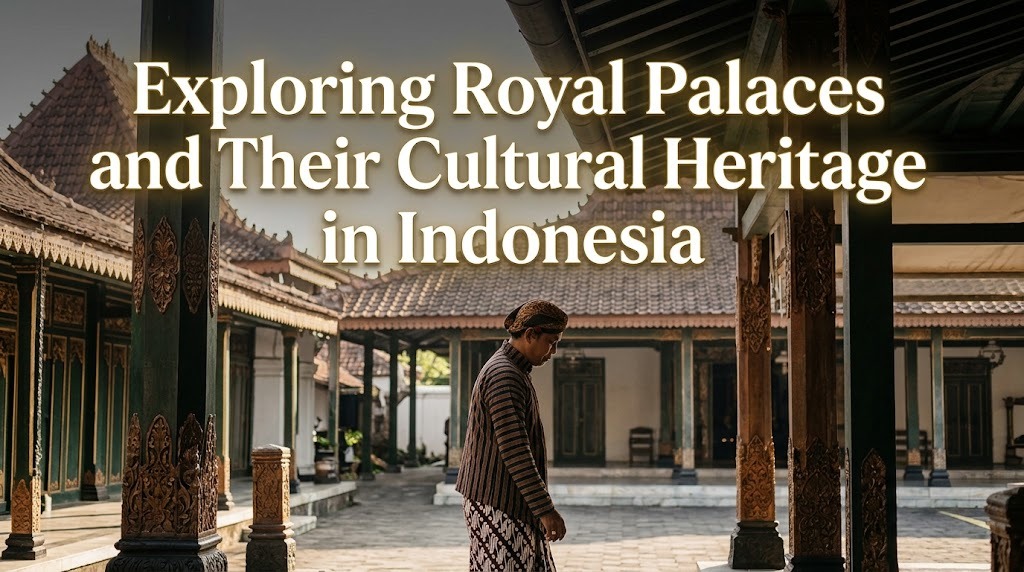
Indonesia is known for its rich cultural diversity, and royal palaces are an important part of this heritage. Across the country, palaces have preserved historical traditions, traditional arts, architecture, ceremonies, and stories passed down through generations. In Java, Sumatra, and other regions, these royal residences provide valuable insight into how local communities developed their cultural identities.
Exploring royal palaces is not only about seeing beautiful historic buildings. Visitors can also learn about traditional values, royal customs, local arts, and historical events that shaped Indonesian society. These places continue to connect the past with the present and offer meaningful experiences for people interested in Indonesian cultural heritage.
THE HISTORICAL ROLE OF INDONESIAN ROYAL PALACES
Indonesian royal palaces have played important roles in the political, social, and cultural development of different regions. In the past, palaces served as centers of government and royal administration, while also becoming places where cultural traditions were developed and maintained. Several well-known palaces in Java are connected with historical kingdoms and sultanates that influenced the development of Javanese society.
The history of each palace is different because Indonesia has experienced various kingdoms, sultanates, colonial influences, and political changes. Despite these changes, many palaces have continued to preserve important cultural elements. Historical documents, traditional objects, architecture, and royal ceremonies can help visitors understand the relationship between Indonesian history and its cultural heritage.
THE CULTURAL BEAUTY OF ROYAL PALACES
One of the most attractive aspects of Indonesian royal palaces is their cultural beauty. Palace complexes often contain traditional architecture, decorative elements, courtyards, ceremonial spaces, and historical artifacts that reflect the values of the society that created them. In Javanese palaces, architectural arrangements can also express ideas about harmony, order, spirituality, and relationships between humans and their surroundings.
The beauty of these palaces is not limited to their physical appearance. Traditional music, dance, clothing, language, and ceremonies may also be associated with palace culture. Gamelan performances, classical Javanese dances, traditional batik, and royal ceremonies demonstrate how artistic traditions can survive through continuous practice and cultural transmission.
TRADITIONS AND CEREMONIES THAT SURVIVE TODAY
Royal palaces remain important places for maintaining traditional ceremonies. Some ceremonies are connected to religious beliefs, historical traditions, agricultural cycles, royal customs, or important moments in the palace calendar. These events can demonstrate how traditional knowledge and cultural practices are passed from older generations to younger members of the community.
Although modern life has changed many aspects of Indonesian society, some palace traditions continue to be practiced. Public cultural events can also allow visitors to observe traditional performances and ceremonies while respecting the rules established by each palace. This creates an opportunity for cultural education and helps younger generations understand the significance of traditions that might otherwise become less familiar.
ROYAL PALACES AS CULTURAL TOURISM DESTINATIONS
Historic royal palaces have significant potential as cultural tourism destinations. Visitors can explore palace buildings, museums, collections, traditional performances, and surrounding cultural areas. Famous destinations such as the Yogyakarta Palace, Surakarta Palace, and Cirebon palaces provide different experiences because each has its own history and cultural characteristics.
Cultural tourism can also benefit local communities when it is managed responsibly. Tourism activities can create opportunities for guides, artists, craftspeople, local businesses, and cultural organizations. However, visitors should respect palace regulations, traditional ceremonies, sacred areas, and local customs. Responsible tourism is essential so that cultural heritage can be appreciated without damaging its meaning or physical condition.
SYMBOLS, ARCHITECTURE, AND CULTURAL VALUES
The architecture of a royal palace often contains symbols that communicate cultural ideas. The arrangement of buildings, gates, courtyards, ornaments, and ceremonial spaces may reflect concepts about social order, leadership, spirituality, and harmony. In Javanese culture, for example, traditional architecture can be understood through philosophical ideas concerning the relationship between people, nature, and the divine.
Palace objects can also carry symbolic meanings. Traditional weapons, royal clothing, heirlooms, musical instruments, and artworks may represent particular historical or cultural values. Understanding these symbols allows visitors to look beyond the physical appearance of a palace and recognize it as a living cultural institution rather than simply an old building.
CONCLUSION
Exploring royal palaces in Indonesia provides an opportunity to understand the country's history and cultural diversity from a unique perspective. These places preserve more than historical buildings because they also maintain traditional arts, ceremonies, architecture, symbols, and community practices. Their continued existence demonstrates the importance of protecting cultural heritage in a rapidly changing society.
Royal palaces can also serve as valuable destinations for cultural education and responsible tourism. By visiting and learning about these sites respectfully, people can develop a deeper appreciation for Indonesia's diverse traditions. Preserving royal palaces means protecting important connections between Indonesia's past, present, and future.
About the Author
Gusti Ayu Tita P
Author — STEKOM University
An active author focused on academic issues, educational technology, and human resource development in the campus environment.















