
Exploring Supernatural Creatures in Indonesian Culture and Folklore
Gusti Ayu Tita P
9 September 2026
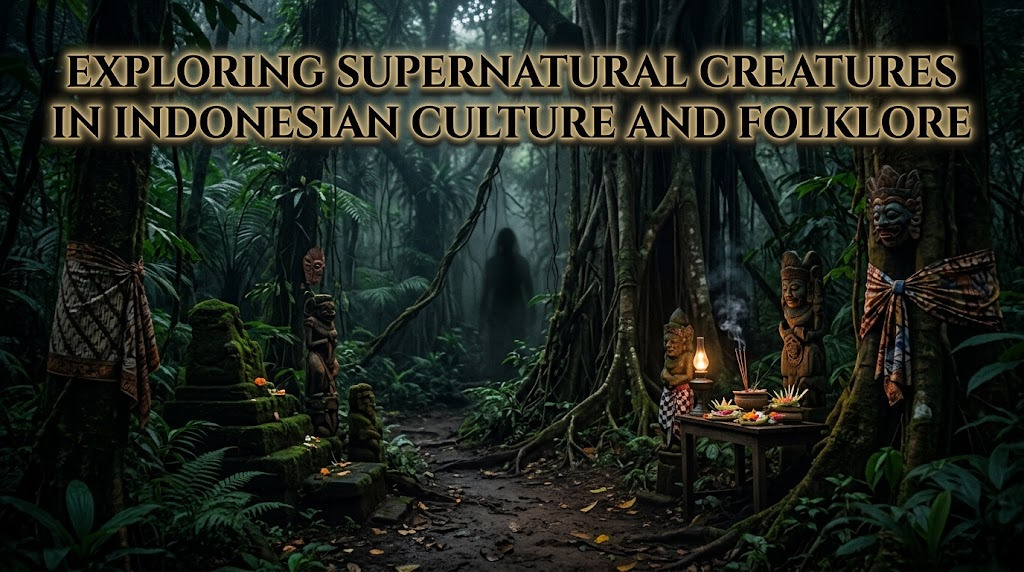
Indonesia is known for its diverse cultures, traditions, and folklore. Among the stories passed down through generations are tales about supernatural creatures that are believed, feared, or simply remembered as part of local heritage. These figures appear in legends, traditional storytelling, literature, films, and modern digital content. Their descriptions can differ significantly from one region to another. Exploring these creatures provides an interesting way to understand the relationship between supernatural beliefs, cultural traditions, and Indonesian society.
THE ROLE OF SUPERNATURAL CREATURES IN INDONESIAN FOLKLORE
Supernatural creatures have been present in Indonesian folklore for generations. Traditional stories often use mysterious beings to explain unusual events, warn people about dangerous behavior, or communicate social values. Some stories may also be connected to particular environments such as forests, rivers, mountains, villages, or old buildings. Because many of these narratives were transmitted orally, their details could change as different storytellers retold them. This explains why one supernatural figure may have several versions.
These stories should be understood within their cultural context. A folklore character is not necessarily treated as a factual creature by everyone who knows the story. Some people may believe the story, while others may regard it as entertainment, tradition, or a symbolic narrative. This difference is important when discussing Indonesian supernatural folklore objectively.
KUNTILANAK AND THE DEVELOPMENT OF A POPULAR LEGEND
The kuntilanak is one of the most recognizable supernatural figures in Indonesian popular culture. It is commonly portrayed as a female ghost with long hair and a white or light-colored dress. Different regions and storytelling traditions may describe the figure in different ways. Over time, the kuntilanak has appeared in horror films, novels, television programs, and online stories. These modern portrayals have helped make the character widely familiar.
However, modern representations do not always reflect older versions of the folklore. Filmmakers and writers may modify a character's appearance, personality, and origin to create a stronger horror experience. Therefore, the kuntilanak is best understood as a folklore figure whose representation has evolved over time, rather than as a scientifically established supernatural being.
POCONG AND CULTURAL IMAGINATION
The pocong is another well-known figure in Indonesian horror culture. It is generally portrayed as a shrouded figure associated with death and traditional burial imagery. The character has become particularly popular in modern horror entertainment because its visual appearance is immediately recognizable. Stories about the pocong appear in films, television shows, online videos, and fictional narratives. Different stories may give the character different origins and supernatural abilities.
The popularity of the pocong demonstrates how cultural symbols can become horror characters. Elements associated with death can create a strong emotional response, especially when combined with darkness, silence, and suspense. At the same time, audiences should distinguish between cultural and religious practices surrounding burial and fictional horror representations of the pocong.
GENDERUWO, WEWE GOMBEL, AND OTHER FIGURES
Indonesian folklore includes many other supernatural beings, including genderuwo and wewe gombel. Genderuwo is commonly described in Javanese folklore as a large and mysterious supernatural being, although descriptions can vary. Wewe gombel is another figure associated with traditional stories, particularly narratives involving children and warnings about inappropriate behavior. Such stories have historically been used in different communities to communicate concerns about safety and social conduct.
Other regions also have their own supernatural figures and legends. Leak, for example, is strongly associated with Balinese cultural folklore, while other communities preserve distinct stories about spirits and mystical beings. These differences demonstrate the extraordinary diversity of Indonesian folklore. It would therefore be inaccurate to assume that every supernatural belief has the same meaning throughout the country.
WHY THESE CREATURES REMAIN POPULAR TODAY
The continued popularity of supernatural creatures is influenced by several factors. First, these figures are already familiar to many people through family stories and local traditions. Second, horror entertainment provides new ways to reinterpret traditional characters for modern audiences. Third, social media makes it easy for supernatural stories to spread rapidly through videos, podcasts, posts, and online discussions. This combination allows old folklore to remain visible while taking new forms.
Modern creators can also use supernatural characters to explore contemporary issues. A traditional creature may become a symbol of fear, social pressure, loneliness, environmental concerns, or unresolved conflict. Through this process, folklore evolves with society instead of remaining exactly as it was in the past. This is one reason supernatural characters continue to inspire new stories.
FOLKLORE, BELIEF, AND CRITICAL THINKING
It is important to distinguish between folklore, personal belief, and scientific evidence. A supernatural story can be culturally significant without being scientifically verified. People may have personal experiences that they interpret as encounters with supernatural beings, but personal testimony alone does not establish a supernatural explanation. Environmental conditions, sleep problems, stress, fear, and perception can sometimes influence unusual experiences.
A respectful approach does not require people to ridicule traditional beliefs. Instead, cultural appreciation and critical thinking can exist together. Researchers and readers can examine where a story originated, how it changed, and what social meaning it carries. This approach allows supernatural folklore to be studied as an important part of cultural history without presenting legends as established scientific facts.
CONCLUSION
Supernatural creatures in Indonesian culture represent a fascinating combination of folklore, imagination, tradition, and social values. Figures such as kuntilanak, pocong, genderuwo, wewe gombel, and leak have become familiar through regional stories and modern entertainment. Their descriptions and meanings can vary depending on cultural and geographical context. This diversity makes Indonesian supernatural folklore an important subject for understanding the country's rich cultural heritage.
At the same time, supernatural stories should be approached with respect and critical awareness. Some people may view these figures as genuine supernatural beings, while others understand them as folklore or fictional characters. By recognizing these different perspectives, people can enjoy and preserve Indonesian supernatural folklore while maintaining a clear distinction between cultural narratives and scientifically verified information.
About the Author
Gusti Ayu Tita P
Author — STEKOM University
An active author focused on academic issues, educational technology, and human resource development in the campus environment.















